










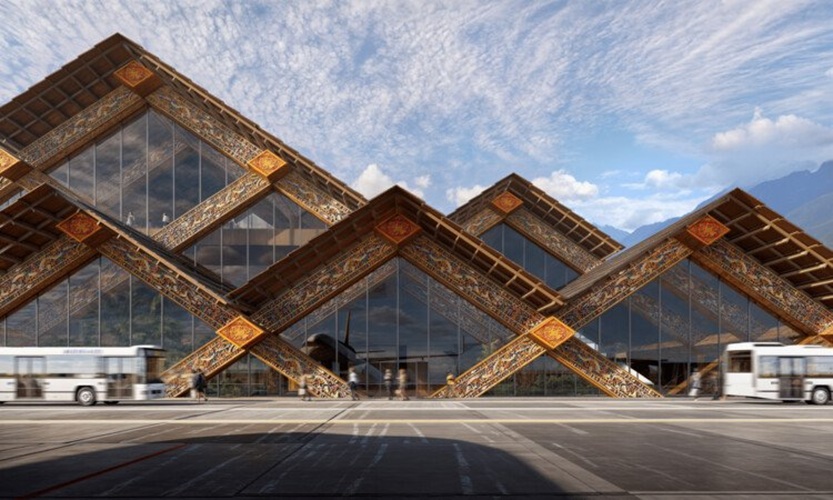
Bhutan’s upcoming Gelephu International Airport has earned global recognition after being named Future Project of the Year at the World Architecture Festival, marking a major architectural milestone for the Himalayan nation.
The award celebrates visionary projects that are yet to be built, and the Gelephu airport—scheduled to open in 2029—stood out for its ambitious design and deep connection to local culture and landscape.
Designed by the Bjarke Ingels Group (BIG), the airport will become Bhutan’s second international gateway, beginning operations with 123 flights a day and gradually expanding to handle an estimated 5.5 million passengers annually by 2065.
Set against Bhutan’s dramatic natural terrain, the airport’s architecture mirrors the surrounding mountains.
Its distinctive diagrid roof structure rises in peak-like forms and is constructed using locally sourced, sustainable timber.
Traditional Bhutanese carvings feature prominently throughout the structure, while elements of the façade draw inspiration from the Kachen, a sacred wooden pillar central to Bhutanese architecture.

The arrival experience is planned around a landscaped public plaza divided into four zones, each highlighting native plant species.
Inside, a central “Forest Spine” courtyard filled with indigenous flora and elevated walkways will separate domestic and international terminals, creating a calm, nature-rich environment for travellers.
The design also incorporates climate-responsive features rooted in traditional building practices.
ALSO READ: Gandharba marks 21 years with theatre festival and Bhupendra Sangeet competition
These include ventilated roofs and courtyards to enhance airflow, timber structures that help regulate humidity, and wide eaves that provide shade and protection during the monsoon season.
Local craftsmanship plays a key role throughout the airport, with Bhutanese carpentry, wood carving, painting and weaving integrated into both exterior and interior spaces.
As part of the larger Gelephu Mindfulness City masterplan, the airport is intended to promote wellbeing, using abundant natural light through skylights, expansive windows and grand entrances.
Dedicated indoor and outdoor areas for yoga, meditation and sound healing are also planned.
By blending sustainability, tradition and forward-looking design, Gelephu International Airport has positioned itself as a standout example of future-focused architecture on the global stage.