










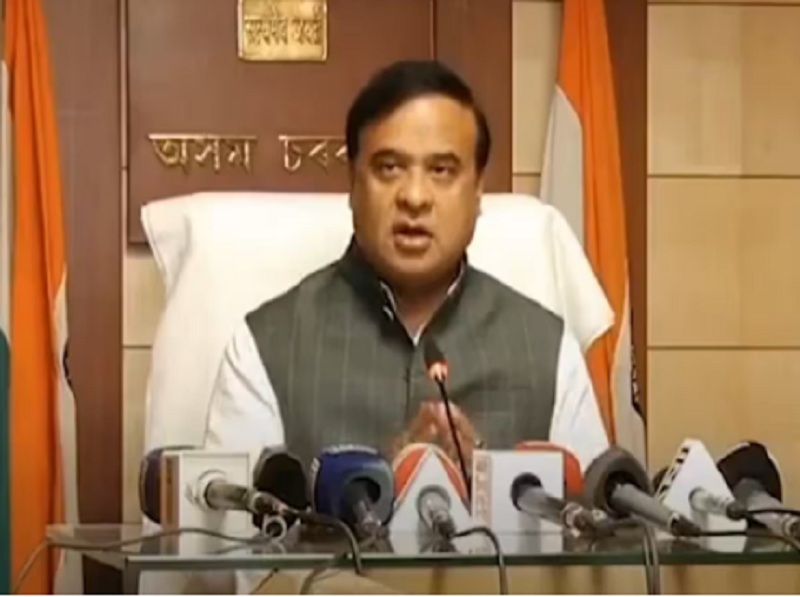
Guwahati: Assam Chief Minister Himanta Biswa Sarma has asserted that the Assamese community could become “almost” a minority by the time the 2027 Census is conducted, describing the current period as a “very dark time” in his political life.
Replying to the Motion of Thanks on the Governor’s Address in the Assam Legislative Assembly, the chief minister said demographic trends indicated a steady shift in the state’s population balance. However, he did not provide specific data to substantiate his projection about the 2027 Census.
Sarma maintained that the BJP-led state government was striving to protect Assam’s identity and cultural foundations. He said the BJP-led Assam government is trying to keep alive the “lamp”, which is giving “courage to everyone”.
He further claimed that residents from districts as diverse as Dhubri and Majuli had conveyed to him that they felt secure under the present administration. “We are moving towards becoming a minority, but that one lamp continues to give light and courage,” he remarked during his speech.
The chief minister has previously argued that if existing growth rates persist, the Muslim population in Assam could come close to parity with the Hindu population by 2041. His statements have frequently centred on demographic change as a key political and social concern in the state.
As per the 2011 Census, Assam’s total population stood at 3.12 crore. Of this, Muslims accounted for 1.07 crore, or 34.22 per cent, while Hindus numbered 1.92 crore. These figures have often been cited in political debates surrounding population trends in the state.

The BJP has consistently highlighted shifts in district-level demographics, noting that the number of Muslim-majority districts rose between the 2001 and 2011 Censuses. While no nationwide Census was conducted in 2021, party leaders have continued to reference earlier data to underline their concerns.
In 2001, when Assam had 23 districts, six had a Muslim majority: Dhubri (74.29 per cent), Goalpara (53.71 per cent), Barpeta (59.37 per cent), Nagaon (51 per cent), Karimganj (52.3 per cent) and Hailakandi (57.63 per cent).
ALSO READ: Assam CM announces tea garden workers’ wage hike from March 1
By 2011, the number of districts had increased to 27, and nine were recorded as Muslim-majority districts. These included Dhubri (79.67 per cent), Goalpara (57.52 per cent), Barpeta (70.74 per cent), Morigaon (52.56 per cent), Nagaon (55.36 per cent), Karimganj (56.36 per cent), Hailakandi (60.31 per cent), Bongaigaon (50.22 per cent) and Darrang (64.34 per cent), according to Census data.