










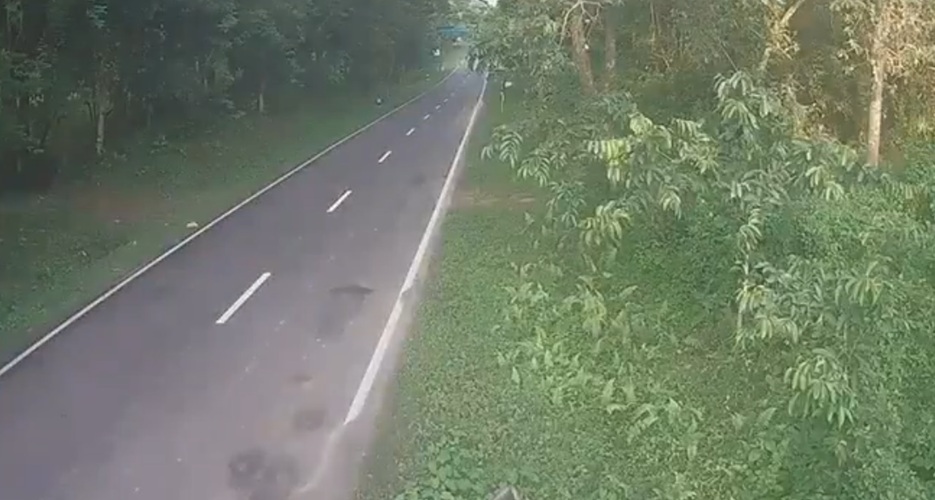
Guwahati: Even as Prime Minister Narendra Modi laid the foundation stone for the Rs. 7,000-crore Kaziranga Elevated Corridor on Sunday, concerns over its ecological impact have begun to surface, with Ellora Vigyan Mancha (EVM), a voluntary people’s science organisation, urging the Union Ministry of Environment, Forest and Climate Change to order an in-depth scientific study before construction begins.
The ambitious project aims to strike a balance between development and conservation.
It involves the construction of a 35-km-long elevated corridor through Kaziranga National Park and the four-laning of the Kaliabor–Numaligarh stretch of National Highway-715, with a total estimated investment of Rs. 6,957 crore.
Implemented in line with Supreme Court directions and recommendations of the Wildlife Institute of India, the corridor is intended to ensure safe wildlife movement, reduce road accidents and minimise human–animal conflict in one of the country’s most sensitive ecological zones.
Passing through Nagaon, Karbi Anglong and Golaghat districts, the corridor is expected to transform connectivity across Upper Assam.
Chief Minister Himanta Biswa Sarma has said the project will cut travel time between Upper Assam and Guwahati by at least one hour, strengthen regional connectivity and open new opportunities in eco-tourism, cultural tourism and local employment. The project is targeted for completion within 36 months.

However, EVM, which is committed to the protection of ecology, biodiversity and sustainable development, has raised serious questions about the planning and execution of the project.
In a detailed letter to the MoEFCC, the organisation acknowledged the stated objective of preventing wildlife deaths due to vehicle collisions but cautioned that the project, if not preceded by rigorous scientific assessment, could create new ecological risks.
The organisation pointed out that Kaziranga National Park, apart from being a vast protected area, is also a UNESCO World Heritage Site.
As per National Board for Wildlife rules, any major construction project in such a sensitive area requires a mandatory Environmental Impact Assessment (EIA).
EVM claimed that no comprehensive EIA appears to have been conducted before sanctioning the elevated corridor and urged that such an assessment be undertaken before any construction activity begins.
EVM further highlighted that wildlife in Kaziranga regularly uses at least nine identified corridors to move between the southern part of the park and the Karbi Anglong Hills, both on a daily basis and seasonally during floods.
It expressed concern that the prolonged construction period—estimated at four to five years—could render these corridors non-functional, disrupting animal movement.
“Even if construction is halted during the monsoon, obstacles such as trenches, pits and construction structures could pose a serious risk of injury or death to wild animals,” the organisation warned.
It also cautioned that blocking established corridors could push animals into nearby human settlements, sharply increasing incidents of human–wildlife conflict.
Raising another critical issue, EVM noted that the Karbi Anglong Hills are the natural source region of Kaziranga, supplying rainwater and sediments that sustain the park’s wetlands, grasslands and overall ecological balance.
It questioned whether cutting portions of the hills for the elevated corridor could disrupt natural water and soil flow, damage wetlands and grasslands, and ultimately affect the availability of food for herbivores such as elephants, rhinos, deer and buffaloes.
ALSO READ: Assam: Modi unveils Rs 6,957-cr Kaziranga corridor, flags off new Amrit Bharat train services
The organisation also called for meaningful public consultations before construction begins, stressing the importance of involving local communities and stakeholders in a project of such scale and sensitivity.
In its appeal, EVM strongly recommended the constitution of an independent expert committee comprising environmental scientists, wildlife and biodiversity experts, engineers, geologists and other specialists to conduct a comprehensive and transparent study of the proposed corridor.
“We respectfully request that construction of the elevated corridor be kept in abeyance until a thorough, independent and scientific assessment is completed and its findings are made public,” the organisation said.
As Assam embarks on one of its most ambitious infrastructure projects, the debate underscores the delicate challenge of pursuing faster connectivity while safeguarding the fragile ecosystem of Kaziranga—an issue that now awaits careful consideration at the national level.