







Itanagar: Arunachal Pradesh’s Tawang on Wednesday hosted the first-ever international conference on the Tibetan spiritual leader, the sixth Dalai Lama, Gyalwa Tsangyang Gyatso.
“Tawang, the birthplace of His Holiness the Sixth Dalai Lama, Gyalwa Tsangyang Gyatso, today becomes the centre of a global academic dialogue on his cultural, historical, and spiritual legacy,” Chief Minister Pema Khandu said in a post on X.
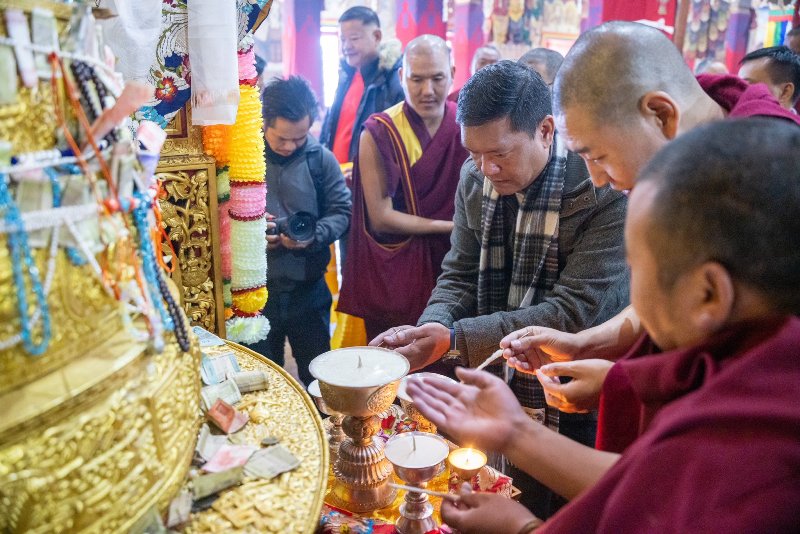
The first-ever international conference began with the sacred Mandala offering and prayers at the historic Tawang Monastery.
Tsangyang Gyatso, the sixth Dalai Lama, is known for his spiritual wisdom and celebrated poetic works.
Khandu said the conference was a “blessed beginning to honour his timeless spiritual and cultural legacy”.
“Born in 1683, in the 17th century, His Holiness continues to inspire humanity through his timeless teachings, poetry, and compassion. May the light of the Sixth Dalai Lama guide humanity forever,” the chief minister said.
The first-of-its-kind four-day conference brings together leading researchers in Tibetan literature, Buddhist studies, arts, history, and anthropology from premier institutions across India and abroad, officials said.

Hosted by the state Karmik and Adhyatmik Affairs department, the Thubten Shedrubling Foundation, and the Centre for Cultural Research and Documentation (CCRD), the conference aims to critically examine the multifaceted legacy of the sixth Dalai Lama (1683–1706/46), a figure whose life and writings have profoundly shaped Tibetan intellectual and spiritual history.
Despite the complexities surrounding his brief and extraordinary life, Gyalwa Tsangyang Gyatso left behind a remarkable body of poetic works composed primarily in vernacular Tibetan. His verses, often meditations on impermanence, exile and spiritual longing, continue to resonate globally.
ALSO READ: Arunachal Pradesh: Mechukha to host Asian Qualifier for Adventure Racing World C’ship 2027
A representative of the Thubten Shedrubling Foundation said that Gyalwa Tsangyang Gyatso’s life served as a bridge between the spiritual and the secular, and that his poetry stood as a testament to the enduring power of human expression amid historical turmoil.