








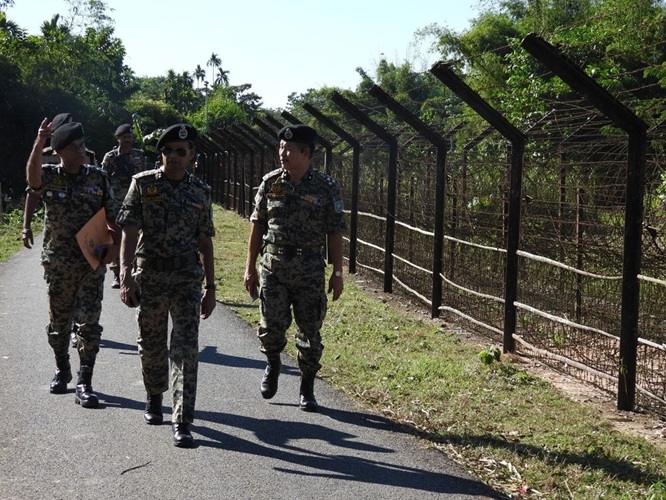
Agartala: Security has been stepped up along sensitive stretches of the India-Bangladesh border in Tripura after intelligence inputs flagged possible movement of cadres belonging to two Bangladesh-based armed groups — the Parbatya Chattagram Jana Samhati Samiti (PCJSS) and the United People’s Democratic Front (UPDF), officials said on Saturday.
Acting on inputs received from the Border Security Force (BSF), the District Magistrate of Gomati district, Rinku Lather, imposed a night curfew in select border areas under the Karbook sub-division to prevent infiltration and maintain public order.
The curfew, enforced under Section 163 of the Bharatiya Nagarik Suraksha Sanhita (BNSS), 2023, will remain in effect from 6 pm to 6 am until February 28.
The district administration said the measures were taken in view of apprehensions that militants, along with Bangladesh nationals, Rohingyas and members of extremist outfits, could attempt stealthy infiltration across the international border with the intent to carry out criminal activities, smuggling and acts that could disturb peace.
Under the curfew order, carrying firearms, lathis or other weapons has been prohibited, except for personnel of the police, CRPF and BSF deployed on duty.
Government officials and security personnel have been exempted from the restrictions.

Residents living within 300 metres of the international border have also been excluded from the curfew provisions, the notification said.
Tripura shares an 856-km-long international border with Bangladesh and is surrounded by the neighbouring country on three sides, making it vulnerable to cross-border crimes and illegal movement.
Gomati and Dhalai districts in particular share borders with the Chittagong Hill Tracts (CHT) region of southeast Bangladesh, which has witnessed prolonged unrest.
The latest security alert comes against the backdrop of an incident in June last year, when Tripura Police detained 13 members of the PCJSS, including two women, after they reportedly crossed into India from Bangladesh.
Sources said the group had sustained injuries during armed clashes with a rival faction in Panchari in the CHT and entered Indian territory through Raishyabari in Dhalai district for medical treatment.
ALSO READ: Skywatchers in for treat as Paush Purnima coincides with ‘Wolf Supermoon’
The PCJSS was formerly associated with the ‘Shanti Bahini’, an armed group that waged a long insurgency demanding a sovereign Chittagong Hill Tracts for indigenous communities such as Chakmas and Mogs.
The conflict formally ended with the signing of the Chittagong Hill Tracts Peace Accord between the PCJSS and the Bangladesh government on December 2, 1997, though tribal groups have repeatedly alleged that key provisions of the accord remain unimplemented.
Reports of renewed tension in the CHT have surfaced following political developments in Bangladesh last year, with tribal organisations alleging attacks on indigenous communities by security forces and illegal settlers.
Indian Chakma leaders have also renewed demands for the full implementation of the 1997 peace accord to ensure the protection of tribal populations in the region.