










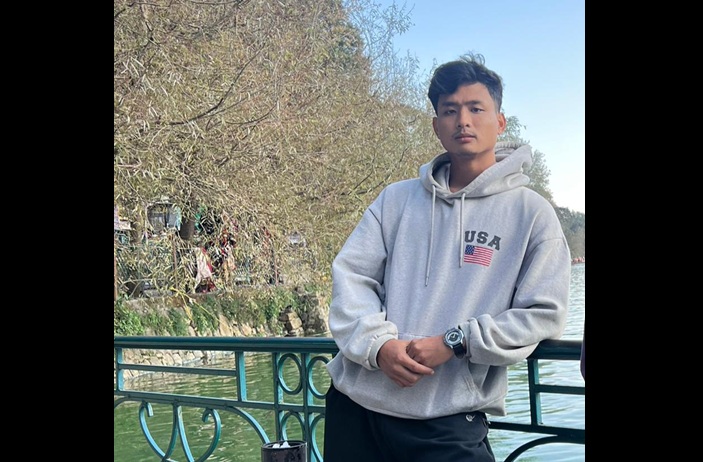
The Supreme Court of India on Wednesday disposed of a public interest litigation (PIL) seeking nationwide guidelines to address racially motivated violence against citizens from the North-Eastern states, following the killing of a Tripura student in Uttarakhand.
A Bench headed by Chief Justice of India Surya Kant described the incident as “unfortunate” and said the concerns raised in the petition should be taken up with the Attorney General for India, the highest legal authority of the Union government, instead of being pursued through judicial directions at this stage.
The Bench, also comprising Justices Joymalya Bagchi and Vipul Pancholi, observed that the issues raised involved larger policy considerations and institutional mechanisms.
“At this stage, we deem it appropriate that the issues ought to be brought before the competent authority through the good office of the learned Attorney General,” the court said while closing the case.
The PIL had sought the framing of pan-India guidelines to tackle what it described as a “continuing constitutional failure” in addressing hate crimes and racially motivated violence, particularly against people from the North-East.
It argued that despite new criminal laws such as the Bharatiya Nyaya Sanhita, 2023, and the Bharatiya Nagarik Suraksha Sanhita, 2023, there was still no formal legal recognition of racial or hate crimes, no requirement to record bias motivation at the FIR stage, and no specialised mechanisms for investigation or victim protection.

During the hearing, the petitioner, advocate Anoop Prakash Awasthi, urged the court to consider at least creating dedicated grievance redressal mechanisms in educational institutions to deal with identity-based discrimination.
He described the issue as widespread and deeply rooted in everyday social behaviour.
However, the court expressed reservations about developing region-specific legal frameworks.
The Bench cautioned that such an approach could deepen regional identities rather than strengthen national unity, observing that India’s federal structure should reinforce unity instead of encouraging identification based on regions.
The petition was filed in the backdrop of the killing of Angel Chakma, a final-year MBA student from Tripura, who was allegedly assaulted in Dehradun in December 2025.
ALSO READ: Army, IAF launch massive operations to contain forest fires in Arunachal, Nagaland
According to the complaint, Chakma was attacked in the Selaqui area after an altercation with a group of youths who allegedly hurled racial slurs before assaulting him with sharp objects.
The plea highlighted Chakma’s last recorded words during the confrontation. “We are not Chinese… We are Indians. What certificate should we show to prove that?” — describing them as a tragic reflection of the struggle for constitutional belonging faced by many citizens from the North-East.
It further argued that such crimes are routinely treated as ordinary offences, leading to the erasure of racial motive and dilution of their constitutional significance.
Citing earlier incidents, including the killing of Nido Taniam in 2014, the petition claimed that the death of Angel Chakma was part of a long-standing pattern of racial violence, not an isolated case.
While declining to issue judicial guidelines, the Supreme Court indicated that the concerns raised deserved serious institutional consideration, directing the petitioner to place the matter before the Attorney General for appropriate action at the policy and administrative level.