










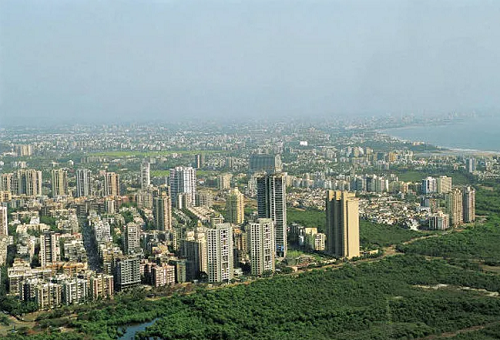
India’s urban story is unfolding at a remarkable pace. Over the past few decades, the country has witnessed a steady movement of people, capital, and economic activity toward cities. Urbanization has increasingly become a central driver of economic growth, social transformation, and infrastructure development.
According to official estimates, India already has more than 7,000 cities and towns, with an urban population exceeding 377 million in 2011—about 31 percent of the total population. This share is expected to grow substantially in the coming decades as migration continues and economic opportunities increasingly concentrate in urban centres.
However, this rapid urban transition has brought with it a formidable challenge: the enormous demand for infrastructure. Roads, parks, housing, schools, water systems, drainage networks and public spaces must all expand to accommodate the growing urban population. Unfortunately, most Urban Local Bodies (ULBs) in India operate with limited fiscal capacity and narrow revenue bases.
At the same time, acquiring land for public purposes—such as road widening, urban amenities or environmental protection—is often a costly and time-consuming process. Land prices in rapidly expanding cities make traditional acquisition financially burdensome for municipal authorities.
Recognizing these constraints, policymakers have increasingly explored innovative mechanisms to mobilize resources for urban development. One such mechanism emerged prominently in the Value Capture Finance (VCF) Policy Framework released by the Ministry of Housing and Urban Affairs (MoHUA) in 2017.
The central idea of value capture is simple yet powerful: public investment in infrastructure often increases surrounding land values, and governments should capture part of this increase to finance further development. Among the several tools proposed under this framework—such as betterment levies, development charges and land pooling—the concept of Transferable Development Rights (TDR) stands out as a particularly creative instrument.

Transferable Development Rights allow the “development potential” of land to be separated from the land itself and transferred to another location. When land is required for public purposes—such as roads, parks or heritage preservation—the owner may surrender it to the planning authority without immediate monetary compensation. In return, the authority issues a Development Rights Certificate (DRC) granting the owner the right to construct additional built-up area elsewhere or sell that right to another developer. This additional development potential is typically expressed in terms of Floor Area Ratio (FAR) or Floor Space Index (FSI).
In essence, TDR converts development rights into a tradable commodity within the urban land market. The original parcel from which the rights originate becomes a “sending zone,” usually an area where development must be restricted for planning or environmental reasons. The rights are then utilized in a “receiving zone,” where higher density development is permitted. Through this mechanism, governments can secure land for public purposes without immediate cash payments while landowners retain economic value through the sale or use of development rights.
The intellectual roots of TDR can be traced to early twentieth-century urban planning in the United States. New York City pioneered the idea by allowing unused “air rights” from one property to be transferred to another. Over time, the system evolved into a broader planning instrument used to preserve heritage buildings, protect agricultural lands, and manage urban density.
Other global cities adopted similar models, adapting them to local planning contexts. For instance, São Paulo in Brazil developed an innovative variant known as CEPACs—certificates of additional construction potential—which could be sold to developers and used to finance infrastructure projects. Curitiba, another Brazilian city, used TDR creatively to protect flood-prone riverbanks by converting them into parks rather than building costly concrete flood defences.
India’s engagement with TDR began in the 1990s, with Mumbai emerging as the pioneering laboratory. Constrained by geography and extremely high land values, Mumbai needed innovative ways to acquire land for infrastructure without massive fiscal outlays. The Maharashtra Regional and Town Planning Act provided the legal framework for granting development rights against land surrendered for public purposes.
Under the city’s Development Control Regulations, landowners who gave up land for roads, parks or amenities received DRCs representing additional buildable area that could be used elsewhere in the city or sold in the open market. Over time, Mumbai’s TDR market expanded significantly, supporting slum rehabilitation, road widening and heritage preservation projects.
Following Mumbai’s experience, several other Indian cities experimented with the mechanism. Ahmedabad introduced TDR within the framework of the Gujarat Town Planning and Urban Development Act, employing it for heritage conservation, slum redevelopment and public housing projects. Hyderabad adopted a TDR policy through its building rules, using it particularly for road widening, conservation of lakes and protection of heritage structures. In each case, the underlying logic remained similar: instead of compensating landowners entirely through cash payments, governments provided tradable development rights that could be monetized in the real estate market.
In Assam, the concept of Transferable Development Rights (TDR) has been introduced relatively recently as part of the state’s effort to adopt modern urban planning tools and reduce the financial burden of land acquisition for public infrastructure.
The Government of Assam notified a state-level TDR Policy in 2022 under the framework of the Assam Town and Country Planning Act, 1959, enabling planning authorities and Urban Local Bodies to compensate landowners through development rights rather than direct cash payments. Under this system, when land is surrendered free of cost for public purposes—such as road widening, creation of public amenities, protection of wetlands or other environmentally sensitive zones—the landowner receives a Development Rights Certificate (DRC) representing additional Floor Area Ratio (FAR) that can be utilized on another plot or sold to developers.
The system has first been operationalised in the Guwahati Metropolitan Development Authority (GMDA) area, where TDR certificates are being issued to facilitate planned urban expansion while protecting ecologically sensitive areas. By allowing landowners to monetize development potential instead of losing land without compensation, the TDR framework seeks to balance urban growth, environmental conservation and infrastructure development in Assam’s rapidly expanding cities.
Also Read: From Scandal to Sovereignty: India’s audacious AI Summit amid controversy and global convergence
The importance of such instruments becomes even clearer when we consider the projected transformation of India’s urban landscape by 2030. Demographic and economic trends indicate that nearly 42 percent of India’s population may live in urban areas by that time, compared to 31 percent in 2011. This transition will coincide with the expansion of the working-age population and a shift toward service-sector employment. Such structural changes will intensify the demand for urban infrastructure and housing. Yet historically, investments in the urban sector have remained relatively modest—around 1 percent of GDP—far below the scale required to support this transformation.
Traditional funding channels—central grants, state transfers and municipal budgets—are unlikely to be sufficient. Consequently, cities must increasingly rely on innovative financial mechanisms, including municipal bonds, public-private partnerships and value capture tools such as TDR. By converting land value into a financial resource, these mechanisms can significantly reduce the fiscal burden on public authorities while enabling faster project implementation.
Despite its promise, however, the TDR system is not without challenges. One of the major concerns relates to market volatility. Since the monetary value of development rights depends on demand in the real estate market, landowners may face uncertainty regarding the timing and price of their DRC sales. Another challenge lies in urban planning itself. If receiving zones are not carefully identified, excessive concentration of development rights could strain infrastructure, worsen congestion or distort the urban form. Therefore, a successful TDR policy requires careful calibration of sending and receiving zones, transparent regulatory frameworks and robust monitoring mechanisms.
Institutional capacity also plays a crucial role. Municipal authorities must maintain accurate spatial databases, track the issuance and utilization of development rights, and ensure that the infrastructure capacity of receiving areas is adequate to support higher density. Establishing digital platforms or “TDR banks” can improve transparency by connecting buyers and sellers while reducing dependence on intermediaries. At the same time, awareness campaigns and technical support for landowners—especially smaller property holders—are necessary to build confidence in the system.
Also Read: Strangers at Home
Looking ahead, the future of Transferable Development Rights in India will depend on how effectively these policy and institutional challenges are addressed. A clear legal framework integrated into town planning legislation, consistent building regulations and stable policy signals are essential to attract participation from both landowners and developers. Strategic alignment with other urban initiatives—such as transit-oriented development, affordable housing programmes and smart city projects—can further enhance the effectiveness of TDR as a financing tool.
Equally important is the need for transparency and accountability. Governments must ensure that TDR issuance, valuation and utilization are recorded in publicly accessible digital systems. Regular monitoring and evaluation will help prevent speculative hoarding or misuse while maintaining confidence in the market. In addition, integrating TDR with broader value capture strategies can enable cities to finance major infrastructure projects without excessive reliance on public funds.
Ultimately, Transferable Development Rights represent more than a technical planning instrument; they embody a new philosophy of urban governance. By recognizing land value as a shared public resource and by aligning private incentives with public goals, TDR offers a pathway toward more sustainable and equitable urban development. As India moves toward an increasingly urban future, this innovative mechanism—if implemented with foresight and transparency—could become one of the most powerful tools for shaping cities that are both economically vibrant and socially inclusive.