










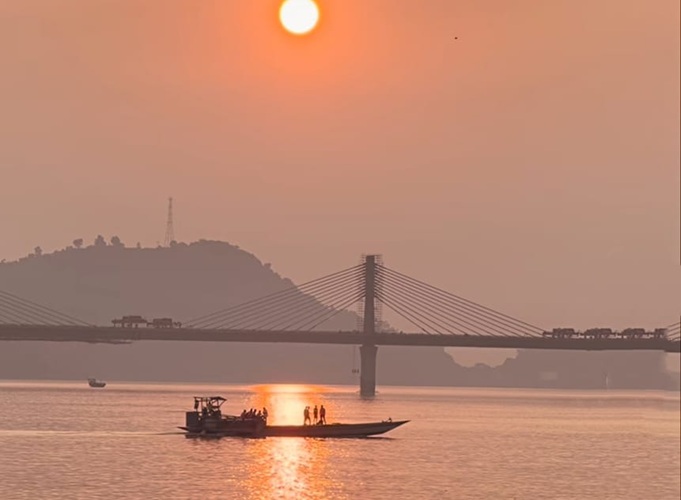
Northeast India is often described as the country’s “Ashtalakshmi” — eight states endowed with natural abundance, cultural richness and immense strategic significance. The region forms a critical bridge between New Delhi and Southeast Asia.
Yet for decades, this promise has remained only partially realised. Inadequate infrastructure, weak industrialisation, high unemployment and fragile connectivity have constrained its growth trajectory.
Today, however, the Northeastern region of India stands at a decisive moment. Energy — in its multiple forms — is emerging as the central pillar that could reshape the region’s development pathway.
But energy expansion in the region cannot follow a conventional template. It must be deeply aligned with climate realities, ecological sensitivities and the lived experiences of its communities.
Energy as a Development Multiplier
Energy is not merely about lighting homes. It powers irrigation pumps, cold storage chains, small enterprises, hospitals, digital networks and tourism infrastructure.

Reliable and affordable energy can catalyse agriculture, manufacturing and services simultaneously. For a region long constrained by remoteness and terrain, energy can become the great equaliser.
However, the North-East is not just economically underdeveloped; it is also one of India’s most climate-vulnerable regions.
The region forms part of the Eastern Himalayan landscape — a globally recognised biodiversity hotspot and ecological transition zone.
Extensive forests, hill systems and floodplains provide carbon sequestration, hydrological regulation and slope stability. These ecological services are not peripheral — they are foundational to India’s environmental security.
The challenge, therefore, is not whether to develop energy resources, but how.
The Hydropower Promise — and Its Paradox
If one resource defines the North-East, it is water. The Brahmaputra River and its tributaries flow through vast valleys and gorges, offering enormous hydropower potential.
According to the Central Electricity Authority, the region has more than 60 GW of hydropower potential — one of the largest untapped reserves in the country.
Yet, only a small fraction ( ~3 GW) of the potential has been developed so far.
Projects such as the 2 GW Subansiri Lower Hydroelectric Project, which resumed construction in October 2019 following clearance from the National Green Tribunal, is expected to significantly enhance production of green electricity for the region as well as India, when all the 8 x 250 MW units will be operational.
Currently, one unit is operational with full commissioning of all units expected by 2027-28. If all other ongoing and proposed projects are realised, the North-East could transition to a power-surplus region, supplying electricity both within and beyond its boundaries.
However, hydropower in the Himalayas carries inherent risks. The Eastern Himalayas are seismically active, prone to landslides and increasingly exposed to extreme weather events.
Climate change is intensifying rainfall variability and accelerating glacier and snowmelt upstream in the Himalayas.
In the Brahmaputra basin, floods are becoming more intense and prolonged, while riverbank erosion is displacing communities and eroding agricultural land.
Furthermore, large hydro projects, if poorly designed or implemented without cumulative basin-level assessments, may amplify these vulnerabilities.
Reservoir-induced seismicity, sedimentation challenges and downstream flow alterations must be rigorously evaluated.
Transparent environmental impact assessments and meaningful community consultation are not procedural formalities — they are essential safeguards.
Hydropower can indeed be transformative. But in the North-East, it must be climate-informed, geology-sensitive and socially negotiated.
From Generation to Transmission: The Grid Imperative
Building generation capacity alone will not deliver prosperity. Historically, the region has struggled with weak transmission corridors and high distribution losses.
Even where electricity is available, supply reliability has often been inconsistent.
Strengthening inter-state and intra-state transmission infrastructure is therefore critical. Modern substations, real-time monitoring, smart grids and improved maintenance can reduce technical losses and enhance financial viability of utilities. Without grid modernisation, surplus generation risks remaining stranded.
The region’s geography also presents an opportunity: it can serve as a gateway for cross-border electricity trade. Cooperation with neighbouring countries such as Bhutan and Bangladesh can convert the North-East into a regional energy hub.
Power trade is not merely about electrons; it strengthens economic interdependence, fosters stability and creates revenue streams that can be reinvested locally.
However, grid expansion must also account for climate resilience. Transmission lines crossing landslide-prone hills or floodplains must be engineered for extreme weather conditions.
Climate-proofing infrastructure at the design stage is far more cost-effective than post-disaster reconstruction.
Electrification to Reliability: The Quality Question
The region has made notable strides in household electrification during the last decade and a half.
Nearly all villages now have grid connectivity and households are connected with electricity supply. But electrification is only the first step. The real test lies in quality, affordability and continuity of supply.
Farmers require stable electricity for irrigation and post-harvest management. Small enterprises depend on predictable power to manage costs and remain competitive.
Tourism — a sector with immense potential in states like Meghalaya and Sikkim — relies on reliable hospitality infrastructure.
Digital education and telemedicine, crucial in remote hill districts, cannot function with erratic supply.
Improving utility finances, reducing aggregate technical and commercial losses, and leveraging digital technologies will be central to the next phase of reform. The focus must shift from access metrics to service quality indicators.
Clean cooking transitions have also improved, with greater adoption of LPG during the last decade primarily under the PM Ujwala Yojana.
The health and environmental gains are substantial. Yet refill affordability and last-mile logistics remain pressing concerns in remote habitations. Policy support must ensure that progress in clean cooking is sustained.
Oil and Gas: A Continuing Role
Long before renewable energy transitions became central to global energy discussions, the North-East was a vital hub in India’s hydrocarbon story.
Assam remains synonymous with India’s oil industry and, collectively with Tripura and parts of Arunachal Pradesh, contributes a significant share of the country’s crude oil and natural gas output.
The Hydrocarbon Vision 2030 for the region lays out a roadmap to unlock untapped reserves, attract investments, and develop value chains — from extraction to refining to downstream industries.
Infrastructure such as the North-East Gas Grid is expanding cleaner energy access to industries, transport and households.
While India is committed to reducing carbon emissions, oil and gas will continue to play a transitional role.
Hydrocarbon infrastructure not only ensures energy security during the transition period but also supports industrial corridors and logistics networks critical to economic growth.
The expansion of oil and gas infrastructure has multiplier effects: petrochemical clusters, fertiliser plants, city gas distribution networks and compressed natural gas corridors can catalyse industrialisation in a region that has long remained industrially underdeveloped.
Decentralised Renewables: Energy for the Last Mile
While large hydropower and hydrocarbons dominate headlines, decentralised renewable systems may prove equally transformative.
Solar rooftop installations, mini-grids and biomass-based systems can provide reliable power to remote villages where managing grid is costly or technically challenging.
The region’s rich biomass resources — including bamboo and agricultural residues — offer opportunities for localised energy generation and rural employment.
Decentralised systems also enhance resilience: when central grids fail due to floods or landslides, local generation can sustain essential services. Such models also align well with community-centric development.
Critical Minerals: Strategic Opportunity, Ecological Caution
The region is also endowed with critical raw materials such as graphite and rare earth elements — vital for electric vehicles, batteries and clean energy technologies. In a world racing toward energy transitions, these minerals carry strategic value.
Yet mining in the fragile Eastern Himalayas demands extreme caution. Without stringent environmental safeguards and transparent governance, mineral extraction could undermine ecological stability and social cohesion.
Any mineral strategy must prioritise benefit-sharing with local communities and strict compliance with environmental norms.
Climate Risks and Development Pathways
The broader question is developmental direction. The Brahmaputra valley, particularly in Assam, faces recurrent flooding with increasing intensity.
Riverbank erosion displaces thousands annually. Hill states confront landslides triggered by extreme rainfall.
These are not isolated events, but systemic risks amplified by climate change.
Development planning must therefore integrate climate projections, disaster risk assessments and ecosystem services valuation. Infrastructure — whether dams, highways or transmission lines — must be evaluated for long-term resilience.
Cumulative impact assessments across river basins will be important.
Equally important is the integration of indigenous knowledge systems. Communities across the hill states possess deep understanding of water management, slope stability and sustainable agriculture.
Formal planning frameworks should incorporate these insights rather than overlook them.
A Balanced and People-Centric Roadmap
The region has all the ingredients to emerge as a dynamic energy hub: With expansive hydropower potential, established hydrocarbon resources, emerging renewable capacities and critical mineral prospects, the region’s energy landscape is poised for transformation.
Yet this energy future must be inclusive, equitable and ecologically responsible.
For policymakers, this implies moving beyond siloed sectoral planning.
Energy policy must intersect with climate adaptation, disaster management, biodiversity conservation and livelihood strategies.
For practitioners, it demands robust engineering, transparent governance and continuous community engagement.
The region’s transformation will not come from megawatts alone. It will come from aligning energy expansion with climate realities, ecological thresholds and human aspirations.
If planned judiciously, energy can shift the narrative of the Northeast — from a peripheral frontier to a resilient growth engine.
Energy, in all its forms, must therefore be deployed not merely as a commodity but as a strategic enabler of sustainable development, regional peace and shared prosperity.
(Dr. Debajit Palit is the Centre Head of the Centre for Climate Change and Energy Transition at Chintan Research Foundation. Views expressed are personal)