










In the pre-dawn mist of December 20, 2025, the rhythmic clatter of the Sairang-New Delhi Rajdhani Express was shattered by an impact that resonated far beyond the Jamunamukh-Kampur railway section.
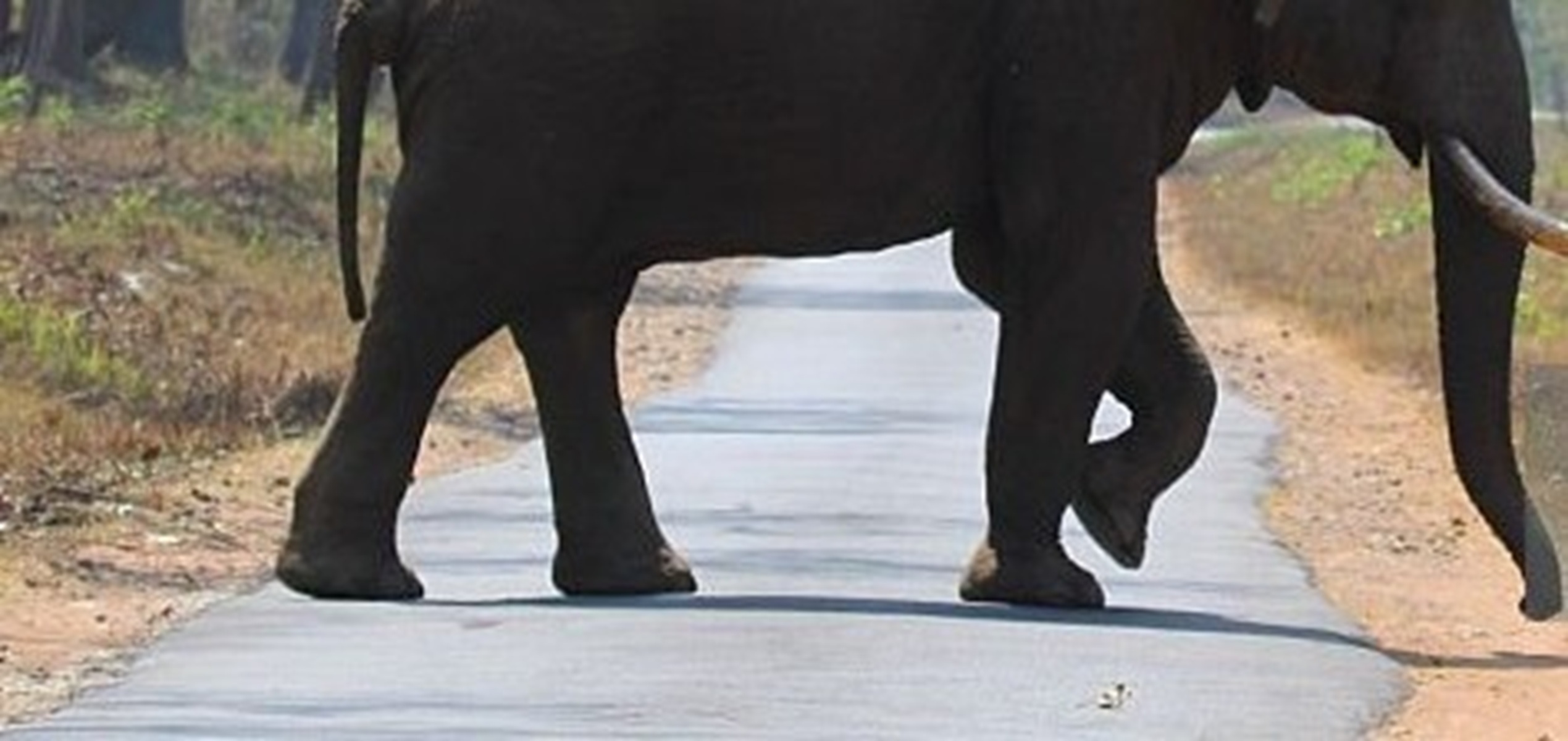
At 2:17 am, Train No. 20507 collided with a massive herd of approximately one hundred wild Asian elephants, leaving a trail of devastation that claimed the lives of seven to eight adult elephants and left a young calf injured.
While the six hundred passengers on board escaped physical harm, the derailment of the locomotive and five coaches served as a violent reminder of the collision between India’s rapid infrastructure expansion and its ancient wildlife heritage.
The site, located just 126 kilometres from Guwahati in the Hojai district, became a grim tableau of scattered remains and mangled steel, forcing the cancellation and regulation of dozens of trains across the Northeast Frontier Railway (NFR).
This tragedy was not merely an accident; it was a symptom of a systemic failure occurring at a moment of profound symbolic irony.
Just hours after the collision, Prime Minister Narendra Modi arrived in Assam to inaugurate the new terminal of the Lokapriya Gopinath Bardoloi International Airport—a four-thousand-crore-rupee marvel featuring “Bamboo Orchids” architecture inspired by the very biodiversity that was, at that same moment, being cleared from the railway tracks.

The juxtaposition of a nature-themed airport terminal with the deaths of a flagship species highlights a critical gap between the aesthetic celebration of nature and the substantive protection of living ecosystems.
While policy rhetoric often leans into the “inspiration” of Assam’s wildlife, the ground reality is a growing conservation crisis.
Between 2009 and 2024, at least 186 elephants have died on Indian railway tracks, with the Northeast Frontier Railway zone accounting for 65 deaths between 2014 and 2022.
This region represents 35-40% of all documented railway-related elephant deaths nationally, making it a critical hotspot for extinction.
The Jamunamukh-Kampur section, though not officially designated as an elephant corridor by authorities, is clearly a vital artery for movement, as evidenced by the sheer size of the herd involved in the Rajdhani collision.
This discrepancy between official maps and the lived reality of wildlife suggests that our identification of protection zones is dangerously outdated, failing to account for the actual foraging and migration patterns of these majestic animals.
The root of this crisis lies in the fragmentation of habitat by linear infrastructure. India’s railway network functions as an impenetrable physical barrier, cutting through forests where elephants have roamed for millennia.
These giants require extensive corridors—often stretching over fifty kilometres annually—to reach seasonal food and water.
When a high-momentum express train meets a herd in a region lacking underpasses or overpasses, especially under the shroud of dense winter fog and low visibility, the result is almost inevitably lethal.
Despite the existence of Intrusion Detection Systems (IDS) that use artificial intelligence to alert loco pilots of animals on the tracks, coverage remains a patchwork; only 141 kilometres of the NFR track currently benefit from this technology, leaving 926 kilometres of high-risk territory in various stages of implementation.
The path forward requires a transition from reactive mourning to proactive accountability. The current “accountability vacuum” allows procedural breaches—such as ignoring speed restrictions during low-visibility hours—to go unpunished.
A robust framework would see digital speed recording devices mandating compliance in habitat zones, with strict financial and disciplinary penalties for loco pilots, station masters, and divisional officers.
A proposed penalty structure could include fines of up to Rs. 1,00,000 and suspension for negligent operations that lead to collisions. Furthermore, the implementation of structural interventions is no longer optional.
A comprehensive national plan has already identified 705 necessary measures across 127 railway stretches, including 65 underpasses that must accommodate the four-meter height of an elephant, as well as overpasses, ramps, and 300+ “honey bee” buzzer devices.
The cost of such measures, such as the Rs. 208 crore plan for comprehensive IDS deployment, is a modest fraction of the billions spent on modernizing terminals and fertilizer plants.
Global models provide a blueprint for what is possible when political will aligns with ecological necessity.
The Terai Arc Landscape initiative, spanning India and Nepal, has successfully restored 165,000 acres of habitat, supporting the recovery of Bengal tigers, elephants, and rhinoceroses through landscape-level integration.
Similarly, the European Green Belt Initiative demonstrates how railway infrastructure can be integrated within broader habitat restoration across twenty-four countries.
Closer to home, the Sawantwadi-Dodamarg Wildlife Corridor in the Western Ghats showcases how forests, agricultural land, and infrastructure can coexist through the use of dedicated crossing infrastructure, though organisations like Vanashakti intervened to prevent the mining leases of the area from functioning.
These successes suggest that the technology exists and the methods are proven; the primary obstacle remains the implementation of these standards across all elephant habitat railway sections.
However, even the best engineering and technology face a burgeoning adversary: climate change.
The warming planet is acting as a “threat multiplier,” fundamentally altering the behaviour of Assam’s elephants.
Rising temperatures accelerate the evaporation of traditional waterholes and rivers, forcing elephants to travel much greater distances to locate freshwater sources.
This forced long-distance migration pushes herds into unfamiliar terrain and across railway lines at unusual times and locations.
Simultaneously, shifting vegetation patterns and the increased frequency of forest fires—projected to rise by 40-50% in Northeast India—destroy historical feeding grounds. Elephants are then driven to expand their range into agricultural areas and human settlements in a desperate search for food.
The Assam tragedy is a stark example of this cascading climate-wildlife-infrastructure triangle. Climate change drives habitat degradation, which triggers forced migration, eventually leading to infrastructure collisions.
ALSO READ: Arunachal Pradesh: Army, Galo body to organise pilgrimage expedition to Topo Gone
This pattern is mirrored in places like Chittoor, Andhra Pradesh, where climate-driven food scarcity pushed elephants to move across state lines, leading to thousands of acres of crop damage and dozens of deaths due to illegal electrified fencing.
In Assam, the compression of available space due to human development and climate change means elephants are trapped in a shrinking landscape where every crossing is a gamble.
Ultimately, the tragedy of the Rajdhani Express is a harbinger of a future where human-animal conflict is intensified by ecological instability.
As monsoon patterns shift and water scarcity in South Asia is projected to increase by 20-30% by 2050, the “collision” will not just be between a train and a herd, but between a changing climate and our static methods of conservation.
We cannot claim to celebrate biodiversity through architecture while presiding over the steady erasure of the species that inspired it.
The question is no longer whether we have the tools to prevent these deaths, but whether we possess the priority to integrate climate adaptation into our national development goals.
Without a landscape-scale restoration of corridors and a rigid enforcement of safety protocols, the “Bamboo Orchids” of our infrastructure will remain a hollow tribute to a heritage we failed to protect.
Every week of delay without action increases the probability that another herd will meet the same tragic fate.
An Integrated Action Plan with the primary objective of zero elephant fatalities due to railway collisions by 2030 through the seamless integration of artificial intelligence, structural engineering, and climate-adaptive habitat management should be the priority of the government.