










Arunachal Pradesh occupies a crucial place in India’s development vision. It is simultaneously resource-rich and ecologically irreplaceable, strategically critical yet institutionally cautious, development-oriented but environmentally fragile.
As India’s clean energy transition accelerates and critical minerals assert themselves as a cornerstone of energy security, such duality is no longer just on the fringes of debate but quite operational.
The recent signing of the Composite Licence for the Phop Graphite and Vanadium block in Yazali circle of Keyi Panyor district between Oil India Limited (OIL) and the Government of Arunachal Pradesh marks a decisive moment for the state and country.
Executed in the presence of senior state and central government officials, with the Centre for Earth Sciences and Himalayan Studies (CESHS), an autonomous institution under the Department of Science and Technology of the Government of Arunachal Pradesh, joining as a 10% local partner, the agreement signals India’s intent towards securing domestic critical mineral assets.
Beyond resource development in a strategically sensitive border region, the initiative reflects a growing recognition of supply-chain resilience as a core pillar of energy security, particularly in light of concentrated value chain and mercurial geopolitical risks.
This development warrants careful examination, not merely as an exploration initiative, but as a test case for whether India can operationalise a systems-based, climate-informed, and ecologically cognisant approach to critical mineral governance.

Making Mineral Security Sustainable for Energy Security
Graphite and vanadium are not abstract commodities but foundational inputs for energy transition technologies.
While Graphite is used as anode material in lithium-ion battery across electric mobility, stationary energy storage systems; vanadium is used substantially for grid-scale decarbonisation through its application in vanadium redox flow batteries (VRFBs), which enable long-duration energy storage, renewable energy firming, and grid balancing – essential for resilient renewable landscape.
Recently, India’s first MWh-scale VRFB system of 3 MWh capacity was inaugurated by the Power Minister at NTPC Energy Technology Research Alliance in Greater Noida.
India possesses graphite reserves but the pace and scale of exploration is not sufficient to meet national demand.
As a result, the continued dependence on imported graphite as of 2024, is overwhelmingly dependent on China hovering around 90% of India’s total graphite imports. Vanadium tells a similar story.
Despite ~64,594 tonnes of reserves for vanadium pentoxide (oxide in use for energy transition) and successful auctions, India does not yet have an established domestic vanadium mining industry and depends on imports, particularly from China, or by-product recovery.
This exposes a structural vulnerability in India’s energy-transition ecosystem and mineral security framework owing to the growing single-country over-reliance.
Against this backdrop, energy security through mineral security becomes a prime-time discussion wherein, Arunachal Pradesh represents a rare convergence of geological endowment and strategic necessity.
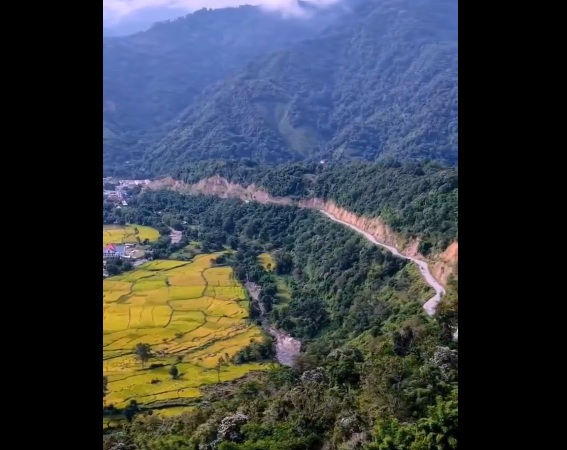
Yet Arunachal is not just another mining frontier. It lies within the Eastern Himalayas, one of the world’s most significant biodiversity hotspots, characterised by high endemism, fragile slopes, seismic sensitivity, and deeply interlinked ecological and social systems.
Past development experiences, particularly large hydroelectric projects and road expansions, have repeatedly been stalled or collapsed under the weight of ecological concerns, local resistance, and inadequate cumulative impact assessments.
Critical minerals now present a new development vector for the state, one that could complement existing revenues from hydropower while enhancing economic resilience.
But if pursued through extractive shortcuts, this opportunity risks repeating old mistakes under a new banner and thereby negatively impacting India’s efforts towards resilient supply chain and as also the state’s economic development.
Exploration Must Begin with Ecology, Not End with It
India’s mining governance has often treated environmental safeguards as an ex-post constraint rather than an ex-ante design principle.
This approach is no longer tenable, particularly in ecologically sensitive northeast region of India.
The recent experience of the Aravalli hills range is emblematic and instructive. Years of fragmented, state-specific mining regulations culminated in ecological degradation, forcing the Supreme Court to intervene through the Mine and Sustainable Mining (MPSM) framework.
MPSM’s central insight was simple but profound: mining must be governed through a unified, science-based, systems approach that maps permissible zones, ecologically sensitive areas, conservation-critical landscapes, and restoration priorities, before extraction begins.
Arunachal Pradesh requires a similar philosophy, adapted to eastern Himalayan realities.
A scientific climate-informed approach to mineral exploration must include cumulative impact assessments, ecological carrying capacity analysis, hydrological sensitivity mapping, and climate risk screening at the exploration stage itself.
Delaying these considerations until mining approvals are sought only increases project risk, public opposition, and long-term economic costs.
A stepwise approach may appear slow. In reality, it is the most effective strategy with shortest timeframe when measured over decades rather than quarters keeping local ecosystem and sustainability indicators in mind.
Minerals, Borders, and Neighbours
Arunachal Pradesh is also geopolitically exposed and economic activity in the region is inherently strategic.
China’s dominance over critical mineral processing and its demonstrated willingness to weaponise supply chains underscore the urgency of securing India’s own mineral frontiers.
Leaving the state’s mineral potential under-explored or institutionally weak creates strategic vacuums which are economic, administrative, and geopolitical in nature.
Responsible domestic exploration helps strengthen India’s sovereign presence in its border regions, embeds economic activity, and reinforces local institutions in ways that purely security-centric approaches cannot.
In this context, the presence of OIL, with field headquarters in Duliajan, Assam, is symbolically and substantively important.
A regionally rooted public sector enterprise with operational experience in sensitive geographies is better positioned to navigate the complex terrain of local engagement, ecological safeguards, and long-term stewardship.
Additionally, the inclusion of CESHS as a local partner with a 10% stake is a strong governance signal.
Local institutional participation strengthens social licence, enables contextual scientific input, and bridges the trust deficit that has historically plagued extractive projects in the Northeast India.
CESHS’s role in preliminary surveys, exploratory activities, and community liaison can help ensure that exploration is informed by regional ecological knowledge.
In tandem, their association with national level institutions such as the Ministry of Earth Sciences and organisations specialising in remote sensing and geospatial analysis should be systematically leveraged to develop a comprehensive, multi-layered mineral mapping exercise.
Such an approach would move beyond surface-level assessments towards high-resolution subsurface characterisation, integrating geological, hydrological, ecological, and climatic datasets.
A mapping and exploration framework grounded in inter-institutional collaboration and advanced scientific methodologies is critical to ensuring that exploration outcomes are credible, transparent, and defensible.
Robust, time-tested processes that can withstand scrutiny which will indubitably arise from regulatory authorities, scientific bodies, and civil society alike are essential to minimise delays, reduce contestation, and build long-term confidence in mineral development pathways.
In ecologically sensitive and strategically significant regions, scientific robustness is not merely a technical requirement anymore but a precondition for durable, policy-stable outcomes.
In the long run, this can offer replicable pathways for critical mineral governance in other sensitive regions of India.
Towards a Systems Approach for Arunachal’s Mineral Future
Arunachal Pradesh stands at an inflection point. Critical minerals can become a pillar of economic diversification and strategic resilience – but only if embedded within a systems-level governance framework.
Such a framework must integrate:
- Scientific exploration protocols aligned with climate and biodiversity risk
- Cumulative impact assessments rather than project-by-project clearances
- Clear zoning of no-go, conditional, and permissible mining areas
- Local institutional participation beyond token consultation
- Long-term restoration planning, not post-hoc mitigation
- Strategic oversight, recognising the borderland nature of mineral assets
India’s Aatmanirbhar initiatives cannot be built on extractive urgency alone.
True self-reliance lies in securing resources without eroding the ecological and social foundations on which long-term security rests.
While beginning with the public sector is a positive step, establishing a successful model can encourage private-sector investments in the northeast region, fostering economic development without compromising its ecological diversity.