










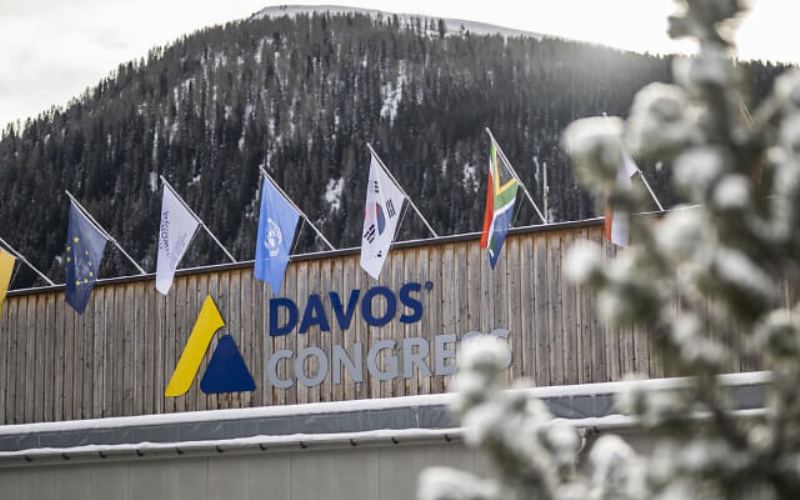
When Assam Chief Minister Himanta Biswa Sarma travels to Davos to attend the World Economic Forum (WEF) Annual Meeting with effect from 19th January to 23rd January, 2026, he does so as part of an unusually large Indian sub-national delegation. Alongside Assam, Indian states and state-led delegations represented at Davos include Maharashtra, Andhra Pradesh, Telangana, Madhya Pradesh, Karnataka, Gujarat, Jharkhand, Uttar Pradesh and Kerala. This widening of participation reflects a decisive shift in India’s economic diplomacy, where states are no longer passive implementers of national policy but active competitors and collaborators on the global investment stage.
The World Economic Forum itself has travelled a long distance since its modest beginnings. Founded in 1971 by German economist, engineer and academic Klaus Schwab as the European Management Forum, its original aim was narrowly focused: to expose European corporate leaders to modern American management practices. Over time, however, the Forum evolved in response to globalization, geopolitical change and technological disruption. In 1987, it adopted the name World Economic Forum, signalling its transition from a regional business conclave into a global platform that brings together business, government, academia and civil society. Today, it positions itself as the world’s leading institution for what it calls “multi-stakeholder governance”.
The WEF’s evolution mirrors broader changes in the global economy. In the 1970s and 1980s, it was primarily concerned with corporate competitiveness and management efficiency. The end of the Cold War, the rise of emerging economies and repeated global crises pushed it into a more political role. Davos became a place where heads of state, central bankers and corporate chiefs debated not only markets but also peace processes, development pathways and global risks. In recent years, themes such as climate change, digital transformation, artificial intelligence, supply-chain resilience and inequality have dominated its agenda, reflecting the complexity of today’s interconnected world.
The Forum generates business acumen and global awareness through several mechanisms. The annual Davos meeting is the most visible, convening around 2,500 carefully selected participants for structured sessions, informal interactions and bilateral meetings. Beyond Davos, the WEF produces influential research reports such as the Global Competitiveness Report and the Future of Jobs Report, which shape both corporate strategy and public policy. It also runs thematic and regional centres that work year-round on issues ranging from the Fourth Industrial Revolution to sustainable development. These platforms allow ideas discussed in Davos to be refined, tested and, in some cases, implemented through public-private partnerships.
Participation at the WEF is deliberately diverse, though not without controversy. The core constituency consists of around a thousand large multinational corporations that are members or strategic partners of the Forum. Alongside them are heads of state and government, ministers, central bank governors, leaders of international organisations, academics, civil society representatives, and selected media and cultural figures. This mix is intended to encourage dialogue across sectors that rarely interact on equal terms. Critics argue that corporate interests dominate, but the Forum has increasingly sought to broaden participation to include labour groups, youth leaders and non-governmental organisations.
Institutionally, the WEF is not an ad hoc gathering but a permanent organisation with its own secretariat. Its headquarters are located in Cologny near Geneva, Switzerland, where a professional staff manages research, events and initiatives throughout the year. Governance is overseen by a Board of Trustees drawn from global leaders in business, politics and civil society, while day-to-day operations are run by a Managing Board headed by the President and CEO. This structure gives the Forum continuity and the capacity to pursue long-term projects rather than one-off discussions.

The Forum’s funding model is equally distinctive. It does not rely on government grants. Instead, its primary revenue comes from membership and partnership fees paid by large corporations, supplemented by event participation fees, targeted donations for specific initiatives, and income from publications and services. This financial independence allows the WEF to convene powerful actors without being formally tied to any single government, though it also reinforces perceptions of elite influence.
A recurring question about Davos is whether its declarations lead to real-world action. While many discussions remain at the level of ideas and networking, there are notable examples where WEF-facilitated initiatives have translated into tangible outcomes. Global alliances on trade facilitation have helped reduce border delays and costs in developing countries. Industry-government collaborations on digital technology have enabled small and medium enterprises to adopt advanced manufacturing tools. Climate-focused coalitions have mobilised corporate commitments to purchase and scale emerging green technologies. These examples suggest that while the WEF itself does not implement policy, it can act as a catalyst that aligns incentives and accelerates action.
Against this backdrop, Assam’s participation acquires particular significance. For the state, Davos represents more than symbolic visibility. It is an opportunity to present Assam as an investment destination with distinctive strengths: its dominance in tea and indigenous silk, its rich biodiversity and tourism potential, its strategic location as India’s gateway to Southeast Asia, and its emerging role in logistics, inland waterways and digital services. Engagement at the WEF allows Assam’s leadership to interact directly with global investors, technology providers and development institutions that would otherwise be difficult to access.
The potential impact on Assam’s economic environment lies in several areas. First, targeted foreign direct investment can bring capital, technology and market access, especially in agro-processing, textiles, tourism and renewable energy. Second, exposure to global best practices can inform state-level policy reforms in ease of doing business, skills development and sustainable infrastructure. Third, positioning Assam within global supply-chain diversification strategies can help integrate the state into international production networks at a time when companies are seeking alternatives and resilience.
At the same time, expectations must be realistic. Participation in Davos does not automatically translate into investment on the ground. Outcomes depend on sustained follow-up, administrative capacity, infrastructure readiness and policy stability. Competition among Indian states at Davos is intense, and more industrialised states enjoy structural advantages. For Assam, the real test will be whether conversations initiated in Switzerland are converted into concrete projects that generate employment, raise incomes and do so without compromising environmental and social balance.
ALSO READ: Between the Register and the Roll: When Proof Replaces Belonging in India’s Democracy
In sum, the World Economic Forum has evolved from a management seminar into a central arena of global economic dialogue, influential though imperfect. For India, and for Assam in particular, participation reflects a maturing engagement with globalization where states seek to shape their own destinies. If leveraged wisely, Assam’s presence at Davos can help reposition the state from the periphery of economic imagination to an active participant in global conversations, linking local aspirations with global opportunities.