










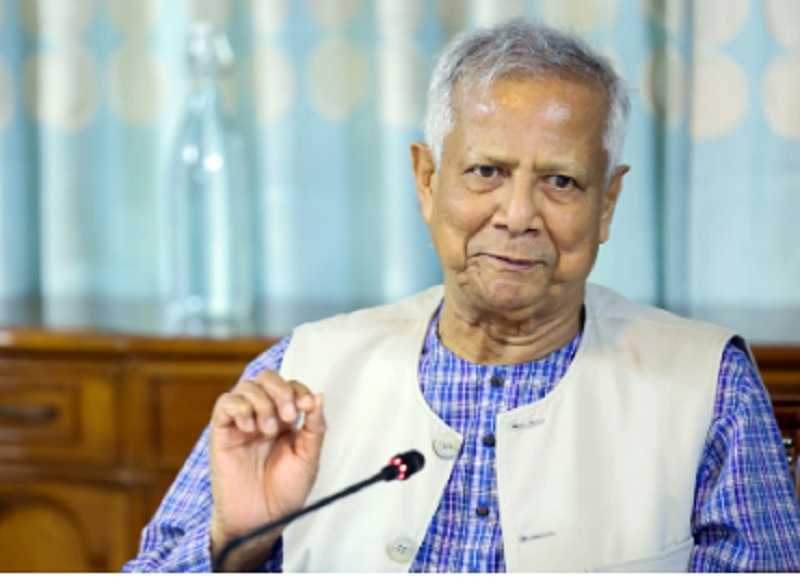
Osman Bin Hadi was a radical youth leader who emerged during the July 2024 uprising and served as a spokesperson of Inquilab Mancha, a post-July platform that accommodates protestors alongside the National Citizen Party (NCP). With an Islamic religious education background, Hadi had been in the news for over a year for hardline television appearances, incitement against journalists and political commentators, and attacks on symbols of the Liberation War. He was also known to espouse the idea of a “Greater Bangladesh” encompassing parts of India.
On December 11, the Muhammad Yunus Administration announced the election schedule for February 12, 2026. Hadi promptly declared that he would contest as an Independent Candidate from Dhaka-8, a constituency represented by BNP heavyweight, Mirza Abbas. The next day, in broad daylight, a motorcycle-borne assailant shot him point-blank in the head.
Video footage showed the shooter belonged to a Group, Hadi had been closely associated with. Subsequent inquiries revealed the assailant to be a Former low-level Awami League Student Leader, accused of armed robbery immediately after Hasina’s ouster in August 2024—and notably released on bail. This raises several troubling questions.
Since Hasina fled Bangladesh aboard a military aircraft, the Awami League has been relentlessly targeted. Hundreds of activists were killed in the immediate aftermath; nearly 50,000 reportedly fled to India. Senior and mid-level leaders are either jailed or in exile, with several deaths in custody. Even prominent industrialists linked to the Awami League have been imprisoned, their businesses destroyed, leaving tens of thousands unemployed.
Former Chief Justices, Senior Lawyers, Retired Bureaucrats, Police Officers, Professors, Editors and Journalists have been jailed on what are widely seen as fabricated murder charges. At least 300 journalists face criminal cases. Over the past 18 months, on an average, one senior journalist has been arrested every month on terror or murder charges. In a country where school children are detained for chanting the Liberation War slogan “Jai Bangla”, questioning the validity of charges has become futile. Freedom of speech is at its lowest point in Bangladesh’s history.
Prisons are overcrowded with elderly inmates; courts function as extensions of the executive, granting bail only on instruction. Against this backdrop, how did an accused robber secure bail? The Yunus administration has, after all, granted bail to or dropped charges against hundreds of convicted terrorists. Was the assailant part of a group trusted by the interim government?

There is another possibility. At a time when Awami League activists were hunted down, how could a party-linked individual dare to commit armed robbery? Was the case fabricated, or was he an Islamist operating under the Awami umbrella—as many student leaders during the July 2024 protests were? Several NCP leaders previously belonged to the Awami student front. Jamaat activists, who later won university elections, had also operated within Awami structures. Jamaat itself has admitted that it orchestrated the July protests while operating undercover.
This brings us to more fundamental questions: the role of the Yunus administration in the attack on Hadi, who benefits from it, and how many more lives Bangladesh may lose in the coming months. Behind the Nobel Peace Prize, Yunus appears to be presiding over, or facilitating, the advance of Islamic hardline agendas. From ministers to bureaucrats, the administration is heavily influenced by Jamaat and Hizb-ut-Tahrir nominees. Reports have even identified a Dhaka city corporation administrator as a Hizb-ut office-bearer. NCP leaders have openly acknowledged Jamaat’s representation. This administration, it seems, allowed a killer to roam free. The question is: Who ordered the attack?
At the time of the shooting, BNP chairperson and two-time Prime Minister, Beguam Khaleda Zia was critically ill and was admitted in a hospital. Her son, Tarique Rahman, stayed away from Dhaka due to security threats, generating public sympathy for the BNP. The attack on Hadi abruptly shifted the political narrative, pushing Khaleda Zia’s condition out of public focus.
Mirza Abbas, the BNP candidate in Dhaka-8, is a seasoned politician with little reason to fear a marginal figure like Hadi. No student leader from 2024 can win a parliamentary seat without backing from either the BNP or Jamaat. The only clear beneficiaries of Hadi’s death are Jamaat and the NCP, who are exploiting the incident to stoke anti-India and anti–Awami League sentiments through insinuation. That effort itself suggests that neither India nor the Awami League had any role in the attack.
The larger issue is the nature of the coming election. It has been announced that the Awami League—commanding at least 30% loyal voters—has been completely excluded and formally banned. The Jatiya Party, with a 7–8% vote base, has been subjected to intimidation rather than reconciliation. In effect, Yunus is attempting to conduct an election involving parties that together represent barely half the electorate.
While the BNP, with its 30% base, remains in the fray, administrative support appears tilted towards Islamist forces led by Jamaat, historically a 5% party. A referendum to amend the constitution has been tagged onto the election—an idea Jamaat strongly supports but the BNP opposes as Unconstitutional. Jamaat and the NCP fear that a BNP victory would bury their project of minority rule over the majority.
ALSO READ: Bangladesh: Election uncertainty as BNP leader plans to return home
As a result, Jamaat and the NCP are now seeking to manufacture fresh unrest. Reports of killings and arrests have surged since Hadi’s shooting. Jamaat’s Student Wing, ICS and the NCP have threatened to shut down the Indian mission, while the Yunus administration has subtly attempted to shift pressure onto Delhi. It is a calculated ploy to destabilise the situation further.