










Things have been happening in Bangladesh. And yet things have not been happening in Bangladesh. Find a contradiction here?
Of course, at this point in time, Bangladesh is trapped in a wide, perhaps widening, web of contradictions. Observe closely.
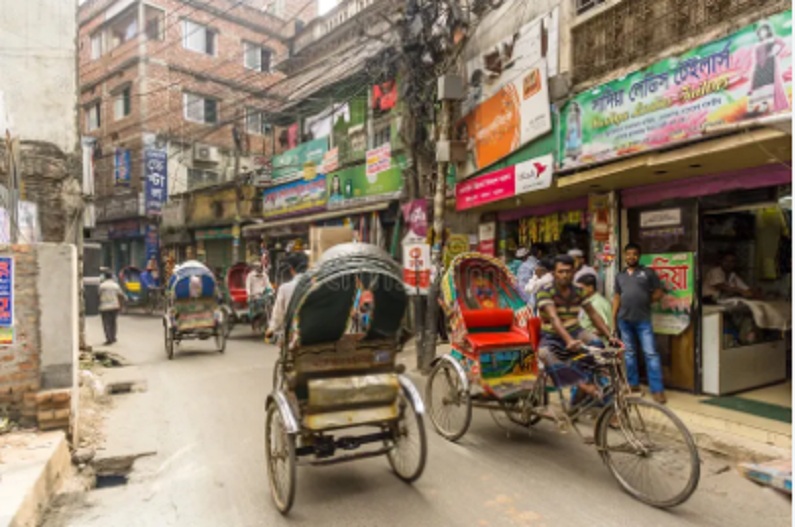
On the streets of the capital Dhaka, rickshaw pullers, labourers, and the struggling middle class bravely tell informal pollsters that they will not vote in the February 12 election.
And they will not because the Awami League is not in the scene. In the view of these citizens, the election is not happening, for it is a farce.
But there is the excitement generated among Muhammad Yunus and his advisors about the election. They are falling over one another in asking people to vote ‘Yes’ for the referendum that will accompany the vote for a new parliament.
These individuals running an unconstitutional regime have deliberately not left any room for citizens to argue against the so-called referendum. Their insecurity thus manifests itself.

They are worried that citizens might not trek to the polling centres on election day. That is the fear eating them up from within.
Yunus would like the Awami League to express ‘contrition’ over its ‘crimes’ in its years in power. That is a wish that will not see the light of reality. It is not happening.
What is happening is the determination of the Awami League to see the back of the Yunus outfit before there can be any talk of an election.
The party and its supporters have been flooding social media platforms with loud appeals to citizens to say ‘No’ to Yunus’ referendum, to remind them that without the logo of the boat publicly acknowledged there will be no election.
What has not been happening, therefore, is election-related enthusiasm among citizens. Which is only natural, for when anywhere from 40 percent to 45 percent of voters, perhaps more and all followers of the Awami League, will not have their party to vote for, the election does not and will not make sense. That is, if the election at all goes ahead. If it does, it will be a hollow exercise and will only add to the crisis that has ravaged Bangladesh in the last seventeen months.
Yunus and his regime and followers are on slippery ground. The Jamaat and the BNP are at each other again. Yunus’ student supporters — he has already referred to them as his employers — in the NCP have been sliding and slipping in ways they had never imagined earlier.
The regime is not quite sure if these crises will allow its election plans to take effect. But let one have an objective view here.
The home affairs advisor has ‘assured’ people that the arms and ammunition looted by lawless elements before and after August 2024 will not be used to disrupt the election. And who has given him that assurance?
For a home affairs advisor, a retired lieutenant general to boot, to come up with such outlandish comments even as law and order slides further is a happening that has been making the rounds to the merriment of citizens.
What else has been happening? Sheikh Hasina’s son Joy has been speaking to Indian media on his mother’s administration and on the future of the Awami League.
Khaleda Zia’s son Tareque, now the leader of his parents’ political party, has been promoting his young daughter in the political realm. Meanwhile, he has had the cheering spectacle of senior editors, businessmen, poets and others visiting him and paying homage to him.
BNP Secretary General Mirza Fakhrul Islam Alamgir has been castigating the Jamaat-e-Islami over its collaborationist role with the Pakistan occupation army in 1971.
Alamgir was riled by growing Jamaat criticism of his party. Beautiful irony can be spotted here. There once was a BNP-Jamaat alliance, in opposition and in government. That has lately been fraying, which is why Alamgir and other BNP-wallahs like him have been going after the Jamaat, no holds barred.
It does not matter that Akhteruzzaman, a freedom fighter and retired major once with the BNP and a vocal critic of the 1971 collaborators, formally joined the Jamaat the other day. He will be a Jamaat parliamentary nominee, perhaps arrayed against a candidate from his old party.
On Wednesday, it was the turn of Professor Abu Sayeed, an Awami Leaguer elected to the Pakistan national assembly at the December 1970 election who served as a member of the Bangladesh constitution-drafting committee in 1972 and subsequently served as minister of state for information in Sheikh Hasina’s first government (1996—2001), to make a formal entry into the BNP.
Sayeed, who has authored a good number of books and has been a consistent defender of Bangabandhu Sheikh Mujibur Rahman, left the Awami League after 2001 and linked up with Dr Kamal Hossain’s Gano Forum but soon made his way out of that organisation as well.
What else has been happening? Former foreign minister Hasan Mahmud has been speaking to journalists at the Press Club in Delhi, prompting questions regarding his position in the Awami League in these difficult times.
His predecessor A.K. Abdul Momen has lately been in the picture as well, taking part in online discussions about the future plans of the Awami League. To what extent Mahmud and Momen have the support of Sheikh Hasina as party spokespersons is a question being asked in Bangladesh at this moment.
So will the election go ahead as planned by the Yunus regime? It all depends on how things shape up between now and early February.
Incidents of violence have been rising, with the media maintaining absolute silence on the situation. To be sure, some media are awash with discussions and articles in fulsome praise of Tareque Rahman, his mother and father.
Meanwhile, Ghulam Muhammad Quader, chairman of the Jatiya Party and brother of the late General Hussein Muhammad Ershad, has been urging citizens to save the country by voting ‘No’ at the referendum called by the Yunus regime.
The crisis goes on. Mobs yet have a field day.
Those who are in power have yet to acknowledge the devastation they have wrought in the country since the fall of Sheikh Hasina’s government. They cheerfully preside over this dangerous and growing absence of the rule of law.
ALSO READ: Bangladesh: The crimes, the anarchy, the fascism
Yunus’ ‘meticulous design’ has been operating overtime. And his ‘reset button’ continues to push the country into increasingly deeper holes. The rise of religious extremism, coupled with the fascism deployed by the regime, keeps Bangladesh’s people in a state of grave apprehension about the future.