









The Press Club of India has long stood as more than a professional association of journalists; it has been a living institution that mirrors the evolution, anxieties, and aspirations of Indian democracy itself. From its modest beginnings in the early years of the Republic to its emergence as the country’s most influential collective voice of journalists, the Press Club’s journey has been inseparable from the struggle to protect free expression, professional autonomy, and ethical journalism. The election of Sangeeta Barua Pisharoty as its President marks a historic moment in this journey, symbolising not only institutional change but also a broader shift within Indian journalism.
The idea of a press club in India was first conceived well before Independence, inspired by similar institutions in Britain. Veteran journalist Durga Das, impressed by the London Press Club during his stints abroad, imagined a space in India where journalists could gather freely, exchange ideas, and collectively safeguard professional values. That vision materialised a decade after Independence, when the Press Club of India was formally founded on December 20, 1957, and incorporated in March 1958. Its inauguration in February 1959 by then Home Minister Govind Ballabh Pant gave it both legitimacy and symbolic stature, affirming the State’s recognition of a free press as an essential pillar of democracy.
From a small room with barely a few dozen members, the Press Club grew steadily, both in numbers and influence. Over the decades, it became a central space for debate, dissent, and dialogue, where journalists from diverse ideological, linguistic, and regional backgrounds interacted as professionals bound by shared ethical commitments. As Indian journalism expanded with the growth of print, television, and later digital media, the Club’s membership expanded into the thousands, making it the largest body of journalists in the country.
Yet the significance of the Press Club has never rested merely on its size. Its real importance has been tested in moments of national crisis. During the Emergency of 1975–77, when press freedom was severely curtailed, journalists were jailed, and censorship was imposed, the Press Club emerged as a rare collective space of resistance. It became a forum where journalists articulated opposition to authoritarianism and reaffirmed their commitment to constitutional freedoms. This legacy of institutional courage shaped the Club’s self-image as a watchdog not just of governments, but also of its own profession.
In the decades that followed, the Press Club continued to evolve, responding to new pressures on journalism—commercialisation, corporate concentration of media ownership, political polarisation, and the precarious conditions faced by working journalists. The Club’s leadership structure, elected annually, acquired heightened importance as internal elections increasingly reflected broader ideological contests playing out in Indian society. Panels described as “left-leaning,” “secular,” or “right-leaning” competed fiercely, underlining how the Press Club had become a microcosm of the national media landscape.
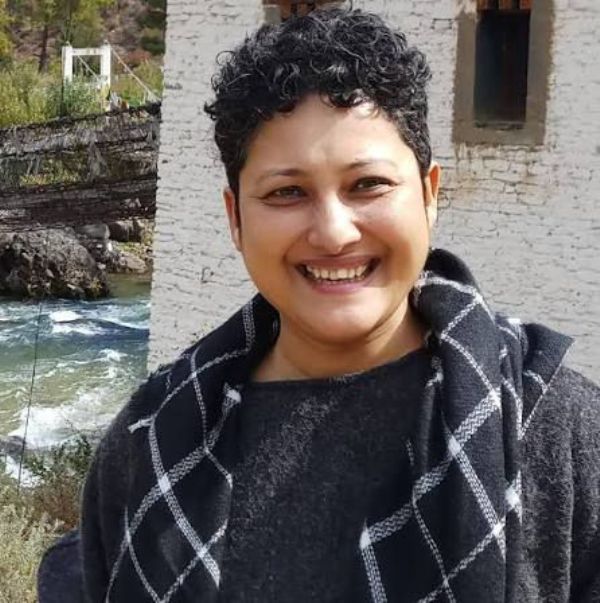
It is within this complex institutional and political context that Sangeeta Barua Pisharoty’s election must be understood. Her victory was historic on multiple counts. She became the first woman President of the Press Club of India in its nearly seven-decade-long history, and the first journalist from the Northeast to occupy the position. The emphatic nature of her win, with her panel sweeping all positions, underscored a decisive mandate from the membership.

Pisharoty’s personal journey in journalism reflects many of the structural challenges faced by women and journalists from peripheral regions. Beginning her career in the mid-1990s with a national news agency, she was among the earliest women from the Northeast to work in the Delhi press corps. Over nearly three decades, she built a reputation for rigorous reporting on politics, governance, social justice, and the complex issues of identity and citizenship, particularly in Assam and the broader Northeast.
Her work has consistently demonstrated a commitment to ground-level reporting and nuanced storytelling. Whether covering displacement caused by river erosion, communal segregation in urban spaces, or the long and contentious process surrounding the Assam Accord and the National Register of Citizens, her journalism has resisted simplification. This approach found fuller expression in her widely discussed book on Assam, which examined the historical roots and contemporary consequences of identity politics in the state.
Before her election as President, Pisharoty served as Vice President of the Press Club, gaining experience in its internal functioning and challenges. Her ascent to the top post therefore represented continuity as well as change—continuity in the Club’s stated commitment to press freedom, and change in terms of representation and leadership style. Her election resonated particularly strongly among women journalists, for whom leadership positions in Indian media institutions have historically remained elusive.
The significance of her victory extends beyond symbolism. At a time when Indian journalism faces mounting pressures—legal intimidation, economic vulnerability, shrinking editorial independence, and growing mistrust among audiences—the role of the Press Club assumes renewed importance. The institution has increasingly articulated concerns about opaque media ownership, the misuse of government advertising as leverage, and coercive actions against journalists. Pisharoty’s leadership will be measured by how effectively the Club translates these concerns into collective advocacy while maintaining its non-partisan institutional character.
Her background also adds a critical regional dimension to the presidency. For decades, journalists from the Northeast have spoken of marginalisation within national media narratives, often reduced to stereotypes or episodic coverage. Pisharoty’s election is widely seen as an opportunity to make the Press Club more inclusive and reflective of India’s geographic and cultural diversity. She herself has acknowledged this responsibility, emphasising the need to make the institution more open, vibrant, and representative.
Predictably, her association with digital journalism and with platforms known for critical reporting has attracted scrutiny from some quarters. However, the scale of her electoral mandate suggests that a broad cross-section of the Press Club’s membership viewed her credentials primarily through the lens of professional integrity and institutional commitment rather than ideological labels. In this sense, her victory may also be read as an assertion of journalistic independence at a time of deep media polarisation.
As the Press Club of India approaches its seventh decade, it stands at a crossroads. The challenges confronting journalism today are arguably more complex than at any point since the Emergency. Digital disruption has fractured business models, social media has blurred the line between information and opinion, and journalists increasingly operate under conditions of precarity and risk. In such a landscape, institutions like the Press Club cannot remain merely social spaces; they must function as active defenders of professional values and democratic norms.
The election of Sangeeta Barua Pisharoty represents a moment of introspection and renewal for the Press Club of India. It signals an acknowledgment of long-overdue inclusivity while reaffirming the institution’s foundational commitment to press freedom. Whether this moment leads to deeper structural change will depend on how the Club navigates the tensions between unity and diversity, activism and neutrality, tradition and transformation.
ALSO READ: When a song hits a sour note: Parliament’s Vande Mataram opera
What is undeniable, however, is that this election has already entered the institutional history of Indian journalism. It reflects both how far the Press Club of India has travelled since its modest beginnings in the 1950s, and how much it must continue to evolve to remain relevant in a rapidly changing media landscape. In that sense, the victory of Sangeeta Barua Pisharoty is not merely a personal milestone; it is a defining chapter in the ongoing story of the Indian press itself.