










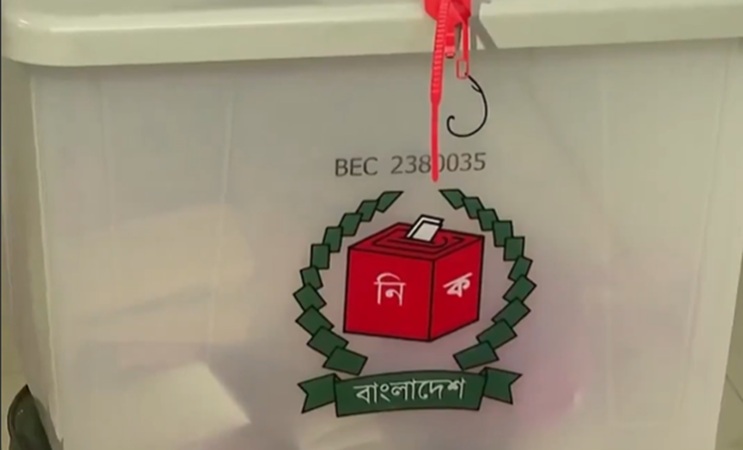
A newly submitted writ petition has injected fresh uncertainty into Bangladesh’s approaching 13th National Parliamentary Election and the much-debated national referendum, both slated for February 12, 2026. The petition, officially filed as Writ Petition No. 1201 of 2026, raises pointed concerns about whether the present political environment meets the constitutional standards required for fair voting.
With the petition now before the High Court Division of the Supreme Court, legal observers say the judiciary’s response could significantly shape the tone — and legitimacy — of the upcoming national events.
Central to the petition is the claim that senior members of the interim government — including advisors to the Chief Advisor — have been actively advocating for a particular outcome in the referendum.
These figures, the petition emphasizes, legally fall under the category of “government beneficiaries” under the Election Code of Conduct, and are thus prohibited from engaging in any campaign activities.
According to the petitioner, Advocate Nadim Ahmed, multiple public statements, televised appearances, and digital communications demonstrate that these officials have encouraged citizens to vote “Yes” in the referendum.
A constitutional analyst following the developments noted:
“The expectation from any interim arrangement is strict political neutrality. If that neutrality erodes, the credibility of the entire election cycle is placed in jeopardy.”

One of the most prominent claims in the petition concerns a government-operated website, www.gonovote.gov.bd, which is alleged to contain referendum-focused messaging encouraging a specific outcome.
The petition argues that:
- The website was created with public funds
- Its content presents one-sided political messaging
- It constitutes an improper use of government digital infrastructure
- Civil servants may have contributed to its dissemination
Digital governance specialists say the allegation raises important questions about how government communication tools should function during an election period.
Another major dimension of the petition is its critique of the Election Commission of Bangladesh, which the petitioner says did not respond adequately after receiving a detailed Notice Demanding Justice on 20 January 2026.
The petition claims the Commission:
- Acknowledged the notice
- Issued no show-cause orders
- Initiated no internal inquiries
- Did not address the media evidence presented
Under Articles 119 and 122 of the Constitution, the Commission is entrusted with ensuring free, fair, and lawful elections. The petition contends that the Commission’s silence represents a dereliction of constitutional duty.
A former election observer said:
“Even the perception of inaction can have a chilling effect on citizen confidence. This is why timely intervention is so critical.”
In addition to allegations of misconduct, the writ raises a broader constitutional concern:
the legal and practical implications of holding a parliamentary election and referendum on the same day, a practice never before attempted at the national level in Bangladesh.
The petition argues that combining the two processes compromises:
- Voter clarity
- Constitutional separation of electoral functions
- The fairness of parliamentary contests
- The integrity of referendum deliberation
Political scientists have echoed this view, pointing out that many democracies avoid overlapping major votes due to the risk of voter confusion and institutional politicization.
To strengthen its argument, the petition invokes Article 91 of the Representation of the People Order (RPO), 1972, which allows the Election Commission to stop an election if free and fair conditions cannot be ensured.
According to the petition, the following conditions now exist:
- Interference by government officials
- Use of state mechanisms in campaigning
- Administrative officials endorsing referendum outcomes
- Public messaging already shaped by executive influence
For these reasons, the petition seeks immediate judicial intervention to delay or restructure the impending vote.
Beyond the immediate electoral implications, the writ petition underscores larger concerns about Bangladesh’s democratic health.
If the allegations are confirmed, it may prompt broader conversations about:
- Reforming guidelines for interim governments
- Strengthening Election Commission independence
- Regulating digital platforms during elections
- Ensuring transparency in public communication
A governance expert remarked:
“Bangladesh stands at a delicate juncture. The legitimacy of this election cycle will depend not just on the vote itself, but on how faithfully institutions uphold constitutional obligations.”
The High Court is expected to schedule a preliminary hearing soon. Its response — whether in the form of an interim stay, a Rule Nisi, or immediate directions — could determine whether the February 12 vote proceeds as planned.
Until then, the writ petition has already succeeded in shifting the national conversation, placing legal scrutiny and constitutional accountability at the forefront of the country’s political discourse.