










By Enayet Kabir
An unofficial directive has reportedly been issued to avoid purchasing “Chinese equipment” for Bangladesh’s defence forces. Over the past one-and-a-half decades, Chinese and Turkish equipment have received significant importance in military purchases.
However, soon after the BNP’s new political government led by Tarique Rahman was formed, several policy-level changes were introduced in the military following leadership reshuffles.
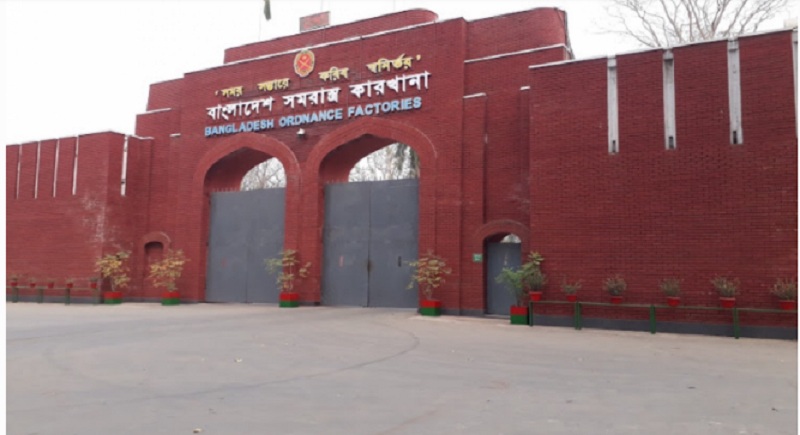
The highest authorities have discouraged the Directorate General of Defence Purchase (DGDP) and Bangladesh Ordnance Factory (BOF) from buying Chinese equipment. Turkish equipment has also been discouraged. Instead of China and Turkey, priority has been given to purchasing equipment from the United States and the United Arab Emirates.
According to informed officials, under the influence of the United States, Bangladesh’s top military authorities were compelled to take this “sensitive” decision. As a result, the previously balanced procurement policy in military purchases may lose its significance.
After General Waker-Uz-Zaman was appointed Chief of Army Staff in June 2024, initiatives were accelerated to modernise the Bangladesh Ordnance Factory (BOF) and establish seven new ammunition production lines to make its “foreign technology-dependent” production system more updated.

A preliminary understanding had also been reached for Turkish technology in drone and bullet production. Infrastructure construction for a Turkish bullet production line is nearing completion, although its tender and contract were finalized during the Awami League government.
Over the past 18 months, discussions have been ongoing with Pakistan Ordnance Factories to refurbish old tanks gifted by Kuwait.
Former Principal Staff Officer (PSO), Armed Forces Division, Lieutenant General S M Kamrul Hassan, has been active over the past year regarding military agreements and procurement from Pakistan. Without the cooperation of the Army chief, he was reportedly interested in purchasing Chinese-technology JF-10 aircraft from Pakistan for the Air Force.
Last January, the Yunus government was active in pursuing a “military agreement” with Pakistan, but it was not finalised due to objections from Gen Zaman. Over the past 18 months, senior Pakistani military officials have visited Dhaka almost monthly, while Lt Gen Kamrul Hassan and his associates regularly paid return visits.
Last year, a four-member team from Indian Military Intelligence visited Bangladesh. They informed Bangladesh’s military authorities with documented evidence about 12 “militant hideouts” influenced by Pakistan inside Bangladesh and requested action. Later, through joint India–Bangladesh efforts, the hideouts were dismantled.
An initiative by the Yunus government to expand and construct a military airbase in Nilphamari using Chinese technology also stalled due to China’s lack of interest.
Bangladesh does not typically formulate military procurement based on a national defence policy. Although some planned purchases are made for UN missions, overall procurement largely depends on the preferences of the military authorities. As a result, business groups influence procurement decisions.
A new initiative is underway to purchase Armoured Personnel Carriers (APCs). A senior military official has confirmed that this time, APCs will be purchased from the United Arab Emirates or the United States.
However, the biggest challenge for Tarique Rahman’s new government and the Army chief will be pressure from the United States regarding the GSOMIA and ACSA agreements. The essence of these two agreements is that Bangladesh would be obligated to share its military information with the US and would not enter into military agreements with any other country without informing the United States.
The US Under Secretary of State Paul Kapur is scheduled to visit Dhaka in mid-next month. Bangladesh’s former National Security Adviser and technocrat Foreign Minister under the BNP government, Khalilur Rahman, will visit New Delhi on February 27.
ALSO READ: Bangladesh Army chief Gen Waker-uz-Zaman’s command restored
This time, India’s Foreign Minister S Jaishankar — not Ajit Doval — will be sitting across the table from him. Both foreign ministers are known to be close to the United States.
(The writer is a political and economic analyst)