










By Enayet Kabir
Regardless of the February 12 electoral outcome in Bangladesh, the country’s immediate future is fraught with extreme uncertainty. The political class, the media and domestic and foreign polling agencies have conducted countless analyses of what the election results might be.
However, in reality, there is no room for genuine competition in this rigged election. Of the 51 political parties, except for one – the Jatiya Party – all the others are essentially ranged in favour of the so-called July revolution. In the event these political parties vote in favour of ‘Yes’ in this unconstitutional referendum, they would effectively end up taking a stand against democracy.
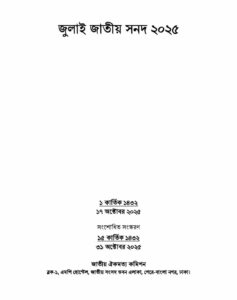
Readers might like to download from the “razakar-military-NGO” government and the Chief Adviser’s Office websites the revised copy of the July Charter 2025, proposed by the Consensus Commission. In Clause 7, under the section for Fundamental Principles, there is no trace of democracy.
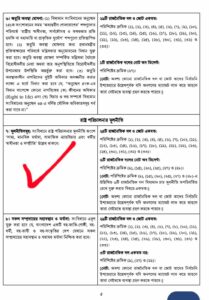
A very obvious question arises: what is the explanation for removing “democracy” from the state’s Fundamental Principles? Those who drafted the proposal and reached a consensus should provide an explanation to the people of the country. In the first draft of this report, “democracy” was present under this same clause.

It was even mentioned in the first volume of the Consensus Commission’s report, and news was published in the media accordingly. But after all this time, how did this significant change suddenly and silently appear on the official website?
In the copy provided on the official site, “Equality, Human Dignity, Social Justice, and Religious Freedom and Harmony” have been retained as the fundamental principles of state governance. It is mentioned there that a total of 24 political parties and alliances have agreed to this proposal.
Also Read: Bangladesh steps up security as over half of polling centres marked risk-prone
Meanwhile, six parties took a stand in favour of keeping the existing principles of the current constitution unchanged and provided a “Note of Dissent” regarding the proposed principles. This means they support keeping the old principles where “democracy” is explicitly mentioned.
According to the appendix, the six parties that gave a Note of Dissent are — Gono Forum, JSD, Bangladesh JSD, CPB and the two factions of BSD. Surprisingly, the “two political rivals” participating in the 13th parliamentary elections — BNP and the war-criminal-affiliated Jamaat—have agreed to the proposed principles where “democracy has vanished!”
This question and the discussions surrounding it are extremely urgent at this moment. This issue could become pivotal in the “near future” in determining the future trajectory of the Bangladeshi state. It is absolutely vital that the common people receive an explanation before the referendum centered on this Charter.
Before casting their preference for “Yes” or “No,” they have the right to understand the matter clearly. Whether the “voting” organised by the Yunus-Military-Jamaat-BNP-NCP-deep state alliance takes place by day or by night is less important than this “referendum fraud”.
This “fraud” indicates that the immediate future of the Bangladeshi state is bound to be uncertain, volatile and fragile.
(The writer is a political and economic analyst)