










By Enayet Kabir
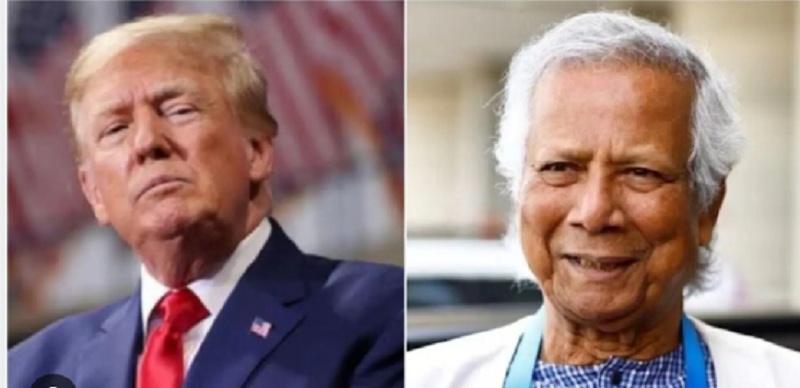
After seizing power in August 2024, Mohammad Yunus and his associates signed an unprecedented secret “charter of servitude” with the US just two days before Bangladesh’s February 12 election. This deal was struck at 10 PM on February 10. Yunus and his associates are essentially American proxies.
One of them, Khalilur Rahman, has been appointed as Foreign Minister under the technocrat quota by the BNP-led government. The top military officials who supported the Yunus government, along with that government’s political partners — BNP, the war-criminal Jamaat-e-Islami, and NCP — will not be able to escape responsibility for this act of treason. If the Reciprocal Trade Agreement (RTA) with the United States comes into effect, Bangladesh’s national food and energy security will be permanently at risk.
The top military officials who supported the Yunus government, along with its political partners BNP, war-crimes accused Jamaat-e-Islami, and NCP, will not be able to escape responsibility for this alleged act of treason. If the Reciprocal Trade Agreement (ART) with the United States is implemented, Bangladesh’s national food and energy security will be permanently at risk.
In a letter written by US President Donald Trump to Bangladesh’s newly appointed Prime Minister Tarique Rahman, American intentions are said to be clearly expressed. Trump, described as a seasoned businessman, directly urged the implementation of the Reciprocal Trade Agreement (ART) without diplomatic subtlety.
He also expressed hope that Tarique Rahman would take swift and decisive steps to complete routine defence agreements such as GSOMIA and ACSA. In effect, under the guise of trade and military agreements, there is said to be an attempt to transform Bangladesh into the “51st state” of the United States. Let us examine how.

If the ART agreement with the United States takes effect, Bangladesh’s national food and energy security will be endangered. In the long term, the country may have to import food and energy to meet the needs of 170–180 million people. In exchange for a slight tariff reduction on Bangladeshi goods, Bangladesh has reportedly committed to purchasing $15 billion worth of LNG and $3.5 billion worth of agricultural products from the US over the next 15 years.
It has also agreed to buy 25 Boeing aircraft for the Bangladesh Air Force and Biman Bangladesh Airlines at a high cost. By opening the market to American agricultural and industrial goods, local farmers are put at risk and food security is threatened.
Although the agreement appears to offer good news by reducing tariffs on ready-made garments (from 20 percent to 19 percent), it reportedly imposes “obligations” regarding trade balance. As a result, Bangladesh would be compelled to source raw materials for exports to the US.
The mandatory purchase conditions would prevent Bangladesh from buying these goods more cheaply and conveniently from countries such as India, China, or Russia. Various circles have raised allegations that the agreement is unequal and questioned its real benefits and losses.
Senior citizens of Bangladesh and India may remember PL-480. In the 1960s and 1970s, neither Bangladesh nor India had achieved food self-sufficiency. Both countries believed they could not be truly sovereign unless they could feed their own people. Following the artificial food shortages linked to PL-480 and the 1974 famine in newly independent Bangladesh, both countries moved away from that agreement through planned agricultural management.
Although they shifted from purely natural farming to hybrid seeds developed by local scientists and farmers, productivity rose significantly. Despite reduced arable land and a doubled population, around 22.5 million farming families continue to supply food.
The author claims that the Yunus group has now caused unprecedented damage, allegedly planning to render the country’s fertile soil barren. The text alleges that for 54 years, US imperialist groups have collected socio-economic and agricultural data through NGOs. It further claims that corrupt academics and officials have supplied data to American databases. It criticizes certain political thinkers for opposing GM (genetically modified) foods and seeds while alleging that the Yunus group secretly sold Bangladesh’s agricultural future to the US.
According to the article, one of the US’ strongest tools in controlling global trade is the patent system for GM seeds and generics. Through ART, Bangladesh may allegedly be forced to import patented GM seeds to reduce trade imbalances. The text claims this could:
1. Make farmers dependent on multinational companies for patented seeds.
2. Cause genetic contamination of local varieties.
3. Undermine national food sovereignty.
4. Pose health risks such as antibiotic resistance and allergies (as alleged by some scientists).
5. Harm local dairy and poultry industries by opening markets to U.S. products.
6. Increase pesticide resistance in Bt crops.
7. Deepen dependence in poultry breeding on US grandparent stock.
The pharmaceutical sector would also allegedly come under US multinational control through patent enforcement. Exporting medicines to the US or producing under contract manufacturing would require US FDA approval, potentially forcing Bangladesh to import raw materials from the US instead of India. This could conflict with Bangladesh’s National Drug Policy and create unequal competition.
In the textile sector, zero tariffs in the US market would reportedly apply only if garments are made from US cotton or synthetic fibres (MMF). This would prevent Bangladesh from sourcing cheaper raw materials from India, Uzbekistan, China, Japan or Korea. Meanwhile, tariffs on Bangladeshi goods would remain significant.
The agreement would also eliminate or gradually reduce tariffs on thousands of US product categories, causing a major loss in Bangladesh’s import-duty-based revenue. Since import duties constitute a large portion of government revenue, this could create a severe fiscal deficit.
The article further states that Trump’s letter emphasises both trade and defence cooperation, urging swift completion of routine defence agreements to enable Bangladesh’s military to use advanced American equipment. It claims that signing GSOMIA and ACSA would restrict Bangladesh from defence agreements with China, India, or Russia, and require sharing military information with the US, as well as purchasing American arms at high cost.
ALSO READ: In Bangladesh, the BNP government will have its plate full
The text concludes by questioning whether Bangladesh is becoming a US buffer and proxy state in South Asia. It argues that the current government lacks the power to cancel the pre-election trade agreement and warns of geopolitical risks involving India and China.
(The writer is a political and economic analyst)