










By Enayet Kabir
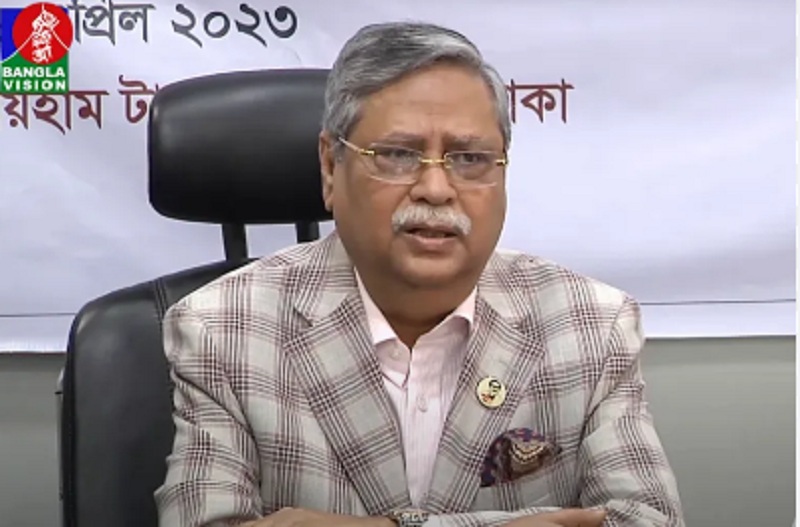
On March 12, in Bangladesh’s newly formed parliament, the ruling party BNP and the opposition party Jamaat-e-Islami allegedly conspired to humiliate President Mohammad Shahabuddin.
Accused of misconduct, President Shahabuddin has taken several steps that could lead to his impeachment. Bangladesh’s Constitution mandates the president to uphold the dignity of the office and maintain truthfulness.
However, a former judge who assumed the highest constitutional position through the nomination of the Awami League may now face serious allegations of “lying.”
The way President Shahabuddin was humiliated yesterday makes it difficult to imagine anyone being insulted more. The BNP-Jamaat alliance reportedly forced him to speak against his appointing authority, Sheikh Hasina and the Awami League.
From behind the scenes, Tarique Rahman allegedly pulled the strings of this political strategy. In his presidential address, Shahabuddin sharply criticised the government of Sheikh Hasina, which had appointed him.

Through what appeared to be a precise plan by Tarique Rahman and the opposition, a situation was created allowing the Jamaat-e-Islami to openly protest against the president on the floor of the House.
The most surprising aspect was the role of the ruling party. When the uproar against Shahabuddin began, Prime Minister Tarique Rahman reportedly sat calmly in his seat, showing no reaction.
No government party member was seen speaking in support of the president; rather, they seemed to enjoy the opposition’s attacks. After the speech ended, Tarique Rahman allegedly raised his eyebrows and smiled mysteriously.
The most serious allegation against the President across various circles is his contradictory statements.
On the night of August 5, when Sheikh Hasina left the country, he addressed the nation saying that the prime minister had submitted her resignation to him and that he had accepted it. But a few months later, in an interview with Manabzamin editor Matiur Rahman Chowdhury, he claimed he had no documentary proof of Sheikh Hasina’s resignation.
Political beneficiaries of the July riots view the President’s contradictory stance as an outright “falsehood” and “violation of oath.”
Yesterday, by agreeing to read the BNP government’s written “political speech of the President,” Shahabuddin appeared almost comical. He himself has spread confusion regarding historical truth. Because of misconduct, he has morally lost the qualification to remain the constitutional head of state.
Mohammad Shahabuddin, known as an Awami League loyalist, was elected president purely on party considerations. He had been a member of the party’s publicity and publications subcommittee.
Participants in the July riots reportedly had a primary objective: the abolition of the existing Constitution.
According to the beneficiaries of those riots, keeping someone who was an active participant in Sheikh Hasina’s rule as head of state effectively means protecting the existing Constitution.
There is an ongoing legal debate among the beneficiaries of the July riots regarding his resignation. Since the current parliament was formed under special circumstances and the previous parliament had been dissolved, initiating a standard impeachment process is complicated.
However, legal experts from the BNP argue that what has been happening in the country since August 5 represents an “extraordinary situation.”
In such a case, instead of a literal interpretation of the Constitution, the Doctrine of Necessity—or the people’s will (public will)—should be considered the supreme law. Keeping him in office, they argue, only prolongs legal and political instability.
By forcing the president to read a written speech in the newly formed parliament, the BNP has effectively labelled him “illegal” and “controversial.”
By boycotting his speech, Jamaat-e-Islami sent a strong political message. In a parliamentary democracy, the president’s speech is largely ceremonial, yet Shahabuddin failed to uphold the dignity of being the “guardian of the state.”
A large section of the BNP is no longer ready to accept him in that role. They believe that when parliament and a significant portion of the public have lost confidence in the president, his continued stay in office is merely a waste of time and a threat to state stability.
His controversial role involving the Anti-Corruption Commission (ACC) and a history of political bias have further raised questions about him. Additionally, there are allegations of dual citizenship against him.
Context: The presidency is not merely a ceremonial position; it symbolises the sovereignty and trust of the state. In the current context, due to political manoeuvring, Shahabuddin has lost that trust. His removal now appears to be only a matter of time. Who ultimately wins or loses in this complex political game will be determined by time.
ALSO READ: Bangladesh paradox: Trials for state acts but indemnity for non-state acts?
However, Shahabuddin may one day claim that the government led by Tarique Rahman forced him to read that speech—just as he recently accused the outgoing “Yunus government” of issuing 133 presidential ordinances without informing him.
(The writer is a political and economic analyst)