










By Enayet Kabir
Bangladesh has fallen into a major trap of the United States’ global energy politics. The country’s energy security is now under threat.
The newly formed BNP government, led by Tarique Rahman, has a befuddled Power and Energy Minister, Iqbal Hasan Mahmud Tuku. Earlier, Bangladesh’s energy security already suffered a serious blow from Muhammad Yunus’s alleged US-backed proxy government.
In an attempt to project an “artificial dollar reserve,” the Yunus regime failed to stockpile coal and diesel-octane in time. At the same time, LNG imports were made dependent on the US and Qatar.
As a result, during peak season, Bangladesh’s electricity supply system may collapse, and the demand for fuel in transportation and industries will not be met. The impact will spread throughout the entire economy.
To control global politics, the US—a global imperial power—is still desperate to control fossil fuels. By abducting Venezuela’s President Nicholas Maduro and assassinating Iran’s supreme leader, it is allegedly trying to create an artificial energy crisis in the global market.

China and India are the world’s most important consumers of fossil fuels. The US has not been able to force them to obtain energy either from America itself or from its allied Arab countries.
For the past 50 years, the US attempted to become the single source of fossil fuel supply worldwide. It does not extract much of its own liquid fuels domestically but forces the sale of West Asian oil.
Throughout the 19th and 20th centuries, British and American companies took control of the oil, gas, and mineral resources of West Asian Arab countries.
The two countries with the largest growth in energy demand, China and India, rely heavily on coal for electricity generation, much like the US. Oil- and gas-rich countries such as Russia, Iran and Venezuela serve as alternative energy sources for China and India.
They have been using these alternatives instead of sources controlled by the US in West Asia. This threatened the dominance of the petrodollar.
By provoking Ukraine and NATO-aligned European countries, the US first triggered the Russia–Ukraine war. Later, Ukraine was pressured into handing over coal and other mineral resources to American companies.
After removing Maduro, the US took control of Venezuela’s nationalised oil and gas marketing system that had been built with Chinese investment. Now their attention is focused on Iran’s nationalised fossil fuel resources.
China’s national energy security system is strong. In the post-COVID world, China has strengthened its domestic market while expanding markets for consumer goods and technology in India and Russia.
By creating a revolution in electric vehicles (EVs) and lithium batteries, China has successfully shifted transportation toward clean energy. It is reducing its dependence on fossil fuels by focusing on hydropower and nuclear energy, while producing large amounts of commercial solar and wind energy.
India is also following a similar path toward energy security.
Bangladesh, during Sheikh Hasina’s long rule, had become active in coal-based power generation under the Power Sector Master Plan. Despite US conspiracies allegedly hindering the extraction of Bangladesh’s own coal, efforts were underway to build a diversified electricity production system.
Dependence on the US-controlled Bibiyana gas field in Sylhet and the Shahbazpur gas field in Bhola was being reduced. Russia’s Gazprom was invited to help increase BAPEX’s capacity. Ten new development wells were drilled in the Titas gas fields, and abandoned gas fields were reactivated to find alternative supplies.
At the same time, policy-level discussions progressed on extracting coal through open-pit methods in Fulbari and Barapukuria.
To corner India, soon after the regime change in Bangladesh, the US allegedly attempted a colour revolution in Nepal to control Nepal’s hydropower capacity using similar strategies. Although the Nepali government fell, joint efforts by India and China thwarted US intervention there.
After failing to use Bangladesh’s control to weaken India and China in tariff wars, the United States turned to attacking Venezuela and Iran. America is desperate to establish exclusive control over the fossil fuel supply to India and China. This is seen as a major way to counter the rise of BRICS and a potential BRICS currency.
However, following the attack on Iran and India’s looming energy crisis, Russia has promised to supply 9.5 million barrels of oil to India.
Over the past three decades, the United States allegedly installed proxy governments in Middle Eastern and African countries with nationalized oil and gas sectors by triggering the Arab Spring.
American companies have nearly exhausted the oil and gas resources of many Arab countries. As a result, the United States now no longer considers all of its military bases in 14 Middle Eastern countries necessary.
Interestingly, reports suggest that Israel has been secretly attacking these bases in the name of Iran. Another notable development is that amid this wartime situation, the United States has allegedly encouraged Pakistan to attack Afghanistan. This may have been aimed at disrupting the Trans-Afghanistan pipeline intended to carry oil and gas from Iran to India.
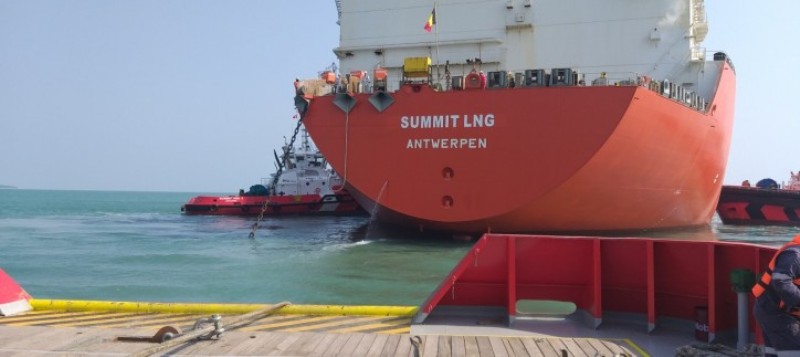
Bangladesh, already desperate due to its energy crisis, stepped into the trap long ago by committing to mandatory LNG imports from the United States to balance trade deficits. To maintain strong bargaining leverage over India and China, the U.S. needs Bangladesh as a proxy state.
Former national security adviser of the Yunus government, Khalilur Rahman—now the technocrat foreign minister of the BNP government—revealed the truth on March 5, 2026. He said that the Yunus government signed a trade agreement (MRT) with the United States with the consent of the leaders of BNP and the war-crimes-accused Jamaat-e-Islami.
Neither the ruling BNP nor Jamaat has protested or commented on this issue. After the controversial election of February 12, is there any doubt that the new government is essentially an extension of the Yunus government?
ALSO READ: Is US official Paul Kapur in Dhaka to coax Bangladesh sign the GSOMIA ?
In reality, Yunus was merely the face of a trilateral governing alliance consisting of BNP, Jamaat-e-Islami, and NCP. The United States has allegedly transformed Bangladesh’s proxy leadership from non-political to political through the military’s manipulation of the February 12 election.
As a result, American proxy influence in Bangladesh may become a major source of tension for both India and China.
(The writer is a political and economic analyst)