










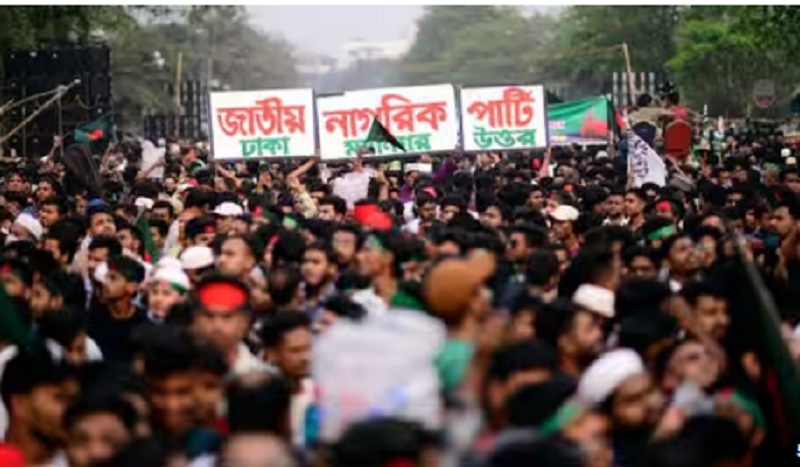
At least thirteen central leaders of the student-led National Citizen Party (NCP) have resigned over the past eight days, protesting the party’s alliance with the Jamaat-e-Islami ahead of Bangladesh’s parliamentary elections scheduled for February.
Beyond opposing the alliance, the leaders have raised broader concerns about the party’s internal functioning, including allegations of a lack of transparency in decision-making and political compromise, Bangladesh-based news portal The Business Standard reported on Saturday.
The NCP emerged earlier this year from the Students against Discrimination (SAD) platform, which spearheaded the violent street movement known as the “July Uprising” in 2024. The party was later formed as a political offshoot with the backing of interim government chief Muhammad Yunus.
Despite internal opposition, Jamaat-e-Islami chief Shafiqur Rahman formally announced the alliance with the NCP last week at a press conference held at the National Press Club in Dhaka.
Even before the official announcement, at least 30 central leaders of the NCP had submitted a memorandum to party convener Nahid Islam objecting to the proposed alliance. The memorandum’s first signatory, NCP joint member secretary Mushfiq Us Saleheen, said the document—titled “Principled objections to a potential alliance in light of the accountability of the July Uprising and party values”—outlined serious concerns about the partnership.
The first major resignation was reported on December 25, when Mir Arshadul Hoque, a joint member secretary of the NCP and the party’s nominated candidate for Chattogram-16, quit as alliance discussions began. Two days later, Tasnim Jara resigned from her post as joint member secretary, announcing on social media that she would contest the election as an independent rather than represent any party or alliance.

A day later, NCP joint convener Tajnuva Jabeen also resigned via a social media post. She had been nominated as the party’s candidate for Dhaka-17 and was actively campaigning at the time.
Other leaders who have stepped down include Azad Khan Bhashani, Arif Sohel, Khaled Saifullah, Mushfiq Us Saleheen, Khan Md Morsalin, Farhad Alam Bhuiyan, Al Amin Ahmed Tutul, Asif Mostafa Jamal, Mir Habib Al Manjur and Wahiduzzaman, the report said.
The memorandum submitted by the dissenting leaders highlighted Jamaat-e-Islami’s controversial political history, particularly its opposition to Bangladesh’s independence and alleged involvement in genocide and war crimes during the 1971 Liberation War. These, the leaders argued, are fundamentally incompatible with Bangladesh’s democratic values and the NCP’s founding principles.
The memo also alleged that Jamaat’s student wing, Islami Chhatra Shibir, had in recent years infiltrated and sabotaged other political parties, accusing it of spreading misinformation and attempting to implicate the NCP in various incidents.
ALSO READ: Bangladesh Air Chief Marshal Hasan Mahmood Khan to be in Pakistan between Jan 4 and 9
Warning of political fallout, the leaders said the alliance risked undermining the NCP’s credibility and eroding public trust, especially among young supporters and citizens who had rallied behind the promise of a new political alternative.