









Kohima: A total of 24 traditional products from Nagaland have been identified for potential registration under the Geographical Indication, as part of efforts to protect and promote the state’s indigenous crafts and handloom heritage.
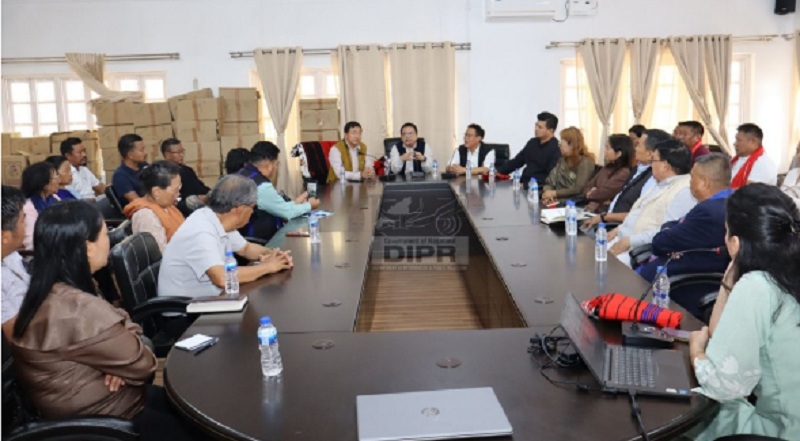
The development was discussed during a stakeholder meeting on GI initiatives for traditional crafts and handloom products held at the Nagaland Handloom and Handicraft Development Corporation office in Dimapur on March 5.
The meeting was organised by the North Eastern Handicrafts and Handlooms Development Corporation Limited (NEHHDC) in collaboration with the Ministry of Development of North Eastern Region.
The initiative aims to identify, document and facilitate the filing of GI applications for traditional crafts and handloom products from the state.
During the discussion, several products representing different tribal communities were highlighted as potential candidates for GI registration. These include Pochury textile and shawl, Zeliang textile, Sumi shawl and textile, Ao textile, as well as Tikhir jewellery and textile.
The applicant bodies proposed for these products include tribal organisations such as Pochury Hoho, Zeliang People’s Organisation, Sumi Hoho, Ao Senden, and the Tikhir Council.

Data presented at the meeting showed that the northeastern region currently has 89 registered GI products. Of these, handicrafts account for the largest share with 48 products, followed by 28 agricultural products, eight manufactured products and five food products.
Speaking at the event, Monmayuri Saikai, Senior Executive (DoBD) at NEHHDC, said the Government of India is committed to safeguarding the cultural heritage of the Northeast, noting that many traditional crafts and products represent valuable cultural assets.
She emphasised that GI registration would help preserve these cultural identities while ensuring that the ownership of such products remains with the respective communities.
She explained that GI tagging plays a crucial role in protecting traditional knowledge, promoting authentic products and enhancing the economic value of indigenous goods.
Saikai also briefed participants on the GI registration process, which includes filing of applications, preliminary scrutiny and examination, publication in the GI journal, and final registration after verification and consideration of objections.
ALSO READ: Former Bihar Assembly Speaker Nand Kishore Yadav appointed Governor of Nagaland
The meeting also highlighted plans to conduct awareness campaigns across Nagaland to educate artisans, weavers and communities about the importance and benefits of GI registration.
It was further noted that GI tagging can be extended not only to textiles and handicrafts but also to traditional jewellery and other indigenous products.