










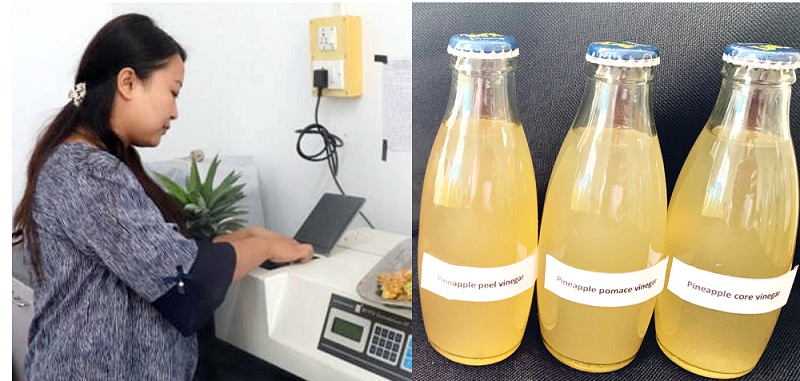
Kohima: Researchers at Nagaland University have shown that pineapple processing waste—especially the peels—can be transformed into high-quality vinegar.
Pineapple is one of the most widely grown tropical fruits, with India being among its major producers. Nagaland is one of the pineapple-growing regions. The organically grown pineapples of Nagland are exceptionally sweet, rich in juice and low in fibre.
The study presents a sustainable, practical solution that can boost rural livelihoods, cut down on environmental pollution from fruit waste, and open up new income-generating opportunities.
Pineapple processing produces substantial amounts of peel, pomace, core and crown, most of which end up being discarded. Rough handling and inadequate storage further add to the waste burden, creating serious environmental concerns.
These by-products, although often treated as waste, are rich in fibre, proteins, pectin, vitamins and minerals. The research team said such pineapple waste materials can serve as suitable substrates for fermentation and other value-added applications.
The Nagaland University study, published in the European Journal of Nutrition and Food Safety, found that vinegar produced from pineapple peels scored highest in acidity, flavour, and overall quality. Using fermentation techniques with yeast and acetic acid bacteria, the team confirmed that peel-based vinegar meets commercial standards and was preferred by sensory panels for its taste and aroma.

The research paper was co-authored by Dr Sentinaro Walling, Prof Akali Sema, Prof CS Maiti, Dr Animesh Sarkar, Prof SP Kanaujia and Alemla Imchen from the Department of Horticulture, Nagaland University.
In addition to vinegar production, the university has developed related innovations, including pineapple core-based candy, fibre extraction, and improved cultivation practices to support farmers. Research is ongoing to reduce crown size for export, improve fruit packaging, and extend shelf life.
Vice Chancellor Prof. Jagadish K Patnaik noted, “Transforming discarded peels into a commercially valuable, nutritious, and eco-friendly product not only reduces waste but also opens new opportunities for entrepreneurship, food-processing industries, and community-based enterprises.”
“Our study examined whether different parts of pineapple processing waste could be turned into good-quality vinegar. Using standard fermentation with yeast (Saccharomyces cerevisiae) and acetic acid bacteria, we found that vinegar made from the peel consistently performed better in acidity, colour and flavour. A group of sensory panels also preferred the peel-based vinegar for its taste, aroma and overall quality in compliance with commercial fruit-based vinegar, showing that this commonly discarded material has strong potential to be transformed from waste to wealth,” said Akali Sema, the academic team leader of the research project, of the university’s department of horticulture.
ALSO READ: Nagaland flags off first Zanthoxylum seed consignment to Dabur India
Research scholar Sentinaro Walling is also set to register a patent under the product development category for the preparation of candy from pineapple core waste.