










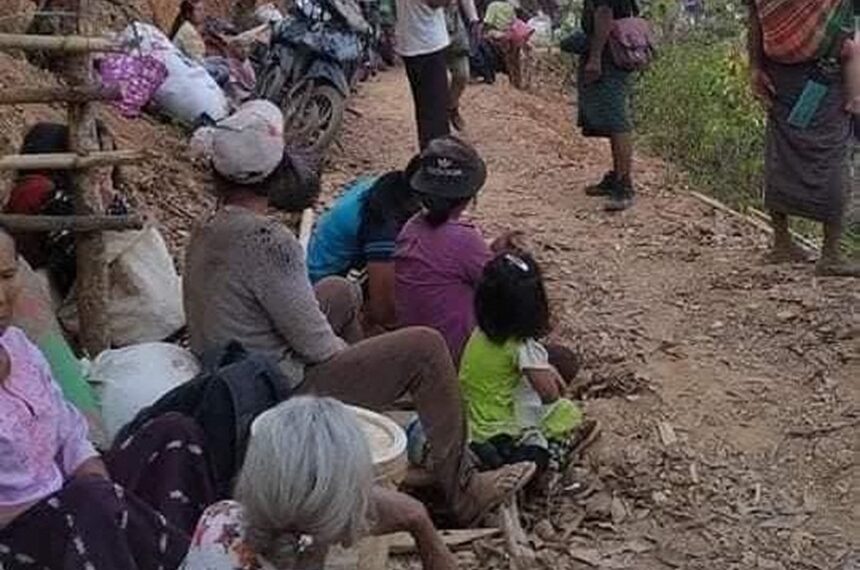
Mizoram has recorded substantial progress in the biometric enrolment of refugees from Myanmar, with officials from the State Home department confirming that over 90 per cent of the exercise has been completed statewide.
Official figures indicate that Mizoram is currently providing shelter to 28,355 refugees from Myanmar. Biometric details have been already completed from 26,381 individuals, accounting for 93.04 per cent of the total, through enrolment drives conducted by district administrations across 11 districts of the State.
Champhai district, which shares a long and porous border with Myanmar and hosts the largest number of refugees, continue to remain at the forefront of the exercise.
Authorities there have completed biometric enrolment of 12,083 refugees, even as fresh inflows were reported. Despite fresh arrivals, 231 refugees entering Champhai district towards the end of January, followed by another 137 arrivals last week, officials say enrolment efforts have kept pace with the influx.
Several districts have already completed the process. Aizawl, Lunglei and Serchhip districts concluded biometric enrolment earlier, aided by better accessibility and smoother administrative conditions.
Also Read: “CM failed to produce any evidence”, says Gaurav Gogoi over Pakistan link allegations

In southern Mizoram, Hnahthial district has also achieved near-complete coverage, registering biometric details of 563 out of 591 refugees, reaching 95.26 per cent completion as of Friday.
In contrast, progress has been noticeably slower in Lawngtlai district, Mizoram’s southernmost district, which borders both Myanmar and Bangladesh. Despite hosting 5,034 refugees from Myanmar, district officials have so far managed to enroll only 3,677 individuals, translating to 73.04 per cent coverage.
The district has also witnessed a decline of 983 refugees compared to figures from late January, though the reasons for the decline remain unclear.
Authorities acknowledged that the overall pace of biometric enrolment has varied widely across districts. Although the exercise was formally launched in all 11 districts in the latter part of July last year, a range of challenges have hampered uniform progress. These include technical problems with enrolment equipment, logistical difficulties and the rugged terrain in many border areas where refugee settlements are located.