










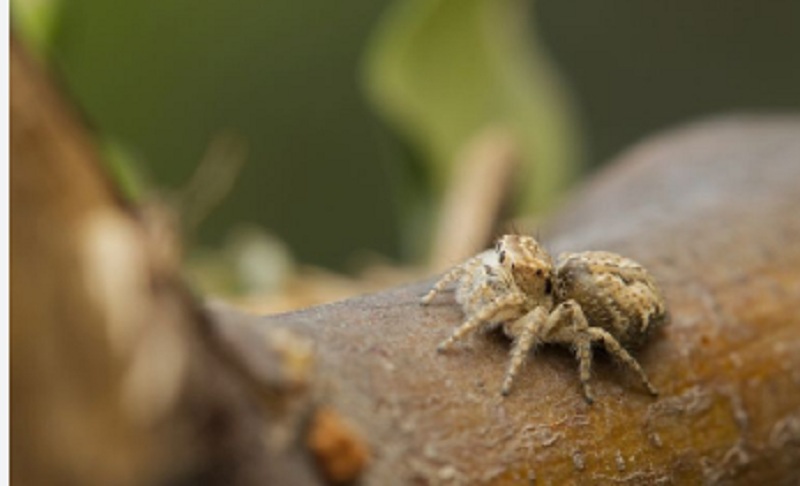
Shillong: Scientists from the Zoological Survey of India (ZSI) have discovered two new species of jumping spiders in Meghalaya.
The newly identified species — Asemonea dentis and Colyttus nongwar — belong to the Salticidae family, commonly known as “jumping spiders,” which are noted for their sharp reflexes and unique predatory behaviour of stalking and leaping onto prey instead of spinning webs.
The research team was led by scientist Souvik Sen, along with Dr. Sudhin P. P.
“These discoveries offer just a glimpse of the extraordinary biodiversity of Northeast India. With limited systematic surveys conducted so far, many more species are undoubtedly waiting to be uncovered,” Sen said.
ZSI Director Dhriti Banerjee said the findings highlight the need for more extensive biodiversity surveys in the region. “Meghalaya’s forests, sacred groves and cliffs are irreplaceable ecological assets,” she said.
The discovery of Asemonea dentis marks only the third record of the genus Asemonea in India, a group that remains largely underexplored.

ALSO READ: Night curfew imposed along Indo-Bangladesh border in South West Garo Hills
The species gets its name from a distinctive tooth-like projection on the male’s palpal femur — a key diagnostic feature. Males have a greenish-brown body with a pale yellow V-shaped marking on the abdomen, while females are creamy white with black patterns.
Colyttus nongwar is only the second species of the Oriental genus Colyttus reported from India. It is named after Nongwar village in Meghalaya, where the species was discovered.