










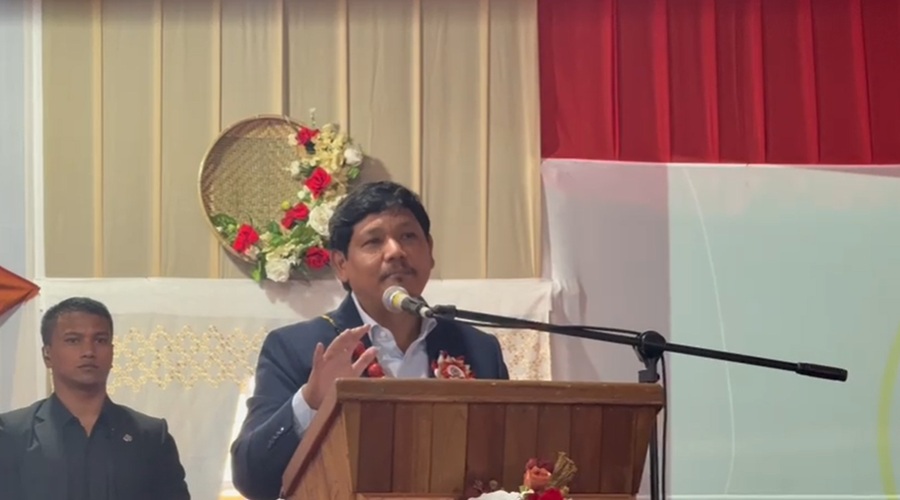
Shillong: The Meghalaya government is preparing to rationalise the state’s school network through a large-scale merger of institutions, citing declining enrolment, duplication of infrastructure, and unsustainable financial pressures on the education system.
Chief Minister Conrad K. Sangma said the state currently has more than 14,000 schools across government, SSA (Sarva Shiksha Abhiyan), grant-in-aid and private managements, including those run by church denominations.
He noted that many of these institutions operate with extremely low student strength, making the existing structure inefficient and costly to maintain.
Data shared by the government shows that 206 schools in the state currently have zero enrolment, while 2,269 schools function with single-digit student numbers.
Sangma said the overlapping presence of multiple school systems in the same areas has led to duplication of services without corresponding demand from students.
Under the proposed restructuring, the government aims to bring down the total number of schools to around 12,000 through mergers, without compromising access to education.

The chief minister also highlighted the financial burden on the state’s education sector. Meghalaya has 14,582 schools and around 55,000 teachers, with an annual salary expenditure of Rs 1,967 crore.
This includes Rs 917 crore for grant-in-aid private schools, Rs 684 crore for government teachers and Rs 366 crore for SSA teachers.
The pressure on state finances has increased further following the approval of a structured pay framework for ad hoc and SSA teachers, which is expected to raise annual expenditure by an additional Rs 817 crore.
Sangma remarked that a fraction of this amount — around Rs 200 crore — could have funded critical infrastructure projects such as the establishment of a veterinary college.
ALSO READ: NFR to run five pairs of Holi special trains to handle festive rush
Drawing comparisons with other northeastern states, he pointed out the imbalance in Meghalaya’s education infrastructure.
While Meghalaya has a population of about 29 lakh and 55,000 teachers, Tripura, with a population of 36 lakh, has 4,900 schools and 36,000 teachers.
Manipur operates 4,600 schools with 42,000 teachers, Nagaland has 2,700 schools and 31,000 teachers, and Mizoram has 3,900 schools with 23,000 teachers.
Sangma acknowledged that school closures and mergers are politically sensitive and often face resistance, but stressed that rationalisation is essential for long-term sustainability and better use of public resources.
He also noted the complexity of the system, pointing out that the state has 24 teachers’ associations, including four each representing ad hoc and SSA teachers, which adds to the challenges of reforming the sector.