










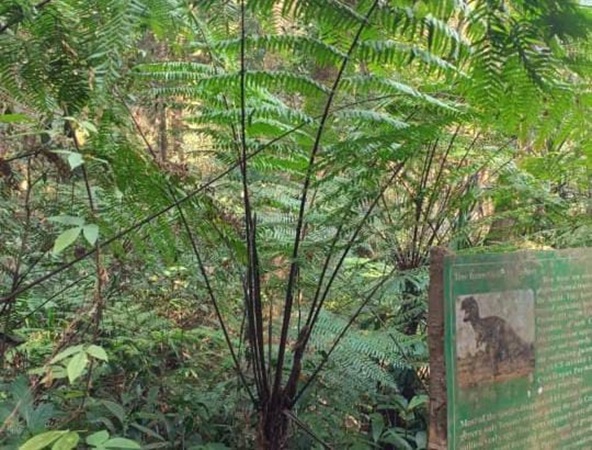
Shillong: Shillong MP Dr Ricky A J Syngkon has sought urgent intervention from the Union Ministry of Environment, Forest and Climate Change to prevent the acquisition of land belonging to the Experimental Botanical Garden at Barapani for the proposed Greenfield high-speed corridor of National Highway-6.
In a letter to Environment Minister Bhupender Yadav, Syngkon raised concerns over the proposed alignment of the highway, which could affect the Experimental Botanical Garden managed by the Botanical Survey of India’s Eastern Regional Centre in Shillong.
He said the garden, developed over more than five decades, is one of the country’s richest and best-maintained plant conservatories, housing over 1,200 species, including several endemic, endangered and threatened taxa from the Indo-Burma Biodiversity Hotspot.
The MP said he had personally visited the garden on multiple occasions and described it as a unique “gene sanctuary” that has evolved from invasive grassland into a major centre for ex-situ conservation through sustained scientific effort.
He noted that many plant species conserved at the site are protected under the Wildlife (Protection) Amendment Act, 2022, and that the garden also supports diverse faunal life, including birds, reptiles, insects and small mammals covered under various schedules of the Wildlife (Protection) Act.
Syngkon highlighted the garden’s role as a living classroom for students and a field laboratory for researchers from India and abroad, adding that it has contributed significantly to biodiversity conservation through the propagation and distribution of native species.

He cited the supply of over 2,000 seedlings and technical guidance by the Botanical Survey of India for a community-based ecological restoration initiative in Ri-Bhoi district as an example of its wider ecological relevance.
ALSO READ: Is Elon Musk about to become world’s first trillionaire?
While acknowledging the importance of infrastructure development and connectivity, the MP said the ecological, scientific and educational loss caused by the fragmentation or alienation of such a nationally significant conservation site would be irreversible and disproportionate to the benefits of routing the highway through the area.
He urged the ministry to examine the proposed acquisition in consultation with expert bodies, advise the road transport ministry and implementing agencies to adopt an alternative alignment that bypasses the garden, and consider recognising the site as a critical biodiversity conservation area of national importance.
Calling the Barapani garden a matter of pride for Meghalaya and the country, Syngkon said safeguarding it would reflect India’s commitment to balancing development with long-term ecological security.