










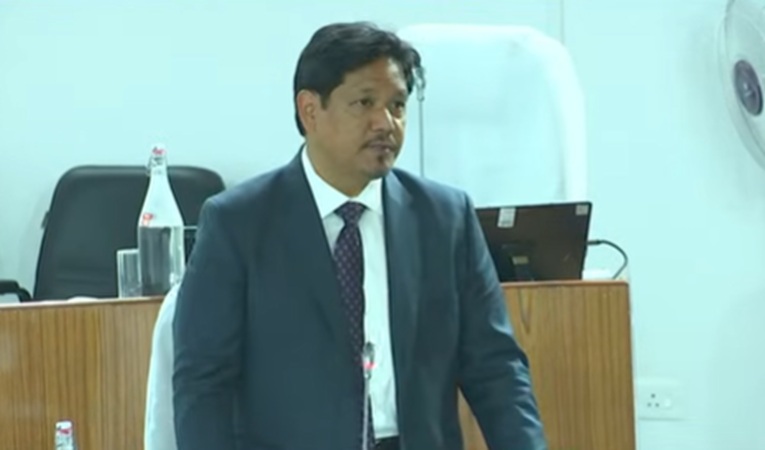
Shillong: Meghalaya Chief Minister Conrad K Sangma on Thursday floated the idea of short-term language training for legislators, proposing brief crash courses to help MLAs become familiar with local languages.
He suggested that representatives from Garo Hills take up Khasi lessons, while those from Khasi-Jaintia Hills learn Garo, saying such an initiative would set a positive example for the public as the government moves ahead with its push for language proficiency in public sector employment.
Speaking in the Assembly, Sangma said it would be beneficial to organise a 10 to 15-day crash programme for members of the House.
According to him, if MLAs themselves take the initiative to learn each other’s languages, it would send a strong message that leaders are willing to lead by example and promote unity and mutual respect across regions.
His remarks came while responding to concerns raised by Dr Mizanur Kazi, who questioned the government’s recent decision to make proficiency in Khasi and Garo compulsory for District Selection Committee (DSC) appointments.
Kazi warned that the policy could put unemployed youth in the Garo Hills at a disadvantage, especially in areas where facilities for learning local languages are limited.

He urged the government to ensure proper training infrastructure and allow adequate time for preparation before enforcing the rule.
Clarifying the government’s stand, the chief minister said the policy was not intended to exclude anyone from employment opportunities.
He explained that the core objective was to ensure that government employees are able to communicate in the local language.
He emphasised that the requirement was limited to basic conversational ability and not advanced or academic knowledge of the language.
Sangma further stated that the focus was on functional communication rather than literary expertise.
He said that if officials are unable to speak Khasi or Garo, it would directly affect service delivery, as they are expected to interact regularly with local communities.
According to him, the intention of the policy is not to deprive anyone of opportunities but to ensure that public servants can communicate effectively with the people they serve.
Referring to everyday realities, he noted that many people in the plain belt areas already speak Garo, adding that language barriers are not as severe as they are often perceived to be.
He also pointed out that the Cabinet has recently taken decisions to introduce Khasi and Garo in primary education, with textbooks already in the process of being developed, as part of a broader effort to strengthen mother tongue education.
“We are proud of our mother tongues, and this policy has been framed with that objective,” Sangma said, while reassuring that people should not feel threatened by the move.