









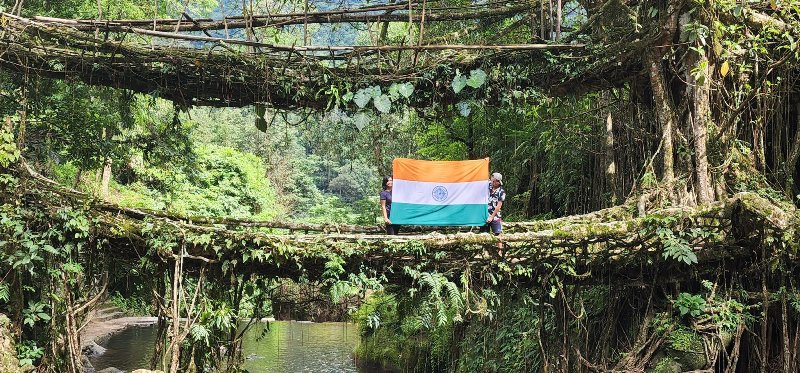
Shillong: India has formally submitted the nomination of Meghalaya’s iconic living root bridges to UNESCO for consideration for inclusion in the World Heritage List for 2026–27, Chief Minister Conrad K Sangma announced on Thursday.
According to an official statement, the nomination dossier was handed over in Paris by India’s Ambassador to UNESCO, Vishal V Sharma, to Lazare Assomo Eloundou, Director of UNESCO’s World Heritage Centre.
Expressing optimism over the nomination, Sangma said the state is hopeful that the living root bridges will be inscribed on the World Heritage List, which would bring global recognition to the indigenous communities that have preserved and maintained the unique structures over generations.
“We are hopeful that the living root bridges will be inscribed this year, ensuring that the indigenous communities, the true guardians of this living heritage, receive the global recognition they so richly deserve,” the Chief Minister said in a post on X.
The submission follows closely on the conferment of the Padma Award on Bah Halley War, in recognition of his lifelong efforts to practice, promote, and conserve this remarkable tradition of sustainable natural heritage, he added.
Ambassador Vishal V Sharma thanked Prime Minister Narendra Modi, Union culture minister Gajendra Singh Shekhawat, Meghalaya chief minister Conrad Sangma, officers in the Archaeological Survey India, Ministry of External Affairs, experts and the local communities guarding the property for this historic nomination, an official statement says.
“Located across the Khasi and Jaintia Hills of Meghalaya, the nominated property represents an exceptional living cultural landscape shaped over centuries by Indigenous Khasi and Jaintia communities,” the statement underscores.
ALSO READ: Meghalaya to host first-ever ‘Spice Festival’ in Mumbai from Jan 30
“The landscape reflects a deep-rooted and harmonious relationship between people, nature, and spirituality, embodied in traditional systems of land use, governance, and ecological stewardship. Central to this cultural landscape is the indigenous worldview anchored in principles of respect, reciprocity, and responsibility toward Mei Ramew (Mother Earth),” the statement explains.