








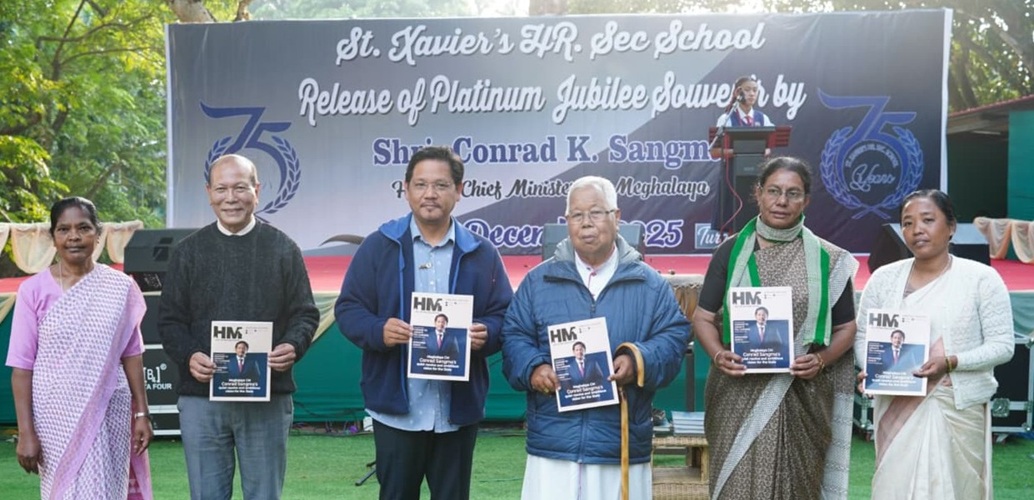
Shillong: Meghalaya Chief Minister Conrad K. Sangma on Thursday called for sweeping, long-term reforms in the state’s education system as he released the Platinum Jubilee Souvenir of St. Xavier’s Higher Secondary School, Tura, during a commemorative programme on the campus.
The event, held to mark the school’s 75 years of service, brought together dignitaries, alumni, students and parents.
In his address, Sangma said Meghalaya is at a critical demographic crossroads, with half of its 38 lakh population below the age of 20.
Describing this as both “a tremendous opportunity and a significant challenge,” he cautioned that the potential of the state’s youth must be guided through values-based education and meaningful opportunities.
Despite an annual spend of over Rs. 3,500 crore on education, the Chief Minister acknowledged that quality remains a consistent concern.

With nearly 55,000 teachers and close to 15,000 schools — many of them tiny institutions in remote villages with only a handful of students — he said the system requires restructuring.
“Reforming this structure is complex and cannot be done overnight,” Sangma said, adding that the transition would need a phased plan over the next 15–20 years to deliver real improvement.
He also stressed the need to strengthen cultural foundations by ensuring children learn both Khasi and Garo at least up to Class 4 or 5.
ALSO READ: Shillong Cricket Association calls MCA election ‘defective’, demands reboot
Sangma praised St. Xavier’s for nurturing some of Meghalaya’s brightest students over the decades.
As part of his support for the school, he announced a new bus under the Chief Minister’s Special Development Fund as well as musical instruments for the school band.
Earlier, Bishop Andrew R. Marak lauded the Missionaries of Christ Jesus for their dedicated service to the school, while Sister Marline Pinto reflected on its journey from a modest thatched structure in 1948 to an institution known for its academic and social initiatives, including special education and NIOS programmes.
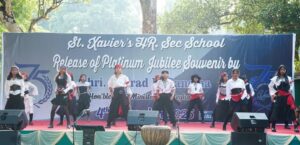
The programme also featured vibrant cultural presentations — including Wangala, Pirate and Ballet dances — before concluding with the Jubilee Song.