







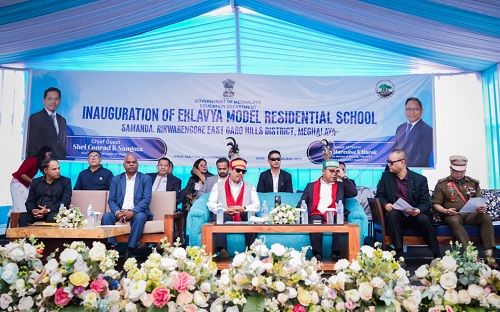
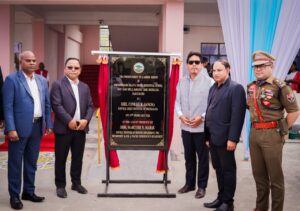
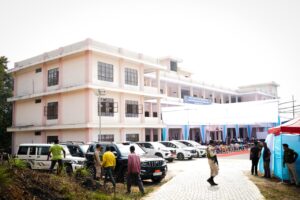
Shillong: Meghalaya Chief Minister Conrad K. Sangma inaugurated the Eklavya Model Residential School (EMRS) at Samanda, Rikwarenggre in East Garo Hills district, marking the commencement of the institution’s academic session.
The event was attended by Marcuise N. Marak, Minister of Housing, PHE Department and Soil & Water Conservation Department, and other dignitaries.
In his address, Chief Minister Sangma described the inauguration as “a memorable and gratifying occasion” and highlighted it as another milestone in the state’s education infrastructure.
Recalling the vision of late P. A. Sangma and his deep faith in education, he said, “Education is the biggest agent of change and the biggest development for a nation, state and society.”
He emphasised that investment in quality schools and colleges for the youth would yield long-term benefits.

Highlighting reforms introduced in the education sector since 2018, CM Sangma noted that nearly 80% of LP and UP schools across the state have been renovated or provided with new buildings. He added that the MBOSE syllabus has been upgraded and the examination system streamlined, while the introduction of CM Impact Books for Class X students contributed to a 96% pass percentage in last year’s SSLC examinations.
He further stated that renovation efforts to Ad Hoc, SSA and deficit schools, and that the pay structure of SSA teachers has been finalized, bringing positive changes to the sector.
Stressing the need for a supportive ecosystem, he said, “We need to create a conducive and secure educational environment not only for students but for teachers as well.”
The Chief Minister informed that there are 38 EMRS schools across the state and expressed gratitude to the Ministry of Tribal Affairs and the Prime Minister for their continued support.
Responding to requests from the school authorities, he announced funding of 20 computers under the Chief Minister’s Special Development Fund and assured that telecom and water supply issues would be addressed.
Addressing the gathering, Minister Marcuise N. Marak thanked the A’king Nokma for donating land for the school and said the institution would benefit students from Samanda and adjoining areas.
Also Read: Nepal Embassy advises citizens on safety after Meghalaya mine blast kills 9 nationals
Urging students to study diligently and make full use of the opportunity, he stressed that education is key to development and called on parents to actively support their children’s education.
He emphasized the importance of preserving local languages, including Garo, Khasi and Jaintia, while encouraging students to learn Hindi, observing that teachers from different states would help students gain fluency and strengthen their communication skills.
In his keynote address, Dr. M. Nandagopal, Principal, EMRS, Samanda, described the Eklavya Model Residential Schools as an initiative of the Ministry of Tribal Affairs, Government of India, launched in 1997-98 to provide quality residential education to Scheduled Tribe students in remote areas.
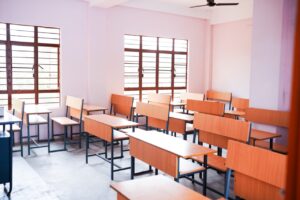
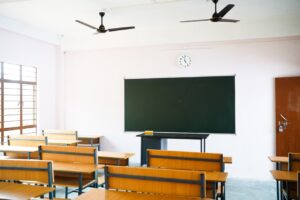
He said each EMRS is designed to accommodate about 480 students and is equipped with modern facilities, including science and computer laboratories and libraries.
He informed that the Samanda EMRS is currently functioning up to Class VIII with 130 students, with 50 additional admissions scheduled this month. Enrolment is expected to rise to 220 in the next academic session and will expand annually until full capacity is reached. The school follows the CBSE curriculum to ensure students from remote areas remain academically competitive.
He added that East Garo Hills is set to have three EMRS schools, two of which are already operational, in line with the government’s objective of establishing such schools in tribal-dominated blocks.
He stated that EMRS institutions prepare students for higher education, competitive examinations and professional careers, serving as an important instrument of social empowerment.
The event also featured musical and cultural performances by students of EMRS, JNV, Williamnagar and Do’kua CLF.