










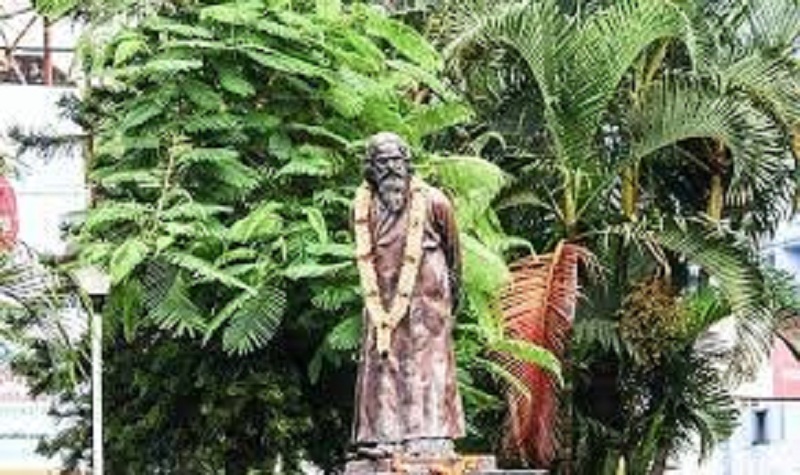
Guwahati: The cultural connection of Nobel laureate Rabindranath Tagore with Assam’s Barak Valley, especially Silchar, goes beyond a single visit. Although Tagore did not directly visit Silchar town, he had important links with the region.
In 1919, during his journey from Guwahati to Sylhet, he briefly halted at Badarpur railway station in Karimganj district.
Although he did not visit the town, his influence on the region is immense. Tagore’s association with the Barak Valley was shaped by family ties, literary references and close correspondence with prominent personalities from the area.
His speeches on education, nationalism and cultural awakening deeply influenced the Bengali-speaking people of the region. His poems, songs (Rabindra Sangeet) and plays gradually became an important part of the valley’s cultural life.
One lesser-known connection is with the historic Silcoorie Tea Estate in Cachar. Tagore’s nephew, Arunendranath Tagore, reportedly worked there as an assistant manager, becoming one of the first Indians to hold such a position during the colonial period. This reflected the Tagore family’s engagement with Assam’s tea industry at a time when most senior posts were held by the British.
Tagore’s influence can also be seen in local place names. Several roads, institutions and cultural organisations in Silchar are named after him, showing the lasting respect people have for him.

Historical accounts suggest that he referred to Karimganj as “Sribhumi,” a name that still carries cultural significance in the district.
The connection was further strengthened through personal and legal ties. Tagore’s father, Debendranath Tagore, is believed to have supported noted Silchar lawyer Kamini Kumar Chanda in legal matters related to tea estates. Tagore is believed to have fondly referred to Kamini Kumar Chanda as “Relchar.”
Kamini Kumar Chanda’s legacy continued through his sons, Anil Kumar Chanda and Arun Kumar Chanda. Anil Kumar Chanda assisted Tagore in important matters related to Santiniketan, strengthening intellectual links between the Barak Valley and Bengal.
Arun Kumar Chanda also made valuable contributions to education in Silchar, and A.K. Chanda Law College in Tarapur was established in his honour.
ALSO READ: Rima Das’ ‘Not a Hero’ earns warm reception at Berlin Film Festival premiere
Tagore also mentioned Silchar in his well-known poem ‘Shesher Kobita’, where the protagonist Amit Ray finds bliss, pecae and eternal joy while wandering all alone in the wilds of Sichar and Sylhet . This shows that the town had a place in Tagore’s literary imagination as well.
More than a century later, Rabindra Jayanti is still celebrated with great enthusiasm in Silchar, reflecting the deep and lasting impact of Tagore’s literary and cultural legacy on the Barak Valley.