










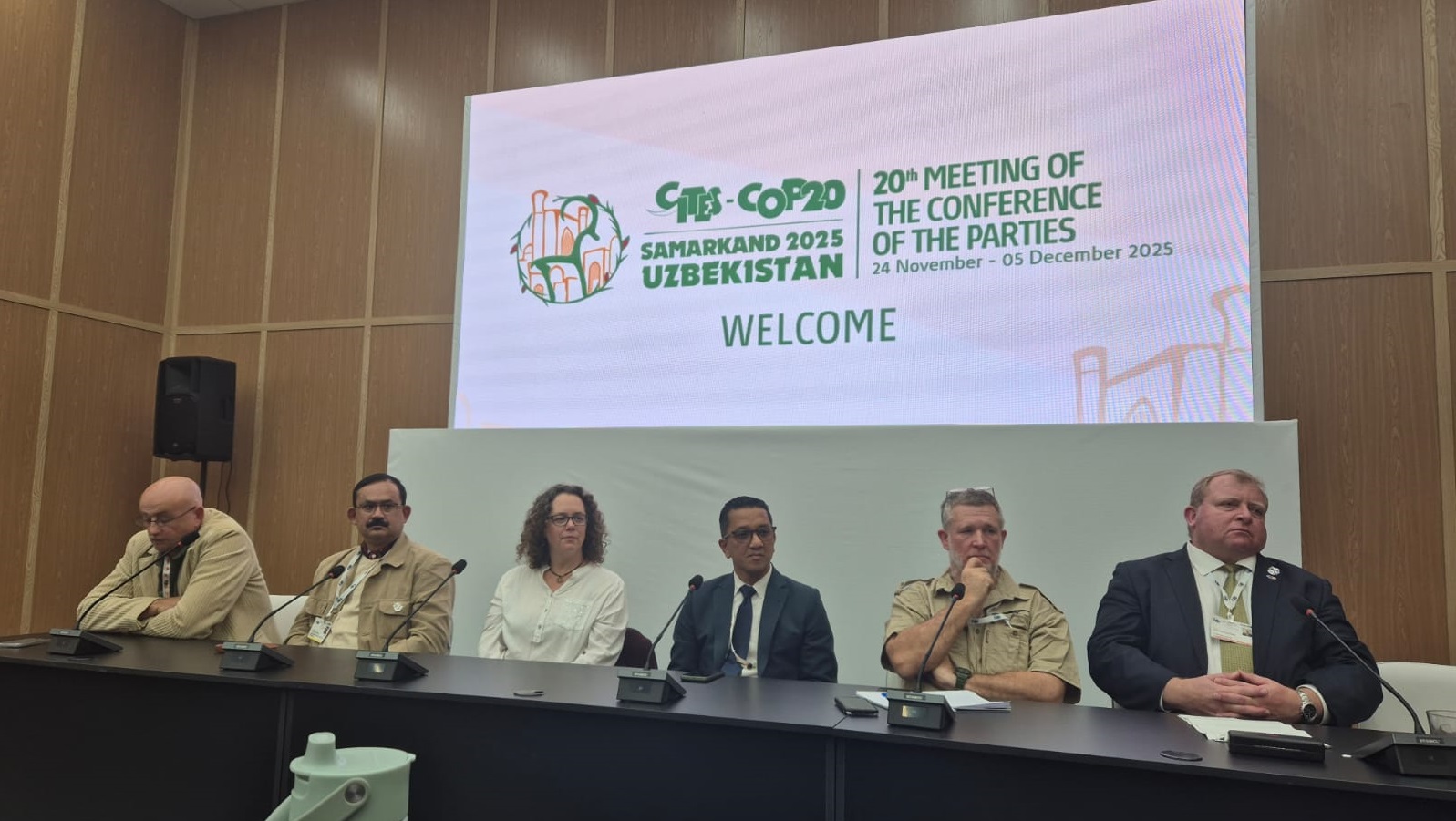
Assam-based conservation scientist Bibhab Kumar Talukdar has underlined the need to accord priority to conservation of Asian rhinos at the global dialogue on conservation of rhinos at the Twentieth Meeting of the Conference of the Parties (CoP20) to CITES, held at Samarkand in Uzbekistan.
Speaking at a high-level side event titled “How can CITES best support impactful rhino conservation?” at Samarkand, Talukdar emphasized on the immediate needs for better rhino conservation.
Talukdar was attending the CITES CoP20 as part of IUCN Delegation.
Hosted by the International Rhino Foundation (IRF) and Save the Rhino International, the event reviewed three decades of international collaboration to curb illegal poaching and horn trafficking under CITES Resolution Conf. 9.14.
The side event was graced by Ben Janse van Rensburg, Chief Enforcement Unit, CITES Secretariat, who has highlighted on background on CITES approach on support to rhino conservation, framing from the Rhino Enforcement Taskforce.
Participating as a distinguished panellist, Bibhab Talukdar, Chair of the IUCN/SSC Asian Rhino Specialist Group and also the Secretary General and Executive Director of Aaranyak, strongly advocated for advancing Asia’s rhino conservation priorities.

He highlighted success stories of rhino population recovery while drawing attention to persistent as well as emerging threats across Asian rhino habitats with special reference to iconic Greater one-horned rhino.
Talukdar appealed to CITES Parties to enhance collaboration within Asian Rhino Range Countries to learn from each other to bolster policy implementation and increase investment in community-led protection programmes.
“CoP20 presents a pivotal opportunity to intensify global commitment against the illegal horn trade and to safeguard the future of every rhino species,” Talukdar said.
The conservationist from Assam was recently honoured with the prestigious Harry Messel Award for Conservation Leadership by the Species Survival Commission of IUCN.
Talukdar said that rhino range countries need to engage with other law enforcement agencies like police, border forces more proactively besides forest and wildlife officials to facilitate shared responsibility to curb illegal rhino killings and international wildlife trade.
It is hoped that some of the actions Talukdar talked about, shall be picked up to secure Asian rhinos by the range country agencies.
The session concluded with a unified call for stronger international enforcement mechanisms, better compliance across borders, and sustained conservation financing – essential to ensure that both African and Asian rhinos continue on their path to long-term recovery.