










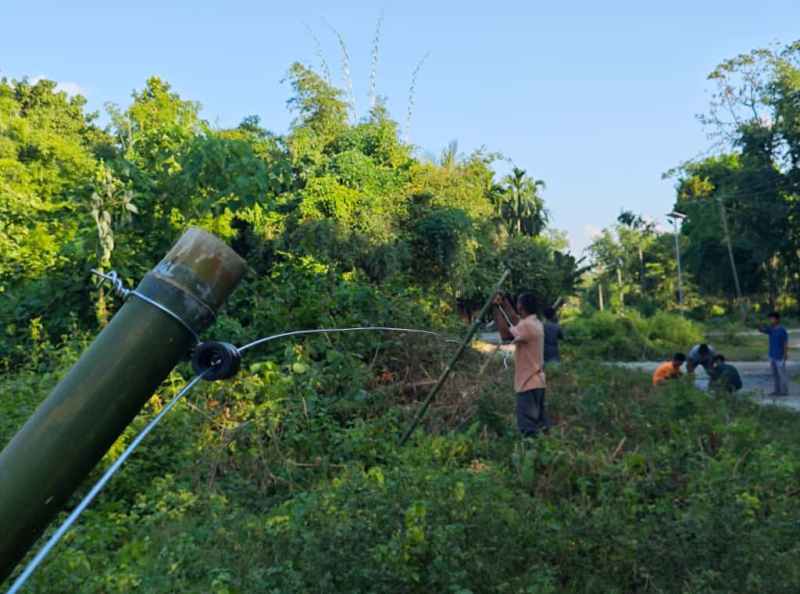
Guwahati: In a major effort to reduce human-elephant conflict, leading biodiversity conservation organisation Aaranyak, with support from SBI Foundation, has successfully installed a nearly 10-kilometre-long solar-powered fence system at Bhangrikuchi village in Assam’s Baksa district.
The solar-powered fence, managed by the local community and covering 18 hamlets, is set to safeguard nearly 285 households and extensive agricultural fields that have repeatedly been affected by wild elephant movement in the area.
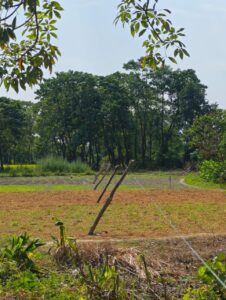
Bhangrikuchi has long remained vulnerable to repeated encounters with elephants, resulting in the destruction of crops and property. The newly installed solar-powered fence offers a safe, non-lethal and environmentally friendly method to deter elephants, while also discouraging the use of illegal and hazardous electric fencing practices.
To ensure long-term sustainability, a Bhangrikuchi Solar-powered Fence Management Committee has been formed to oversee maintenance and monitoring of the system. The initiative is aimed at strengthening community ownership and collective responsibility for safeguarding the fence infrastructure.
Before installation, Aaranyak conducted awareness meetings and field demonstrations to familiarise residents with the functioning of the solar-powered fence, safety measures and basic maintenance procedures. The active participation of community members played a pivotal role in ensuring the smooth implementation of the project.

The initiative was carried out by Aaranyak’s field team under the guidance of Anjan Baruah, Assistant Manager of the Elephant Research and Conservation Division (ERCD).
The fence was formally inaugurated on February 4 by the village head and subsequently handed over to the community in the presence of members of the Fence Management Committee and representatives from all 18 hamlets. Nearly 50 residents attended the programme.
ALSO READ: Assam CM transfers Gaurav Gogoi’s Pakistan links case to Centre
Speaking at the event, Baruah highlighted the importance of regular maintenance, adherence to safety norms and collective vigilance to ensure the fence remains effective in mitigating human-elephant conflict in the long term.