









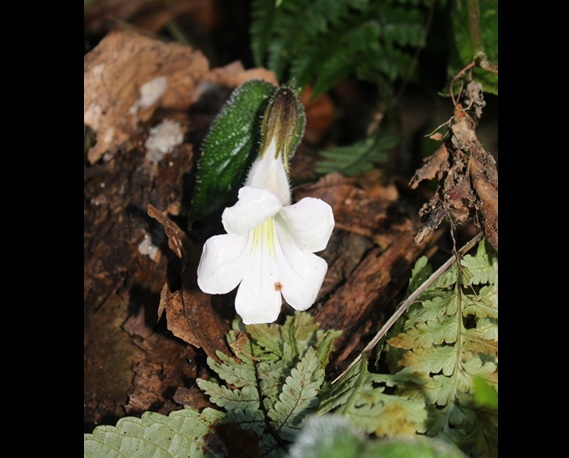
Itanagar: Nearly two centuries after it was last documented, a rare plant species endemic to Arunachal Pradesh has been rediscovered by scientists from the Botanical Survey of India during a field expedition in Lohit district, officials said on Saturday.
The species, Henckelia monophylla, had not been recorded for about 189 years, with its last known documentation dating back to the early 19th century.
Researchers say the rediscovery marks an important addition to botanical knowledge of the Eastern Himalayan region, which is globally recognised for its rich biodiversity.
Belonging to the Gesneriaceae family, Henckelia monophylla is a perennial herb that typically grows in moist forest habitats.
Plants of the Henckelia genus usually feature upright or slightly creeping stems with simple leaves that are ovate or lance-shaped.
They produce axillary clusters of tubular or funnel-shaped flowers, often displaying subtle and delicate colours.

The plant bears elongated capsule-like fruits that contain numerous tiny seeds, enabling the species to disperse and regenerate in favourable ecological conditions.
Botanists said the rediscovery highlights the ecological importance of continued field research in Arunachal Pradesh, which is considered one of India’s most significant biodiversity hotspots.
ALSO READ: Modi launches Rs 23,550-crore development projects in Assam’s Silchar
Reacting to the development, Chief Minister Pema Khandu congratulated the scientists for their achievement.
In a post on the social media platform X, Khandu described the rediscovery of Henckelia monophylla as a remarkable scientific milestone.
He noted that the finding in Lohit district reflects the extraordinary biological diversity of the state and contributes to global botanical knowledge.
The chief minister also commended the research team for their dedication to documenting and conserving the region’s unique plant species.