










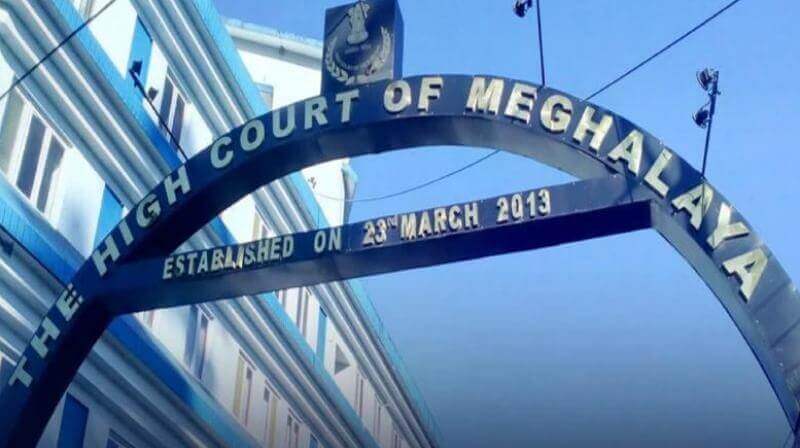
Shillong: In a significant judgment, the Meghalaya High Court on Tuesday quashed a notification issued by the Garo Hills Autonomous District Council (GHADC) on February 17, 2026, which had made the submission of a Scheduled Tribe certificate mandatory for candidates filing nomination papers to contest elections to the council.
The single-judge bench of Justice Hamarsan Singh Thangkhiew delivered the verdict while hearing a writ petition filed by Enamul Hoque of Namabilla village under Rajabala Police Station in West Garo Hills district, challenging the GHADC notification issued by the Chief Executive Member.
The petitioner argued that the GHADC Executive Committee had no authority to de-franchise legitimate non-tribal voters through an executive order, stating that such a move violated the Assam and Meghalaya Autonomous Districts (Constitution of District Councils) Rules, 1951, framed under paragraph 2(6) of the Sixth Schedule of the Constitution of India.
Senior advocate K. Paul, appearing for the petitioner, submitted that Rule 8 and Rule 128 of the 1951 Rules govern the qualifications for membership and electors.
Under these provisions, any person entitled to vote in the council elections is also qualified to contest, while non-tribals are allowed to vote if they are permanent residents within the territorial limits of the autonomous district.
He further argued that any change to these provisions would require following the legislative procedure prescribed under Rule 72, which mandates that proposed rules must be drafted by the Executive Committee, placed before the District Council for approval and subsequently approved by the Governor before coming into force.

Paul argued that the February 17 notification bypassed this mandatory process and had not been placed before the full District Council for approval.
The petitioner also pointed out that since the formation of the GHADC, non-tribal voters included in the electoral rolls have participated in elections and several have even been elected as members of the council.
“The sudden change sought to be brought about by the impugned notification without any legislative approval is therefore incompetent and unjustified,” Paul submitted before the court.
Counsel S. Dey, appearing for the GHADC, defended the notification by invoking Rules 29(a)(b) and 30 of the 1951 Rules, citing demographic changes and emergency powers. He also referred to an earlier judgment in WP(C) No. 3 of 2014.
Dey argued that the Rules empower the Executive Committee to take up matters involving significant administrative changes in the Autonomous District and to propose regulations, rules, or laws. He added that Rule 30 allows the Executive Committee to take up such matters in emergency situations even when the Council is not in session.
Advocate General Amit Kumar, representing the state government, submitted that the notification lacked legislative sanction and would require amendments to Rule 128 to become valid.
Referring to Rule 72(2), Kumar stated that rules confirmed by the District Council must be forwarded to the District Council Affairs Department and require the Governor’s approval before coming into force.
“In the instant case, there has been no proposal for amendment of the Rules and the impugned notification has been issued without due process being followed. Hence, by operation of law and in the absence of legislative sanction, the impugned notification cannot be said to be valid,” he submitted.
While delivering the judgment, Justice Thangkhiew examined paragraphs 2(6) and 2(7) of the Sixth Schedule along with the provisions of the 1951 Rules. The court held that the Executive Committee could only propose changes but could not unilaterally alter the qualifications for contesting elections.
The court further noted that the impugned notification had been issued at the level of the Executive Committee without being placed before the full District Council and without undergoing the mandatory legislative process.
ALSO READ: HSSLC exams on March 11–12 postponed in Meghalaya’s West Garo Hills over tense situation
The judge observed that the impugned notification could at best be considered the first step in proposing changes, which would require corresponding amendments to Rule 8 and Rule 128 of the 1951 Rules.
Accordingly, the court set aside and quashed the February 17 notification issued by the GHADC.