









By Chandan Nandy and Enayet Kabir
Bangladesh Directorate General of Forces Intelligence chief Major General Kaisar Rashid Chowdhury’s two-day visit to New Delhi earlier this month, less than a week after assuming charge, now appears to be linked to “setting up” the “capture” of the two alleged killers of a young anti-India Islamist who was fired at in Dhaka on December 12, 2025.
Sharif Osman Hadi, convenor of a new outfit, Inqilab Mancha, was shot in the head by motorcycle-borne gunmen in Dhaka’s Paltan area on December 12, 2025. He subsequently died in a Singapore hospital on December 18, 2025.
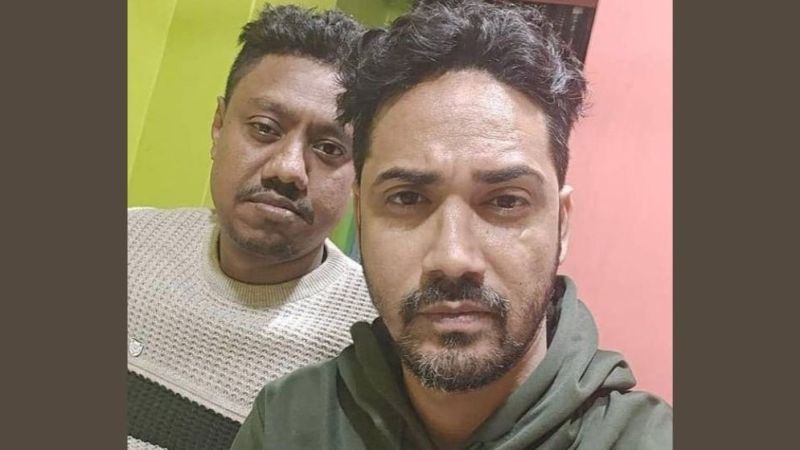
Soon after hitting Hadi, the two alleged killers supposedly fled to India even as the police in Meghalaya and Assam and senior BSF officials strongly denied the illegal entry of the duo identified as Faisal Karim Masud, alias Rahul, and Alamgir Hossain.
It was said that Hossain rode the motorcycle while Masud, riding pillion, fired at Hadi, who was on a cycle rickshaw, in the Paltan area of central Dhaka.
It was presumed that Masud and Hossain crossed into Meghalaya from where they travelled to Assam. There was evidence at the time to indicate that they entered West Bengal.

Now, however, their so-called “arrest” in the Bongaon border area in West Bengal’s North 24 Parganas district raises several questions.
• Did Masud and Alamgir actually cross over to India without being detected by police forces in at least two border districts as well as the BSF?
• How could they move freely within parts of India before finally surfacing at Bongaon, where they were said to have been arrested?
• Did the DGFI have a hand in “sharing” intelligence with Indian authorities, who in turn passed it on to West Bengal police which finally nabbed the two?
• Or did something else, involving Bangladeshi and Indian officials, happen to keep the wraps on Masud and Hossain’s whereabouts till such time that Mohammad Yunus-led interim regime remained in power in Bangladesh?
• More importantly, who harboured Masud and Hossain in India? The two are foreigners and could not have managed to move about and live in a safe location without local help.
• Why is it that the police in Meghalaya, Assam and West Bengal have not arrested any Indian who might have helped Masud and Hossain?
Bongaon is a bustling and crowded border town from where the ‘zero point’ is 3 kms away at Petrapole. This is where the Indian immigration check post is located. On the other side of the border is Benapole, where similar immigration, police and Border Guard Bangladesh infrastructure and personnel exist.
Masud and Hossain could have tried re-entering Bangladesh at a more non-descript border point where their presence would have gone undetected. But they chose Bongaon.
It is being said that Masud and Hossain were nabbed when they were attempting to cross the border into Bangladesh. Why would two persons accused of murder in their country of origin try to return when they were “safe” in India?
More importantly, DGFI chief Maj Gen Kaisar Rashid Chowdhury reached New Delhi from Dhaka on March 1, raising critical questions on the newly appointed intelligence head’s maiden visit to the Indian capital.
Was Maj Gen Chowdhury’s mission aimed at sharing information on Masud and Hossain’s whereabouts or was the duo safely ensconced in an undisclosed location in Bangladesh for the past three months before they were “taken across” to Bongaon where they were “shown arrested” by West Bengal police?
Even more intriguing was the West Bengal Special Task Force’s press release, which said that the arrests were based on “secret credible information” related to two Bangladeshi nationals.
“There was secret credible information that two Bangladeshi nationals, after committing serious crimes including extortion and murder in Bangladesh, had fled their country and illegally entered India, and were trying to take shelter in the border area of Bongaon with the intention of crossing back into Bangladesh when an opportunity arises,” the STF statement said.
Very conveniently, Masud and Hossain were nabbed after the STF acted on a tip-off on the West Bengal side of the border during the intervening night of March 7 and 8. More questions arise:
• When did Masud and Hossain enter West Bengal? At what address did they hide themselves? Who helped them reach Bongaon?
• In the event the DGFI knew the whereabouts of Masud and Hossain, why did it take so long – certainly after the BNP-led government assumed charge on February 17 – for the agency to share the information with Indian authorities?
• Were Masud and Hossain in the West Bengal STF’s custody for several days before they were shown arrested on March 8? Or did the DGFI hold the two in custody not long after the alleged crime was committed on December 12, 2025?
Whatever the truth, the DGFI knew all along where Hadi’s alleged killers were hiding and kept tabs on their movement for the past three months. The night the West Bengal STF made the arrests, the DGFI took unusually proactive steps to project its role.
In a press release issued on March 8, Bangladesh’s Inter-Services Public Relations unit said that the process to hand over Masud and Hossain was already underway.
The ISPR acknowledged the DGFI’s role when a more prudent approach would have been to maintain silence. This would have been in keeping with the long-established principle of discretion associated with security and operational success.
The Bangladesh government will now seek Masud and Hossain’s formal extradition, a process that will be time-consuming, especially as Indian authorities will also have to take legal steps against the duo for entering the country unlawfully.
ALSO READ: US State Dept official Paul Kapur’s India-Bangladesh visit: Arrived with fanfare, left Dhaka quietly
The West Bengal STF will also have to undertake probe missions to Meghalaya, a move that is yet to begin. Besides, it is not anytime soon that Masud and Hossain will be repatriated to Bangladesh, as they will have to contend with cases of illegal entry into India.