









On February 22, 2026, in a landmark announcement that signals a paradigm shift for environmental conservation in Northeast India, Pallav Gopal Jha, the Secretary to the Government of Assam for the Science, Technology, and Climate Change Department, confirmed this week that the state has obtained in-principle Cabinet approval to establish dedicated dark sky parks in three primary locations.
Speaking on the culmination of preliminary studies conducted across eight potential sites, Jha revealed a comprehensive roadmap aimed at curbing light pollution and safeguarding the region’s nocturnal biodiversity.
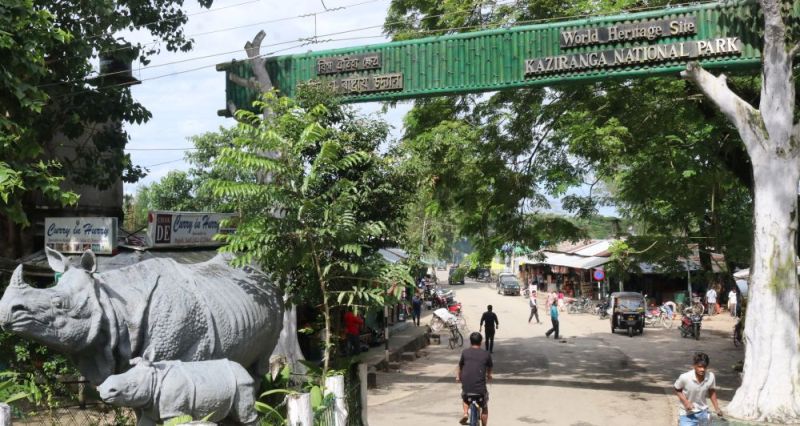
The findings, spearheaded by a multi-departmental initiative involving forestry, power, and rural development, have identified Kaziranga National Park, Manas National Park, and Dima Hasao as the leading candidates for this prestigious international designation, with Kaziranga recording a staggering 94.62% pristine dark area—the highest among all surveyed sites—followed closely by Manas at 92.51% and Dima Hasao at 87.05%.
This bold move to implement downward-focused LED fixtures and smart lighting management in buffer zones is not merely a local policy shift; it is the newest pulse in a global movement that seeks to restore the velvet canopy of the night sky to a world increasingly drowning in artificial luminescence.
The concept of a “Dark Sky Place” is a technical and management framework designed to protect the night sky as a finite natural resource.
While the terms are often used interchangeably in casual conversation, the International Dark-Sky Association—now known as DarkSky International—and the Starlight Foundation maintain rigorous distinctions between parks, reserves, and sanctuaries.

An International Dark Sky Park (IDSP) is typically a publicly or privately owned conservation area, such as a national park, that possesses an exceptional quality of starry nights and a nocturnal environment specifically protected for its scientific, natural, or educational value.
These areas are often wildernesses devoid of permanent human settlements, where management focuses on providing “dark sky programs” to educate the public on the wonders of the cosmos.
In contrast, an International Dark Sky Reserve (IDSR) is a more complex multi-jurisdictional partnership consisting of a dark “core” zone that meets stringent sky-quality criteria, surrounded by a populated peripheral or “buffer” area where lighting ordinances are enacted to protect the core’s darkness.
This model is particularly suited for regions where human habitation exists in proximity to sensitive astronomical or ecological sites, requiring a collaborative effort between local governments, landowners, and residents.
For the most isolated and fragile environments on the planet, the “Sanctuary” designation is reserved, recognizing sites with the highest levels of natural darkness where geographic isolation prevents large-scale public outreach but necessitates the highest tier of conservation.
This movement to rescue the stars from the glare of modernity traces its origins back to the mid-20th century, born from the frustration of astronomers whose research was being blotted out by urban skyglow.
The historical catalyst occurred in 1958 in Flagstaff, Arizona, where the city enacted the first-ever municipal light pollution ordinance to protect the research capabilities of the Lowell Observatory.
What began as a technical requirement for professional science gradually evolved into a broader socio-environmental cause. In 1988, the formation of the International Dark-Sky Association provided a coordinated global voice, and by 2001, the “International Dark Sky Places” program was officially launched.
The first certified reserve and park followed in 2007 at Mont Mégantic in Quebec and Natural Bridges in Utah, respectively. Since then, the progress of the global community has been exponential; as of early 2025, over 200 sites covering more than 160,000 square kilometres across 22 countries have been formally recognized.
Successfully identified spots now dot nearly every continent, serving as beacons of hope for “astro-environmentalism.” In the Southern Hemisphere, New Zealand’s Aoraki Mackenzie International Dark Sky Reserve spans 4,300 square kilometres and has become a global model for integrating scientific preservation with Indigenous Māori cultural heritage.
In Europe, Northumberland National Park in England holds a Gold-Tier status, while Albanyà in Spain has emerged as a premier destination for European astrotourism.
India, too, has rapidly ascended as a leader in this field, with the establishment of the Hanle Dark Sky Reserve in Ladakh—one of the world’s highest-located sites for optical and infrared astronomy—and the Pench Tiger Reserve in Maharashtra, which became Asia’s fifth official Dark Sky Park in 2024.
These sites are not merely designated by decree; they must meet exacting global standards.
Furthermore, sites must strictly adhere to the Five Principles for Responsible Outdoor Lighting, which dictate that all light must be useful, targeted, low-level, controlled through timers or sensors, and restricted to warm colour temperatures of 3000Kelvin or lower to minimize the atmospheric scattering of blue light.
Despite this progress, the global community faces an unprecedented threat from the proliferation of large satellite constellations in Low Earth Orbit (LEO).
These satellites create streaks of reflected sunlight that disrupt astronomical research and alter the appearance of the night sky for all of humanity. To make the vision of a dark-sky-friendly world a reality, international bodies like the International Astronomical Union (IAU) and the United Nations Office for Outer Space Affairs (UNOOSA) are currently working toward harmonized intergovernmental standards.
This includes drafting a 2027 resolution to replace the outdated 1979 standard, with a new goal of achieving “zero-growth” in light pollution and eventually reversing its expansion within a decade.
Steps such as the “French Decree of 2018,” which imposes mandatory technical requirements and curfews on public and private lighting nationwide, serve as legislative templates that the rest of the world must follow to ensure regulatory certainty and environmental protection.
The benefits of these steps extend far beyond the narrow interests of astronomers; they are essential for the survival of the biosphere and the health of the human species. The biological study of darkness, or scotobiology, has revealed that artificial light at night (ALAN) creates catastrophic disruptions for nocturnal wildlife.
Migratory birds, disoriented by urban beams, collide with infrastructure or circle until they die of exhaustion. Sea turtle hatchlings, mistaking land-based lights for the moon reflecting on the ocean, crawl inland to their deaths.
On a global scale, the loss of ecosystem services due to light pollution is estimated at an astronomical $3.4 trillion annually, representing nearly 3% of the global GDP.
For humans, the disruption of our circadian rhythms is a public health crisis; chronic exposure to artificial light suppresses melatonin and is significantly correlated with increased risks of sleep disorders and various forms of cancer.
A 2022 study by AIIMS Delhi found that urban residents exposed to high outdoor light levels suffered from 40% higher rates of sleep disorders.
Moreover, the transition to dark sky preservation is a powerful engine for state economies. The “darkness economy,” fuelled by astrotourism, is one of the fastest-growing niches in the travel industry.
Ultimately, reclaiming the night is a humanitarian imperative. For millennia, the stars have been the canvas of human mythology, navigation, and storytelling. For many Indigenous communities, the erasure of the night sky is seen as a form of sensory deprivation or “cultural genocide” that severs the connection to ancestral knowledge.
By following the lead of visionaries in Assam and across the globe, we are not merely protecting a scientific facility; we are safeguarding a fundamental human right to wonder.
ALSO READ: Strangers at Home
The steps toward a global reality—formalizing “Dark Sky Oases” under international law and enforcing national lighting codes—will ensure that future generations can still step outside and be greeted by the ancient, silver light of the Milky Way, reminding us of our place in a vast and beautiful cosmos.