










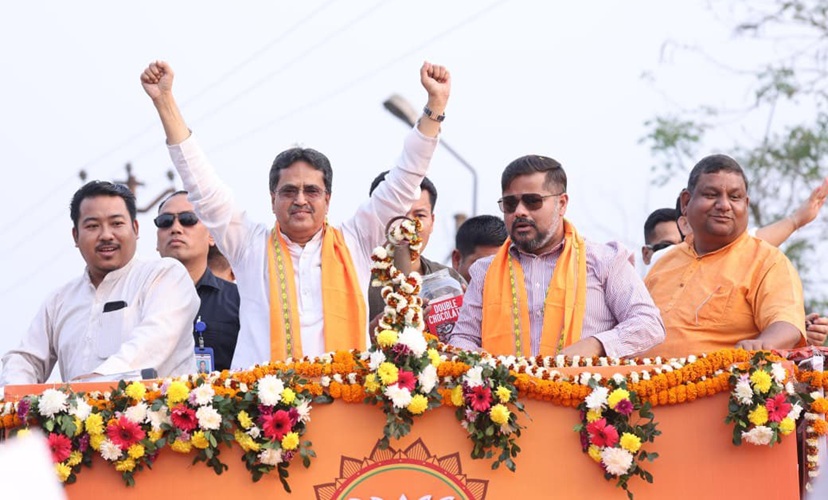
Agartala: Manik Saha on Wednesday sounded the poll bugle for the elections to the Tripura Tribal Areas Autonomous District Council, launching the BJP’s campaign with a mega rally at Khumulwng, the council’s headquarters in West Tripura.
The polling schedule for the 30-member tribal council is yet to be announced, but the election process must be completed by April 18.
The TTAADC administers nearly 68 per cent of Tripura’s geographical area and holds significant political importance in the state.
Addressing the “Empowering Janajati, Empowering Tripura” rally, Saha said inclusive development remains central to the BJP’s agenda.
Referring to Prime Minister Narendra Modi’s “Sabka Saath, Sabka Vikas, Sabka Vishwas” vision, he asserted that Tripura’s progress would be incomplete without the uplift of its tribal communities.
Holding the rally at Khumulwng, he said, symbolised the party’s commitment to indigenous welfare.

The council is currently governed by the Tipra Motha Party (TMP), which is an ally of the BJP. However, both parties are set to contest the upcoming elections independently.
In the previous TTAADC polls, TMP secured 18 seats, while the BJP won 10, with two members nominated by the Governor as per existing provisions.
Targeting the TMP, the chief minister alleged that the party had failed to deliver effective governance in the council areas.
ALSO READ: Meghalaya IAS officer celebrates Holi by painting PMAY beneficiary’s home
He also criticised the Communist Party of India (Marxist), claiming that during its tenure it treated tribal communities as a vote bank.
In contrast, he said, the BJP has worked since 2018 to improve the socio-economic conditions of indigenous people.
Saha expressed confidence that the BJP would secure victory in the forthcoming elections, pointing to what he described as growing support among tribal voters.
The TTAADC was set up in 1982 to safeguard the rights and promote the development of the Tiprasa people.
It became operational under the Sixth Schedule of the Constitution in 1983, granting it administrative autonomy over designated tribal areas.