










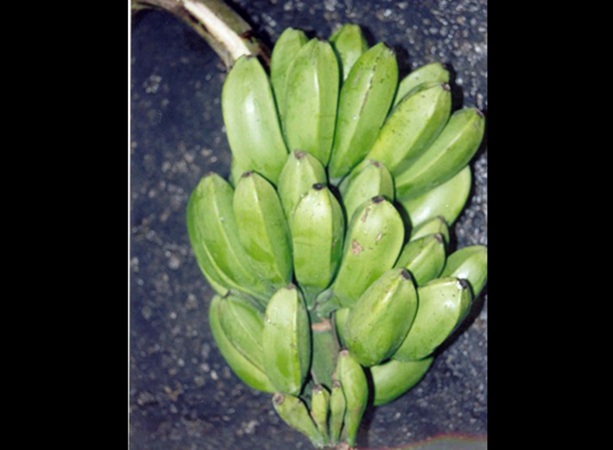
Kohima: A comprehensive study by researchers at Nagaland University has brought to light the vast genetic potential of Musa sikkimensis, a wild banana species native to the Eastern Himalayas and Northeast India, highlighting its importance for climate-resilient agriculture and long-term food security.
The research underscores that Musa sikkimensis—popularly known as the Darjeeling or Sikkim banana—serves as a vital genetic reservoir despite not being widely cultivated for consumption.
The species carries traits associated with disease resistance, tolerance to environmental stress and adaptability to changing climatic conditions, making it a valuable resource for future banana breeding and crop improvement initiatives.
The study, titled “Exploring the Genetic Diversity of Musa sikkimensis Land Races in Nagaland, India”, documents the strong adaptive potential of local banana germplasm across varied ecological zones.
Researchers emphasised that such diversity is crucial for strengthening crop resilience and ensuring sustainable agricultural production in the face of climate change.
Nagaland, situated within the Indo-Burma biodiversity hotspot, is home to a rich array of indigenous banana genotypes.

However, growing anthropogenic pressures, deforestation and environmental degradation have placed several wild varieties at risk of decline, prompting urgent conservation efforts.
The findings, published in a peer-reviewed journal focusing on biodiversity and environmental conservation, were co-authored by research scholars K. R. Singh, Dr S. Walling and Dr Animesh Sarkar of Nagaland University.
Vice-Chancellor Prof. Jagadish K. Patnaik described the work as a significant scientific milestone, noting that the university has developed a biodiversity corridor aimed at conserving indigenous banana germplasm facing extinction threats.
He said the initiative reflects the institution’s responsibility towards safeguarding the wild flora of Northeast India and advancing scientific research rooted in local genetic resources.
In a changing climate scenario, he added, the study would contribute to strengthening genetic resilience, improving adaptability and enhancing nutritional security.
The research builds on a series of postgraduate and doctoral projects conducted under the supervision of Dr Animesh Sarkar, Associate Professor in the Department of Horticulture.
The projects have focused on biodiversity mapping, characterisation of wild banana species and evaluation of genetic resources across the State.
Dr Sarkar said the team encountered significant challenges during field exploration, including difficult terrain, limited access to remote forests and low awareness among farmers about germplasm conservation.
He also noted a growing shift among cultivators towards hybrid and tissue-culture varieties, which could accelerate the erosion of traditional and wild banana genotypes.
Beyond agricultural resilience, the study highlights the ethnobotanical significance of wild bananas among indigenous communities in Nagaland.
Various plant parts are traditionally used for food, fibre, medicine and cultural practices, with reported medicinal applications for ailments such as dysentery, ulcers, diabetes and microbial infections.
ALSO READ: 24 youths from Meitei, Kuki, Naga, Meitei Pangal communities join Manipur Integration Tour
To reinforce conservation measures, the university has established a Banana Biodiversity Corridor within its Department of Horticulture.
The corridor functions as a living field gene bank, integrating in situ and ex situ conservation methods while supporting molecular research, climate-resilient breeding programmes and national germplasm security initiatives.
Additionally, Dr Sarkar has set up a state-wide network for banana biodiversity exploration and biotechnological research, supported by funding from the Department of Biotechnology under the Central government.
Researchers maintain that harnessing wild banana genetic resources could pave the way for developing high-yielding, disease-resistant varieties and innovative value-added products, contributing not only to climate-resilient farming but also to rural livelihoods and socio-economic development.