










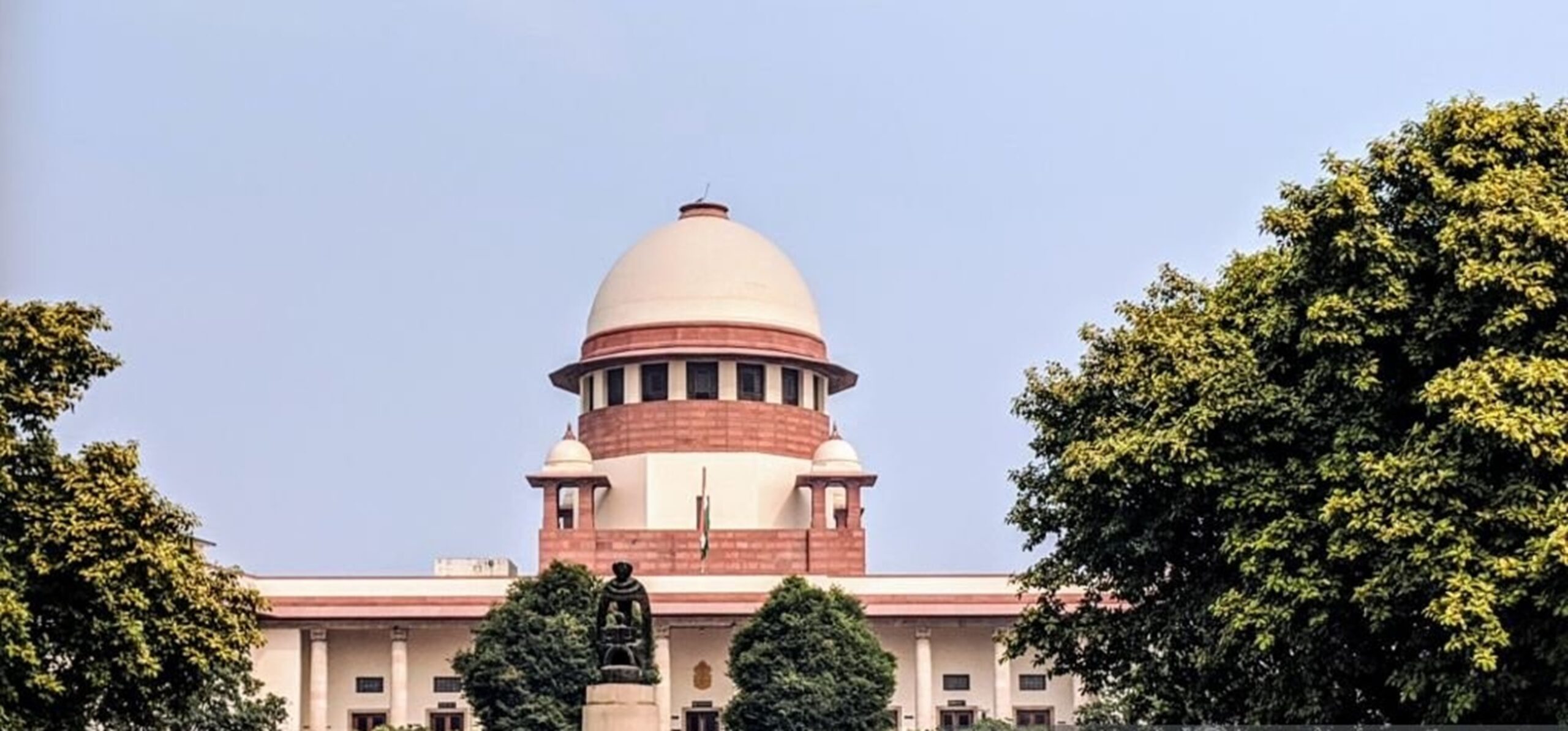
The Supreme Court of India has constituted a High-Powered Committee to reform, govern and expand Open Correctional Institutions (OCIs) across the country, directing that the process be streamlined within three months.
A bench of Justice Vikram Nath and Justice Sandeep Mehta, in its judgment dated February 26, 2026, passed a series of directions while hearing a public interest litigation filed by human rights activist Suhas Chakma, which highlighted overcrowding, inhumane prison conditions and degrading treatment of inmates in prisons across India.
The court ordered the formation of a High-Powered Committee for Reform and Governance of Open Correctional Institutions, to be headed by retired Supreme Court judge Ravindra Bhat as Executive Chairperson.
The committee will include representatives from the National Legal Services Authority (NALSA), the Union Home Ministry, the Ministry of Social Justice and Empowerment, the Ministry of Skill Development and Entrepreneurship, the Bureau of Police Research and Development (BPR&D), state and UT home departments, and senior prison administration officials from selected states.
In its ruling, the apex court underlined that reform, rehabilitation and reintegration must form the core of the criminal justice system, holding that Article 21 of the Constitution obligates the State to enable prisoners to live with dignity and normalcy.
It observed that the underutilisation of existing OCIs, despite available infrastructure, reflects systemic failure and calls for urgent corrective action.

The court examined multiple gaps in the current system, including the absence of OCIs in several states and Union Territories, underutilisation of existing facilities, exclusion of women prisoners, rigid eligibility criteria, weak rehabilitative programmes, and the lack of uniform national standards for governance and management of open prisons.
As part of its operative directions, the Supreme Court ordered states without OCIs — including Arunachal Pradesh, Chhattisgarh, Goa, Haryana, Jharkhand, Manipur, Mizoram, Nagaland, Sikkim and Telangana — and several Union Territories to assess the feasibility of establishing open prisons within three months.
States reporting underutilisation of existing OCIs and open barracks were directed to prepare time-bound plans to fill vacancies and optimise capacity.
The court also directed all states and UTs to restructure OCIs and open barracks to ensure adequate space for women prisoners, calling their exclusion “contrary to domestic and international prison administration standards”.
Governments were further instructed to amend prison rules and administrative frameworks to strengthen rehabilitation and reintegration mechanisms.
ALSO READ: Union Minister Virendra Kumar visits CRC Shillong, reviews disability empowerment programmes
To ensure uniform standards nationwide, the Union government, through the Ministry of Home Affairs, was directed to provide full financial and logistical support to the High-Powered Committee, including infrastructure, staffing and operational requirements.
The judgment also mandates a comprehensive expansion of open prison infrastructure, with each state and UT required to submit time-bound action plans outlining timelines, budgets and capacity targets.
For monitoring compliance, the Supreme Court directed all High Courts to initiate suo motu proceedings to oversee implementation within their jurisdictions.
States and UTs must constitute Monitoring Committees within four weeks, submit quarterly status reports to High Courts, and ensure annual consolidated compliance reports are forwarded to the Supreme Court.
Reacting to the judgment, petitioner Suhas Chakma described it as a historic and unprecedented step, saying it establishes a concrete operational structure with strict deadlines and judicial monitoring, marking a major move towards restoring dignity and humanity within India’s prison system.