










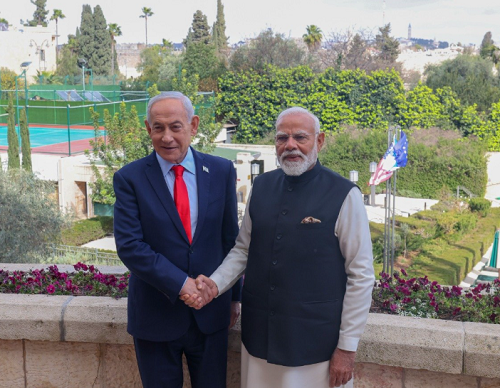
Prime Minister Narendra Modi on Monday held a telephonic conversation with his Israeli counterpart, Benjamin Netanyahu, amid ongoing escalations in West Asia.
In a statement, PM Modi reiterated India’s stance on the ongoing conflict, pushing for early de-escalation of the hostilities. Modi said that he conveyed India’s concerns over the recent developments and emphasised the safety of civilians as a priority.
In a post on X, PM Modi said, “Had a telephone call with PM Benjamin Netanyahu to discuss the current regional situation. Conveyed India’s concerns over recent developments and emphasised the safety of civilians as a priority. India reiterates the need for an early cessation of hostilities.”
The telephonic conversation took place in the wake of the deepening regional crisis following the killing of Iran’s Supreme Leader Ayatollah Ali Khamenei and subsequent retaliatory strikes.
Iran also fired a series of missiles towards Israel and several other West Asian countries.
On Sunday night, PM Modi also spoke to the President of the UAE, Sheikh Mohamed bin Zayed Al Nahyan, and strongly condemned the attacks on the Gulf nation, saying India stands in solidarity with the UAE in these difficult times.
Also Read: Middle east crisis: No immediate oil supply disruption for India, but price volatility looms
Modi chaired a meeting of the Cabinet Committee on Security (CCS) in New Delhi to assess the rapidly evolving situation after the joint US-Israel strikes on Iran and Khamenei’s death. According to sources, the CCS reviewed security implications for India and the wider region. Defence Minister Rajnath Singh, Home Minister Amit Shah, External Affairs Minister S Jaishankar, Finance Minister Nirmala Sitharaman and National Security Advisor Ajit Doval were present at the meeting.

Meanwhile, India’s Minister of External Affairs Dr S Jaishankar held separate discussions on Saturday with his counterparts in Israel and Iran, reiterating India’s consistent appeal for dialogue and diplomacy to ease tensions.