










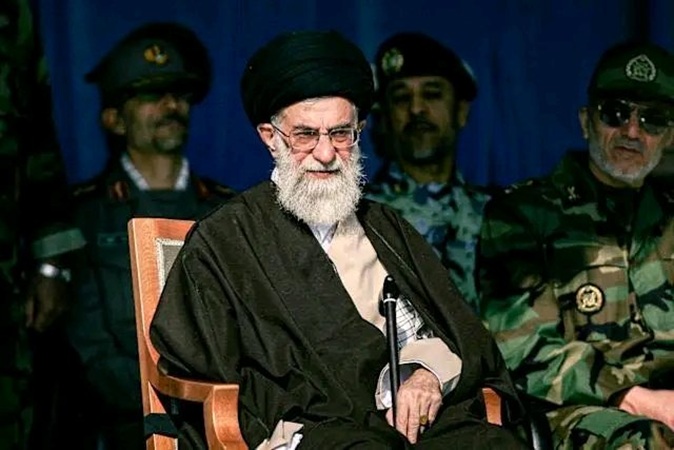
Iran’s Supreme Leader Ayatollah Ali Khamenei has died at the age of 86, Iranian state media confirmed early Sunday, following a large-scale military operation reportedly carried out by Israel and the United States.
According to official Iranian outlets, Khamenei was killed during a joint strike, hours after US President Donald Trump publicly claimed responsibility for the operation.
In a social media post, Trump described the killing as part of a broader campaign aimed at disabling Iran’s nuclear capabilities and warned that further military action would continue in the coming days.
Iranian media also reported that members of Khamenei’s family were among the casualties.
The state-run Fars News Agency said his daughter, son-in-law and granddaughter were killed in the strikes, citing sources within the Supreme Leader’s household.
Khamenei had ruled Iran since 1989, taking over after the death of revolutionary leader Ayatollah Ruhollah Khomeini, who led the 1979 Islamic Revolution and established clerical rule in the country.

While Khomeini shaped the ideological foundations of the Islamic Republic, Khamenei consolidated power over decades, transforming Iran into a centralized theocratic state and positioning it as a regional force in persistent confrontation with Israel and the West, particularly over its nuclear programme.
His leadership was marked by the strengthening of the clerical establishment and the Revolutionary Guard, which together formed the core power structure of Iran’s political system.
He held ultimate authority over all major state decisions, including military, foreign policy and internal security matters, and played a decisive role in suppressing domestic protests and political dissent.
The killing of Khamenei is expected to trigger a major leadership crisis in Tehran, as no clear successor has been publicly identified, a report stated.
Analysts say his death creates a significant power vacuum at the top of Iran’s political system, raising the risk of internal instability and factional conflict within the ruling establishment.
Iran responded to the strikes with counterattacks and issued strong warnings of retaliation.
Ali Larijani, Secretary of Iran’s National Security Council, said Israel and the United States would “regret their actions,” warning of a severe response.
In a message posted on X, he said Iran’s armed forces and citizens would deliver “an unforgettable lesson” to what he described as international aggressors.
Iranian state television announced a 40-day national mourning period and declared seven days of public holidays. A presenter said the Supreme Leader’s “path and mission” would continue with “greater vigour and zeal,” framing his death as martyrdom.
As news of Khamenei’s death spread, eyewitnesses in Tehran told the Associated Press that reactions were mixed, with some residents reportedly celebrating in the streets, while others expressed fear and uncertainty over what lies ahead.