










The United States and Israel carried out coordinated military strikes on Iran on Saturday, sharply escalating regional tensions already strained by the collapse of nuclear negotiations.
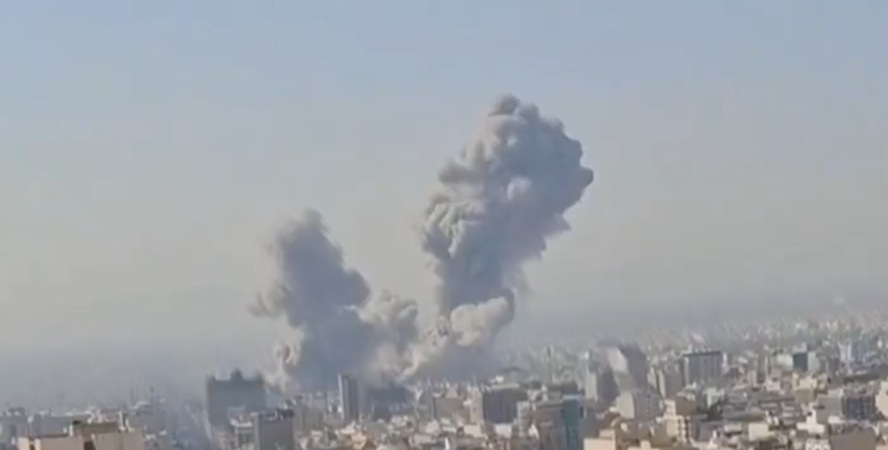
The first reported explosions were heard near offices associated with Iran’s Supreme Leader, Ayatollah Ali Khamenei, in central Tehran, with Iranian media confirming multiple strikes across the country.
Thick plumes of smoke were seen rising over the capital as emergency sirens and security alerts spread across the region.
US President Donald Trump, in a video message posted on social media, said Washington had begun “major combat operations in Iran,” accusing Tehran of continuing its nuclear development and missile programmes. He also issued a direct appeal to the Iranian public, urging them to “take over your government.”
It remained unclear whether Khamenei was present at the targeted location.
The 86-year-old leader has not appeared publicly in recent days, as tensions between Tehran and Washington intensified.

Roads leading to his compound were sealed off by authorities, while further blasts were reported in different parts of Tehran, a report said.
The attack followed a large-scale US military buildup in the region, including fighter jets and naval deployments, aimed at pressuring Iran into a renewed nuclear agreement.
Regional security concerns widened as neighbouring Iraq announced the closure of its airspace, citing safety risks.
An official briefed on the operation said Israeli strikes focused on Iranian military infrastructure, intelligence facilities and key symbols of state authority.
Israeli Defence Minister Israel Katz said the operation was intended “to remove threats,” without providing further operational details.
In Israel, hospitals activated emergency protocols, shifting patients and critical procedures to underground facilities.
Sirens sounded nationwide as Israeli authorities shut the country’s airspace, while the military issued a “proactive alert” warning of possible missile launches towards Israeli territory.
Iran’s long-running nuclear dispute with Western powers has remained at the centre of the crisis.
The US and its allies have long accused Tehran of pursuing nuclear weapons capabilities — a claim Iran denies, maintaining that its programme is for peaceful purposes.
ALSO READ: Strangers at Home
Tehran has consistently defended its right to uranium enrichment and has rejected negotiations on its missile programme and its regional alliances, including support for groups such as Hamas and Hezbollah.
Iranian authorities shut down national airspace and restricted mobile phone services as explosions continued across Tehran.
State television confirmed at least one blast near Khamenei’s office complex but offered no official explanation. No casualty figures were released by either side.
Iran has previously warned that any direct attack would trigger retaliation against US military bases and personnel stationed across the Middle East.
By late Saturday, it remained unclear how or when Tehran would respond, as fears grew of a wider regional conflict unfolding.