










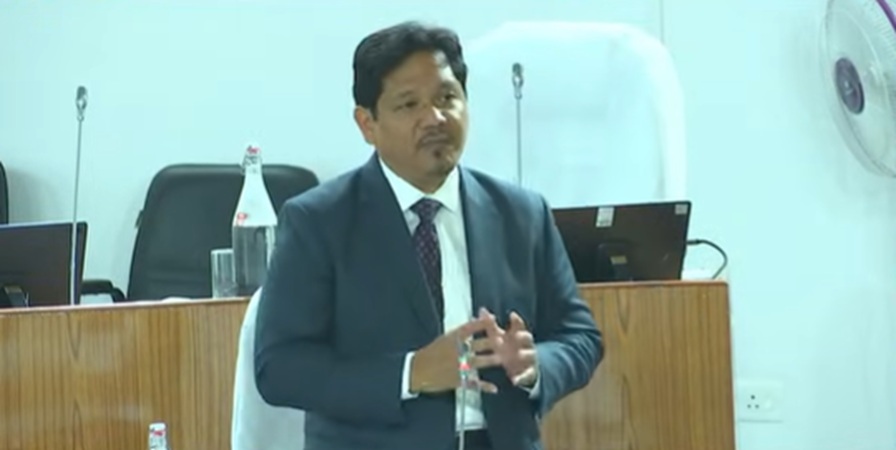
Shillong: Meghalaya has generated around 3.66 lakh employment opportunities between 2019 and 2025, Chief Minister Conrad K. Sangma told the Assembly on Monday, presenting the state’s economic and social development record during his reply to the debate on the Governor’s Address.
According to the chief minister, agriculture emerged as the largest employment generator, contributing nearly 1.90 lakh jobs, driven by targeted programmes in organic farming, fruit development, floriculture, mushroom cultivation and the Lakadong turmeric mission.
He said the benefits were spread across all districts, with significant job creation in regions such as West Garo Hills, Ri-Bhoi and East Khasi Hills through organic farming initiatives alone.
Beyond agriculture, Sangma said sectors such as hospitality, transport, manufacturing and recycling had also contributed substantially to employment growth.
These estimates, he explained, were based on a KLEMS-based employment assessment prepared using the Reserve Bank of India methodology, which analyses labour within a wider framework of capital, energy, materials and services to assess productivity and growth.
The chief minister also highlighted the role of flagship state schemes in expanding livelihoods.

Programmes such as YES Meghalaya, Aqua Mission, CM-CARE and PRIME, he said, have collectively supported close to eight lakh beneficiaries, significantly widening the state’s social and economic safety net.
Acknowledging the challenges of governance, he said the government was making continuous efforts to reach every section of society.
On labour welfare, Sangma said Meghalaya now has the second-highest minimum wage in the country at Rs 525, after Karnataka at Rs 581, and the highest in the Northeast, reflecting the state’s policy focus on supporting low-income groups.
He further claimed that Meghalaya is currently India’s second-fastest growing economy, recording a 9.66 per cent real GSDP growth rate, behind Tamil Nadu.
The state, he said, has maintained an average growth rate of around 10 per cent over the past three years and is working towards a target GSDP of Rs 85,000 crore, equivalent to a $10 billion economy.
While acknowledging that per-capita GSDP remains comparatively low, Sangma noted that Meghalaya has improved its national ranking from 28th in 2019 to 26th at present, attributing slower gains partly to population growth.
ALSO READ: Mexican drug lord ‘El Mencho’ killed in military operation, violence erupts across states
He added that Meghalaya now ranks among the top five states in per-capita GDP growth between 2019 and 2025, with overall living standards improving since 2018.
Linking economic growth with governance reforms, the chief minister referred to policy initiatives such as the adoption of a state anthem and symbols after five decades, revival of legacy projects like the Croborough Hotel, and the construction of a new Assembly building, describing them as part of a broader institutional and economic transformation.
On infrastructure spending, Sangma said that while large tenders follow central guidelines, the government has prioritised smaller projects for local contractors.
Expenditure on such works has increased from Rs 454 crore in 2019 to Rs 1,286 crore, a move he said was aimed at strengthening local livelihoods and small enterprises.
He also announced plans to construct houses for families too poor to purchase land, stating that the initiative is intended to ensure that the poorest sections are not excluded from development, especially as major infrastructure projects reshape Shillong and other urban centres in the state.