










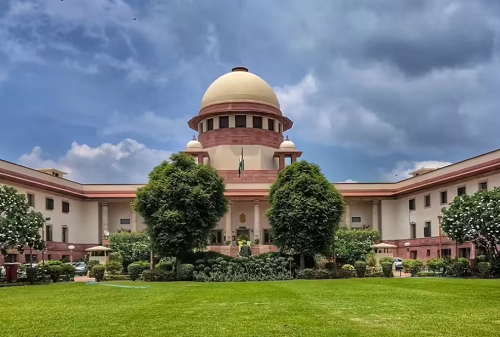
The Supreme Court on Thursday said that it will commence final hearings in the batch of petitions challenging the constitutional validity of the Citizenship (Amendment) Act, 2019, in the week beginning May 5, 2026.
Separate hearings for matters pertaining to Assam and Tripura will follow immediately after the rest of the cases, but the hearing will conclude on May 12.
A three-bench judge comprising Chief Justice of India Surya Kant, Justice Joymalya Bagchi and Justice Vipul Pancholi were considering the petitions today for procedural directions. The matter was last listed nearly two years ago, on March 19, 2024.
Senior Advocate Indira Jaising requested that the petitions relating to Assam and the other North-Eastern states be considered separately, since there are issues arising out of Section 6A of the Citizenship Act and the interline permit.
Also Read: Woman among two granted citizenship under CAA in Assam; total rises to four
The bench directed, “There are two sets of cases assailing CAA 2019. These matters were categorised in two groups, Assam-Tripura and rest of the country. The nodal counsels appointed will identify the matters falling in first and second group and the list shall be submitted to the registry in two weeks. Registry shall thereafter segregate in two categories and the same shall be listed on seriatum for final hearing in the week commencing May 5, 2026. Petitioners shall be heard on first half of May 5, and then another half on May 6 for petitioners and then half day on May 7 to respondents and rejoinder on May 12.”

The court is seized of over 240 petitions challenging the 2019 amendments, which eased the process of granting citizenship to non-Muslim migrants from Pakistan, Bangladesh and Afghanistan who came to India before December 31, 2014.
This case had come up last in 2024 before a Bench led by then Chief Justice of India D.Y. Chandrachud. Senior advocate Kapil Sibal, for the petitioners, had then argued that the Act came into existence in 2019, and the government had waited for nearly five years to notify the Rules.
As per a report
Published in The Indian Express