








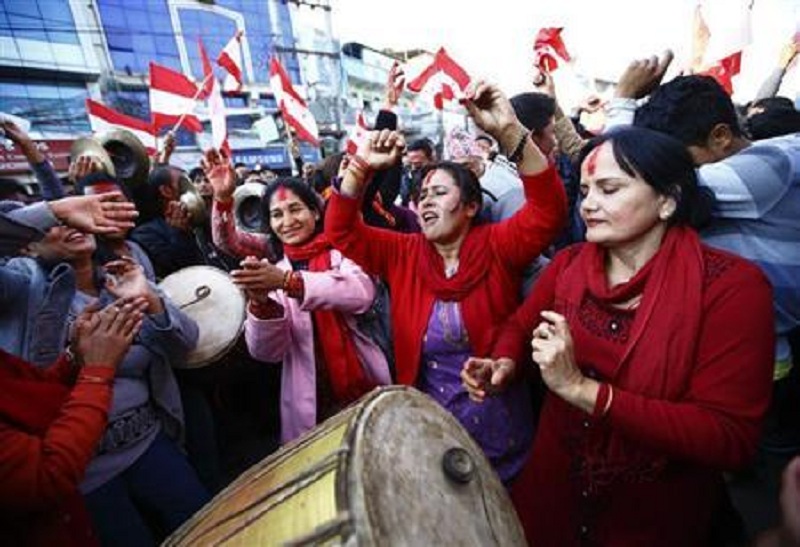
Political activity gathered pace across Nepal on Monday as parties and candidates formally kicked off their campaigns for the March 5 general elections, following the expiry of restrictions imposed by the Election Commission of Nepal.
As the campaign period began, candidates went to their constituencies, started door-to-door visits, and organised public meetings and rallies. The Election Commission has permitted structured campaign activities from February 16 to March 2, including mass meetings, processions, corner interactions and the use of loudspeakers.
Campaigning will come to a halt at midnight on March 2, in line with the mandatory 48-hour silence period before polling day.
The Commission said a total of 18,903,689 voters are eligible to cast their ballots this time, including 915,119 newly registered voters since the 2022 parliamentary elections.
Nepal’s House of Representatives comprises 275 members. Of these, 165 lawmakers are elected under the first-past-the-post (FPTP) system through direct voting, while the remaining 110 are chosen through the proportional representation (PR) system.
For the upcoming polls, around 3,400 candidates are contesting under the FPTP category, while nearly 3,200 nominees are in the fray under the proportional representation system.

Election authorities have almost completed logistical preparations. Of the 20,323,000 ballot papers required for the FPTP races, nearly all have been printed. Similarly, printing of 20,830,000 ballot papers for the PR system has been completed.
ALSO READ: Nepal Embassy advises citizens on safety after Meghalaya mine blast kills 9 nationals
The Commission is preparing to conduct voting through approximately 10,500 polling stations and 23,112 polling booths nationwide. More than 213,000 election staff and over 330,000 security personnel will be deployed to ensure the smooth conduct of polling.
According to EC spokesperson Narayan Prasad Bhattarai, a three-layer security arrangement is being put in place in coordination with the Nepal Army to guarantee a free and fair election on March 5.