










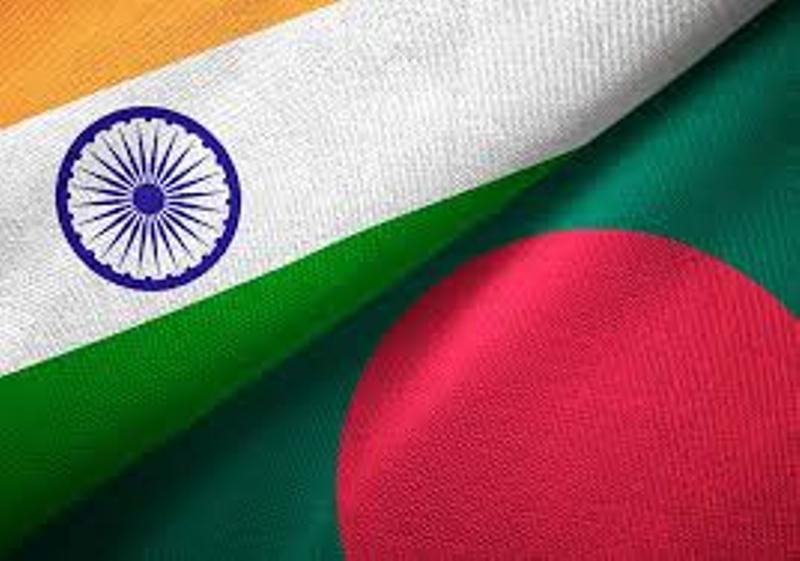
On 12 February 2026, Bangladesh voted not merely for a new government but for a new political grammar. The sweeping victory of BNP under Tarique Rahman coupled with the passage of a far-reaching constitutional referendum, has formally ended the eighteen-month interim interlude that followed the dramatic fall of Sheikh Hasina. For India, and particularly for West Bengal and the Northeastern states with Assam at the centre of concern, the change in Dhaka is intimate, historical, and strategic.
Indo-Bangladesh relations have always oscillated between warmth and wariness. In 1971, India stood unequivocally beside the Bengali nationalist movement led by Sheikh Mujibur Rahman. The Liberation War forged an emotional and strategic bond that remains foundational.
The early years between 1971 and 1975 were marked by exceptional alignment, driven by secular nationalism and shared trauma. Yet the assassination of Mujib in 1975 altered the ideological direction of Bangladesh. The rise of military-backed regimes and later the ascent of Ziaur Rahman introduced the doctrine of “Bangladeshi nationalism,” which consciously distanced itself from the linguistic and cultural affinity with India’s West Bengal.
When the BNP first assumed power in the early 1990s, relations entered a phase of competitive suspicion. Water sharing, border management, and migration emerged as recurrent irritants. The brief return of the Awami League in the late 1990s brought pragmatic engagement, including the landmark Ganges Water Treaty.
But it was during the BNP-Jamaat coalition government between 2001 and 2006 that India’s security establishment experienced what it still recalls as a nadir. Insurgent groups from India’s Northeast, including the United Liberation Front of Asom (ULFA) and the National Socialist Council of Nagaland (NSCN), found sanctuary in Bangladeshi territory. The notorious 10-truck arms haul case, exposing the movement of sophisticated weaponry through Chittagong, cast a long shadow over bilateral trust.
The period from 2009 to 2024 under Sheikh Hasina has often been described as a “golden era” of Indo-Bangladesh relations. Dhaka adopted a zero-tolerance approach toward anti-India insurgent groups, enabling India to stabilize much of its Northeastern theatre. Land boundary disputes were resolved, enclaves exchanged, and connectivity projects multiplied.

Electricity grids were linked, pipelines constructed, and trade expanded to unprecedented levels. For Assam, Tripura, Meghalaya, and Mizoram, Bangladesh was no longer merely a neighbour; it was an economic corridor. West Bengal, sharing deep linguistic and familial ties across the border, experienced a relative calming of earlier anxieties.
The February 2026 transition alters that equation. The BNP’s victory gives Tarique Rahman a commanding majority. Simultaneously, an 11-party Islamist alliance led by Jamat-e-Islami has emerged as the most potent opposition force in the country’s history.
The referendum accompanying the election passed with nearly 73 percent support, introducing term limits for the Prime Minister, bicameralism, and a shift in constitutional language from “Bengali nationalism” and “secularism” to broader notions of equality, dignity, social justice, and religious freedom. Strategically, it indicates that Bangladesh seeks to redefine itself less through cultural overlap with India and more through sovereign distinctiveness.
For India, especially Assam and the larger Northeast, the anxieties are not rhetorical. The 4,096-kilometre border remains porous, marked by riverine tracts and dense terrain. Stability in Dhaka has historically correlated with peace in Guwahati and Agartala.
During the BNP-Jamaat era of 2001–2006, insurgent safe havens across the border aggravated violence in Assam. Under Hasina, decisive crackdowns forced insurgent leaders to relocate or surrender. The concern today is whether a less enthusiastic security cooperation environment might allow radical networks to reconstitute themselves.
Groups such as Ansarullah Bangla Team and Jamaat-ul-Mujahideen Bangladesh have previously demonstrated the capacity to operate across borders. For West Bengal’s border districts—Malda and Murshidabad in particular—the interplay of demography, migration, and radical messaging remains delicate.
In Assam, where the memory of migration-linked political turbulence is fresh, any perception of renewed infiltration or minority persecution across the border can quickly inflame sentiment. The Rohingya crisis in Cox’s Bazar adds another layer, as secondary movements sometimes spill into Indian territory.
The Siliguri Corridor, often described as India’s “Chicken’s Neck,” looms large in strategic calculations. This narrow strip connecting mainland India to the Northeast lies uncomfortably close to Bangladesh’s Rangpur Division. Infrastructure development at Lalmonirhatin northern Bangladesh, with China’s involvement, is closely watched in New Delhi.
India’s concern is not hypothetical encirclement but strategic vulnerability. Any shift in Dhaka’s external alignments—particularly closer engagement with China or tacit tolerance of Pakistani intelligence manoeuvres—would have implications for the Northeast’s security calculus.
The spectre of Pakistan’s Inter-Services Intelligence attempting to revive a “Dhaka Cell” is frequently cited in Indian security discourse. While such claims require careful verification, history has shown that geopolitical rivalries often seek expression through proxy destabilization.
In periods of strained Indo-Bangladesh relations, subversive networks have found greater breathing space. The BNP leadership, therefore, faces its own balancing act: asserting sovereign autonomy without permitting Bangladesh to become an arena for great-power or subcontinental contestation.
Yet it would be simplistic to frame the 2026 transition solely through a security lens. Economic interdependence between India and Bangladesh is profound. Bilateral trade has crossed $13 billion, making Bangladesh one of India’s largest trading partners in Asia. Energy cooperation—electricity exports, cross-border pipelines, and grid connectivity—creates mutual stakes in stability.
Bangladesh’s graduation from Least Developed Country status in 2026 introduces fresh challenges. As preferential tariff access diminishes, Dhaka will seek diversified markets and investment sources. India’s own trade agreements with the European Union and others may intensify textile competition, nudging Bangladesh to look more energetically toward China or other partners.
The cancellation of Indian Economic Zone projects in Mirsarai and Mongla earlier in 2026 signals both bureaucratic frustration and political recalibration. Dhaka cited inactivity; New Delhi perceived a diplomatic chill. These episodes underscore the need for agility.
The message from the BNP’s “Bangladesh First” posture is not necessarily anti-India; it is sovereignty-conscious. India’s earlier habit of investing disproportionate political capital in one party—most recently the Awami League—now appears strategically narrow. In the fluid politics of South Asia, relationships must be institutional rather than personality-driven.
For West Bengal, the transition is layered with emotion and economics. Cultural continuity across the border remains vibrant—shared language, literature, music, and family ties. But political narratives can quickly sharpen distinctions.
The removal of “secularism” from Bangladesh’s constitutional core may resonate differently on either side of the border. It need not imply regression, yet it alters the symbolic vocabulary that once bound the two Bengals more closely.
For Assam, the stakes are sharper. Migration remains a politically sensitive issue, entwined with identity and citizenship debates. Any spike in cross-border displacement—whether driven by economic stress, climate change, or minority insecurity—would reverberate domestically. Hence, stability and inclusive governance in Bangladesh align directly with Assam’s internal equilibrium.
What then should India do to transform this moment of uncertainty into a win-win? First, it must disentangle policy from personalities. The presence of Sheikh Hasina in India after her ouster is diplomatically sensitive. Quiet, calibrated engagement that respects legal processes while minimizing public confrontation is essential. Second, New Delhi must reaffirm that its partnership is with the people and institutions of Bangladesh, not with any single political formation. Third, security cooperation should be institutionalized beyond partisan cycles.
Joint border management mechanisms, intelligence sharing on radical networks, and humane border practices can serve mutual interests. A “zero-killing” border policy, backed by technology and coordination, would address Bangladeshi sensitivities while reducing propaganda opportunities for extremist actors. Fourth, geoeconomic integration must accelerate. Concluding a Comprehensive Economic Partnership Agreement before the full impact of LDC graduation is felt would cushion Bangladesh’s export sectors. Expanding sub-regional energy grids linking India, Nepal, Bhutan, and Bangladesh can create irreversible economic interdependence.
Infrastructure alternatives for the Northeast—through Myanmar projects and internal corridors—should progress not as signals of distrust but as prudent diversification. Finally, people-to-people engagement must widen. Academic exchanges, journalist interactions, historian dialogues, and youth programmes can sustain trust even when political rhetoric fluctuates. India’s earlier tendency to place all diplomatic eggs in one basket should give way to a broader engagement with all mainstream political actors in Bangladesh.
The February 12 mandate in Dhaka does not herald inevitable confrontation. It heralds recalibration. Between the Padma and the Brahmaputra lies a geography that compels coexistence. The future of Assam’s peace, West Bengal’s cultural continuity, and the Northeast’s connectivity is inseparable from Bangladesh’s internal trajectory.
ALSO READ: Ghazwatul Hind: Myth, Misuse and the Battle for India’s Plural Soul
If India approaches the new dispensation with strategic patience, sovereign respect, and economic imagination, the rivers can continue to bind rather than divide. In South Asia’s shifting theatre, wisdom will lie not in nostalgia for a golden era but in crafting a durable equilibrium for the one unfolding now.