










Guwahati: Guwahati’s delicate ecological system is under fresh threat as a large ring road project, promoted as a remedy for traffic congestion and urban growth, is planned through wetlands, forested hills and wildlife habitats on the city’s eastern and southern fringes—areas that serve as natural buffers against flooding, heat and human–wildlife conflict.
The 121-km Guwahati Ring Road, a Rs 5,729–5,730 crore project awarded by the National Highways Authority of India (NHAI) to Ahmedabad-based Dineshchandra R Agrawal Infracon Pvt. Ltd under the Build–Operate–Toll (BOT) model, is being promoted as a long-term solution to traffic congestion and urban expansion. However, environmental groups and experts warn that the ecological cost could be borne by both nature and city residents.
The project includes three major components: a 56-km, four-lane access-controlled Northern Guwahati Bypass; widening of NH-27 from four to six lanes over a 7.76–8 km stretch between Khanapara and Sonapur; and upgradation of an existing 58-km bypass along NH-27. A nearly 3-km-long six-lane bridge over the Brahmaputra will connect Kuruwa with eastern Guwahati, along with a new greenfield road from Baihata Chariali to Kuruwa.
The alignment passes through Baihata Chariali, Kamalpur, Karara, Mandakata, Chandrapur and Sonapur, skirting the city. While officials say this will ease congestion and improve regional connectivity, critics point out that the route cuts through ecologically sensitive zones linked to the Amchang Wildlife Sanctuary.
Two major wetlands—Khamrenga Beel and Borbila Beel—are likely to be directly affected, according to a NorthEast Now report. Khamrenga Beel, near Chandrapur, is part of the larger Amchang landscape and is known as an important bird area. Conservation groups have recorded high bird diversity here, including critically endangered species such as the White-backed and Slender-billed vultures, Spot-billed Pelican, and the rare Baer’s Pochard.
Borbila Beel, spread over about 929 hectares, is another key freshwater wetland that supports aquatic life, birds and amphibians while acting as a natural flood buffer for the area.

Beyond wetlands, forest diversion inside Amchang Wildlife Sanctuary has emerged as a major concern. Official records show that 7.12 hectares of forest land inside the sanctuary have been identified for diversion. Forest officials have confirmed that 2,224 trees inside Amchang will be felled, part of an estimated 4,500 trees across the entire project. At least 2,000 of these are in the Khanapara–Sonapur stretch.
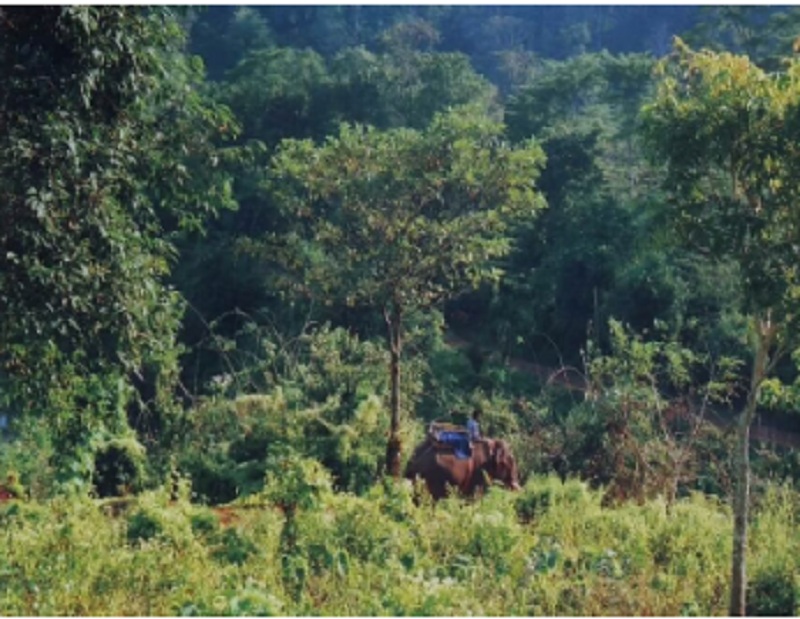
Environmentalists warn that hill cutting for six-lane expansion could disrupt natural drainage from the eastern hills, worsening Guwahati’s chronic flooding. They also caution that further habitat fragmentation could intensify human–elephant conflict, as Amchang serves as a key elephant corridor. Recent years have seen repeated elephant incursions into urban and fringe areas, underscoring the risks.
ALSO READ: Assam: Guwahati to get new women’s de-addiction centre amid rising substance abuse
Despite growing opposition, bids have already been invited for tree felling inside Amchang, raising fears that large-scale forest clearance could begin soon, potentially causing irreversible ecological damage.