










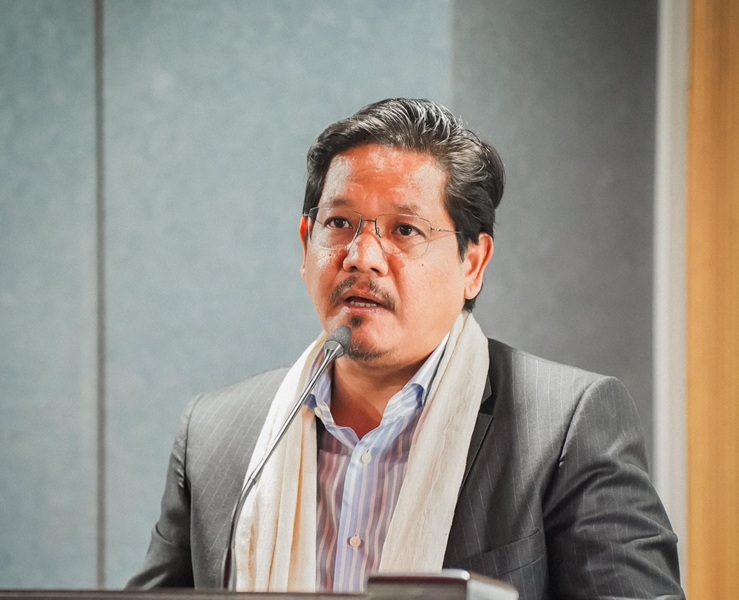
Shillong: Meghalaya’s community-led approach to climate adaptation and water security has received national recognition, with the Economic Survey 2025–26 highlighting the state’s initiatives to address growing stress on water resources, Chief Minister Conrad K. Sangma said on Friday.
The chief minister said the Economic Survey, tabled in Parliament by Union Finance Minister Nirmala Sitharaman, acknowledged Meghalaya’s ecosystem-based and community-centric strategies aimed at tackling challenges such as drying springs and declining water discharge.
Sharing the development on social media, Sangma said initiatives including MegARISE, spring mapping and community-based water harvesting have helped protect critical catchment areas, restore forests and strengthen the capacity of local communities to respond to climate change.
“When communities lead the way, great things are possible,” he said.
Meghalaya has been facing increasing pressure on its water resources, with official assessments indicating that nearly half of the state’s springs have either dried up or experienced a significant reduction in discharge.
To counter this, the government has adopted a community-driven adaptation framework that places local participation at the centre of water conservation efforts.

Under the Protection of Vulnerable Catchment Areas in Meghalaya (MegARISE) project, the state is undertaking sustainable forest management, watershed treatment and forest restoration, with active involvement of local communities.
The programme envisages plantation activities across more than 8,400 hectares and focuses on protecting two major catchments — Umiew and Ganol.
ALSO READ: Nagaland CM rolls out statewide digitisation of birth, death certificates
Another key intervention, the Spring Mapping Initiative, has used Geographic Information System technology to map over 55,000 springs across the state, enabling targeted conservation and timely corrective measures to revive water sources.
In addition, more than 500 community-based water harvesting projects are being implemented to promote climate-resilient water management at the grassroots level.
“These initiatives are not only about securing water resources but also about empowering communities to adapt effectively to climate change,” Sangma said, adding that sustained community participation has been crucial to their success and to ensuring water security for future generations.